A Bordeaux cruise is less about long sailing days and more about the places in between: honey-coloured towns, Vauban fortresses and some of the most famous vineyards on earth. If you love wine, this is the river cruise to choose.
Cruising Bordeaux Rivers
A Bordeaux cruise actually uses three waterways. The Garonne rises in the Val d'Aran in the Spanish Pyrenees and flows about 529 km past Toulouse to Bordeaux. The Dordogne rises on the Puy de Sancy in the Massif Central and flows about 483 km west past Bergerac and Libourne. Just below Bordeaux the two rivers meet at the Bec d'Ambès and become the Gironde, an estuary about 75 km long and the largest in western Europe, which carries their waters out to the Atlantic.
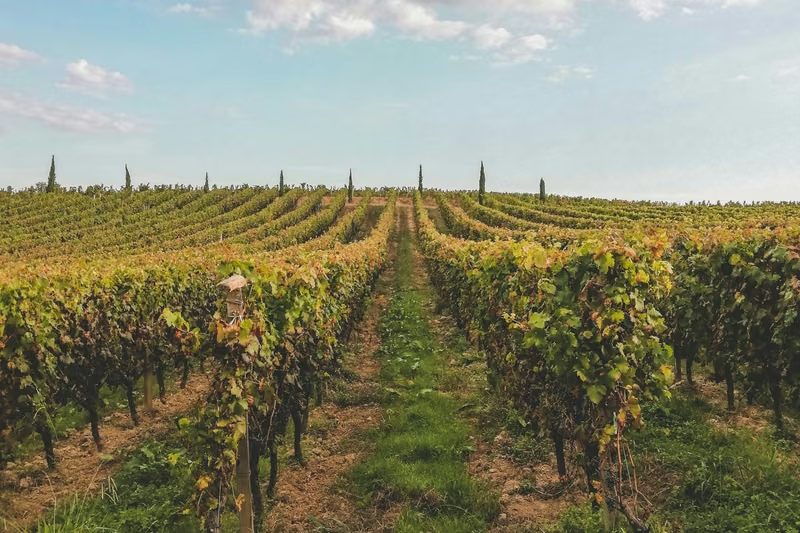
Between them, these rivers run through the heart of the Bordeaux wine region. The Médoc lies along the left bank of the Gironde, with Pauillac and its grand châteaux. Saint-Émilion and Pomerol sit on the right bank of the Dordogne near Libourne, while Sauternes and its sweet white wines lie along the Garonne south of Bordeaux. On a single cruise you can taste wines from all three areas, often with visits to individual châteaux and their cellars, and learn how the soils and grapes of each bank shape the wine in your glass.
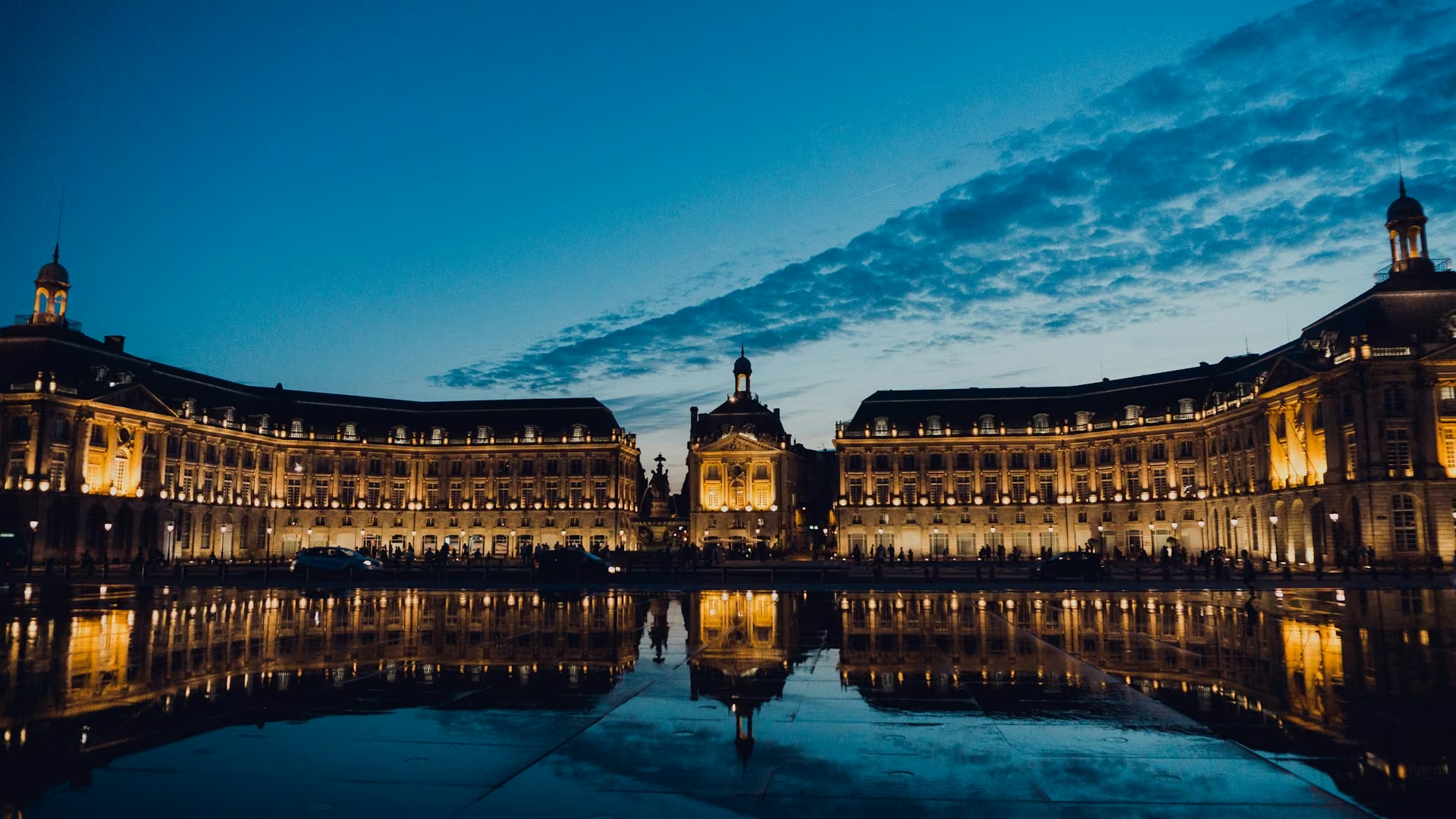
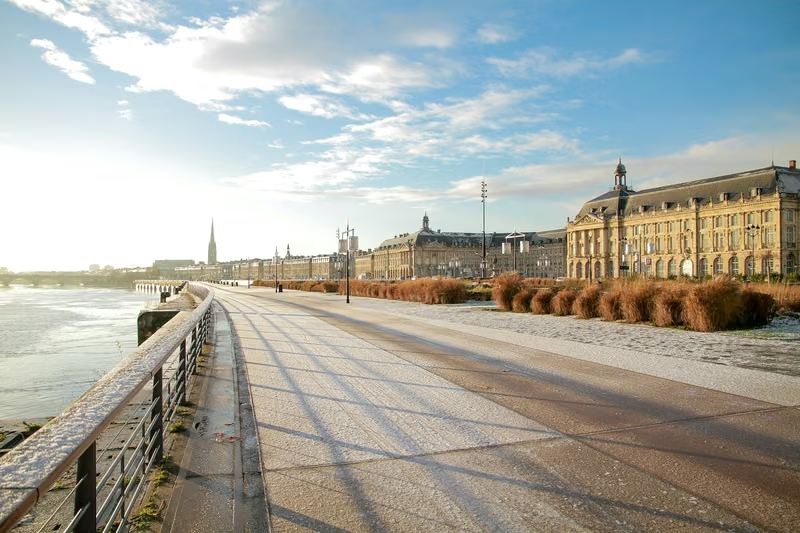
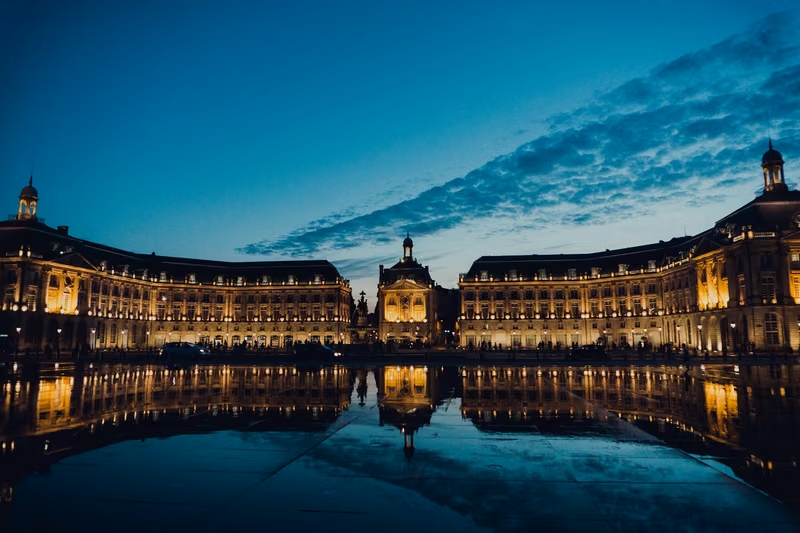
Bordeaux itself makes a superb base. The city's 18th-century quays curve around a crescent-shaped bend of the Garonne, giving it the name Port of the Moon, and this historic port is a UNESCO World Heritage Site. Ships usually moor right in the city, a short walk from the Place de la Bourse and its reflecting pool, the Grand Théâtre and the cafés and wine bars of the old town. Many itineraries begin and end here, with a night or two moored in town.
This is a relaxed, unhurried kind of cruise. Distances are short, and the ships move with the tides on the estuary, so there is plenty of time to enjoy each place. Cruises are typically around a week and suit anyone who enjoys food, wine and small French towns more than big-city sightseeing. Below you will find a short history, highlights, food and wine, advice on when to go and the ports most cruises visit, followed by the Bordeaux cruises we currently offer.
River facts
| Length | Garonne about 529 km, Dordogne about 483 km, Gironde estuary about 75 km |
|---|---|
| Source | Garonne: the Val d'Aran, Spanish Pyrenees. Dordogne: the Puy de Sancy, Massif Central |
| Flows into | The Atlantic Ocean, by way of the Gironde estuary |
| Countries | France (the Garonne rises just over the border in Spain) |
| Cruising season | March to December |
| Typical cruise | 8 days, usually round trip from Bordeaux |
A short history of Bordeaux and its rivers
The Romans founded Burdigala on the Garonne, and they were probably the first to plant vines here. The region's great turning point came in 1152, when Eleanor of Aquitaine married Henry Plantagenet, who became King Henry II of England two years later. For three centuries Bordeaux was an English possession, shipping huge quantities of wine across the Channel. The English taste for Bordeaux's light red wine, which they called claret, has lasted to this day.
English rule ended in 1453 at the Battle of Castillon, fought beside the Dordogne, which effectively closed the Hundred Years' War. Bordeaux's golden age followed in the 18th century, when trade with the Caribbean, including the slave trade, made its merchants rich, and they built the grand stone quays and squares you see today. The Place de la Bourse was built between 1730 and 1775, and the Grand Théâtre opened in 1780.
In the late 17th century the military engineer Vauban fortified the Gironde to protect Bordeaux from attack by sea, building the citadel at Blaye and forts on an island and the opposite bank. These defences are now part of a UNESCO World Heritage Site. In 1855, for the Universal Exhibition in Paris, the leading châteaux of the Médoc and Sauternes were ranked in the famous Bordeaux classification, which still shapes the wine world today.
Highlights along the rivers
Saint-Émilion is the jewel of the right bank, a medieval town of steep cobbled lanes and golden limestone above a sea of vineyards. Its monolithic church, carved out of the rock, is one of the most unusual in Europe, and the town and its vineyards were listed by UNESCO in 1999. Nearby Libourne, a medieval bastide town founded in the 13th century, is where ships moor for Saint-Émilion and Pomerol.
On the Gironde, Blaye's star-shaped citadel looks across the estuary towards the Médoc, and Bourg is a pretty hillside town with views over the Dordogne. Pauillac is home to three of the five first growth châteaux of Bordeaux, and a drive along the Médoc's Route des Châteaux passes one famous name after another.
South of Bordeaux, the Garonne leads to Cadillac, a 13th-century bastide with a grand ducal château. The American car brand owes its name to the town by way of Antoine de Lamothe-Cadillac, the Frenchman who founded Detroit in 1701. Cadillac is the gateway to Sauternes, where autumn mists from the river help create the noble rot that gives the region's sweet wines their richness.
Ports and places to know
Bordeaux, France
Bordeaux's elegant 18th-century quays curve along the Garonne, and the city's historic port, the Port of the Moon, is listed by UNESCO. Highlights include the Place de la Bourse and its reflecting pool, the Grand Théâtre and the Cité du Vin wine museum.
Libourne and Saint-Émilion, France
Libourne is a medieval bastide town on the Dordogne and the gateway to the vineyards of Saint-Émilion and Pomerol. Saint-Émilion's steep lanes, rock-cut church and surrounding vineyards are a UNESCO World Heritage Site.
Bourg, France
This small hillside town looks out over the Dordogne just before it meets the Garonne. It is surrounded by the vineyards of the Côtes de Bourg and has an old upper town of quiet streets.
Blaye, France
Blaye is dominated by its great citadel, built by Vauban in the late 17th century to guard the Gironde. The fortifications are part of a UNESCO World Heritage Site and offer fine views across the estuary.
Pauillac, France
This small town on the Gironde is the centre of the Médoc wine region and home to three of Bordeaux's five first growth châteaux. It is also known for its tender milk-fed lamb, a local speciality.
Cadillac, France
Cadillac is a 13th-century bastide on the Garonne with a grand 17th-century château built for the Duke of Épernon. It is the gateway to the sweet white wines of Sauternes and Barsac.
Food and wine
Bordeaux is one of the most famous wine regions in the world, and a cruise here is the perfect introduction. The left bank, including the Médoc and Pauillac, is known for structured reds based on Cabernet Sauvignon. The right bank, around Saint-Émilion and Pomerol, favours softer, rounder reds based on Merlot. Sauternes produces lusciously sweet white wines, and the Entre-Deux-Mers, between the two rivers, makes fresh dry whites.
The food matches the wine. Oysters from nearby Arcachon Bay are a local favourite, often eaten with little sausages and a glass of white wine. Entrecôte à la bordelaise is steak with a rich red wine and shallot sauce, Pauillac is famous for its lamb, and Sauternes is classically served with foie gras. Do not leave without trying canelés, small caramelised cakes flavoured with rum and vanilla, or the almond macarons of Saint-Émilion.
When to go
Bordeaux cruises run from around March to December. Spring brings fresh green vines and mild temperatures, and early summer is warm without being too hot. July and August are the warmest months, with long days for exploring, though the vineyards are at their busiest with visitors.
September and October are harvest time, when the vineyards are full of activity and the countryside smells of fermenting grapes. It is a wonderful time for wine lovers, though some châteaux are busier and less able to welcome visitors during the harvest itself. Late autumn and early winter are quieter, with cooler days and cosy evenings, and Bordeaux has Christmas markets in December.
Bordeaux Rivers river cruises we offer
These are the cruises currently on our site that sail this river. We are adding more cruise lines, and each will appear here under its own heading.
Viking River Cruises
About Viking| Cruise | Length | From pp |
|---|---|---|
| Châteaux, Rivers & Wine | 8 days | £2,495 |
Lead-in fares per person, checked in October 2026.
Bordeaux Rivers river cruises: questions answered
Bordeaux cruises sail the Garonne, the Dordogne and the Gironde estuary. The Garonne flows through Bordeaux, and the Dordogne joins it just downstream at the Bec d'Ambès, where they form the Gironde. Cruises move between all three, calling at towns such as Libourne, Bourg, Blaye, Pauillac and Cadillac.
Most Bordeaux river cruises last around eight days and are round trips from Bordeaux, so you can arrive and leave from the same city. Some travellers add a few nights in Bordeaux or Paris before or after the cruise, and the high-speed train between Paris and Bordeaux makes that easy.
Wine is the main theme, but there is much more to enjoy. Bordeaux is a beautiful city with a UNESCO-listed historic port, Saint-Émilion is a beautiful medieval town in its own right, and Blaye has a spectacular Vauban citadel. The food is excellent too. Even if you only drink the occasional glass, the scenery, history and small towns make it a rewarding cruise.
Late spring, early summer and early autumn are especially pleasant. September and October bring the grape harvest, which is a lovely time to see the vineyards at work, though some châteaux are busier. July and August are warm and lively. December cruises are quieter and include the Christmas markets in Bordeaux.
The Gironde is the largest estuary in western Europe, about 75 km long and up to around 12 km wide. It is tidal, so ships time their sailings with the tides. Vauban's fortifications at Blaye and Fort Médoc guarded it from sea attack, and today it is lined with vineyards, including some of the most famous châteaux of the Médoc.
Most Bordeaux cruises include or offer visits to wine estates, which often involve a tour of the vineyards and cellars and a tasting. The exact châteaux vary between cruise lines and departures. If you have a particular château or wine area in mind, let us know and we will check which itineraries visit it.
Try oysters from Arcachon Bay, steak with bordelaise sauce made with red wine and shallots, and Pauillac lamb. Sauternes is classically paired with foie gras. For something sweet, canelés are the city's signature cake, small and caramelised with a soft, custardy centre, and Saint-Émilion is famous for its almond macarons.