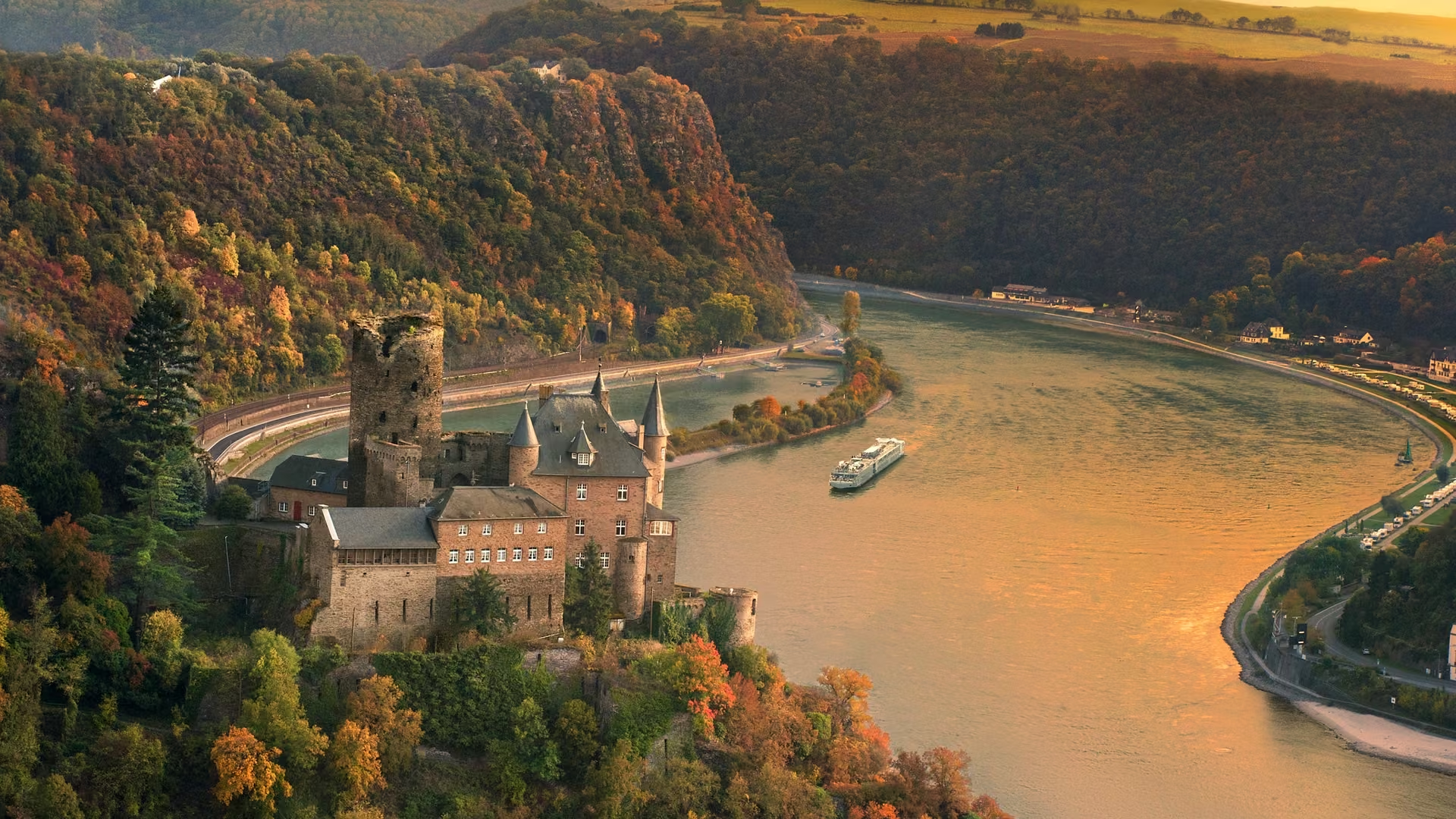
The Rhine has been one of Europe's great trade routes since Roman times, and it is still a working river, busy with barges as well as passenger ships. That mix of industry, history and wine country is what makes it such an absorbing river to cruise.
Cruising the Rhine
The Rhine rises in the Swiss Alps and runs about 1,230 km to the North Sea, flowing through or along the borders of Switzerland, Liechtenstein, Austria, Germany, France and the Netherlands. River cruises usually cover the navigable stretch between Basel and Amsterdam, a journey of around a week that passes through four countries. It is a route of strong contrasts, from the half-timbered villages of Alsace and the edge of the Black Forest to the cathedral cities of the Rhineland, and finally the flat, canal-laced landscape of Holland.
The highlight for most people is the Middle Rhine between Rüdesheim and Koblenz. Here the river cuts a deep gorge through the Rhenish Slate Mountains, with steep vineyards, small wine towns and a castle on almost every crag. The Upper Middle Rhine Valley has been a UNESCO World Heritage Site since 2002, and ships sail through it in daylight so you can watch from the sun deck as the Lorelei rock comes into view. The gorge is only about 65 km long, but it is the picture most people have in mind when they think of the Rhine.
Beyond the gorge there is plenty more to see. Strasbourg, on the French bank, has a soaring Gothic cathedral and a charming old quarter of canals and timbered houses. Speyer, Mainz and Cologne each have great cathedrals of their own, and Cologne's twin spires are among the most recognisable sights in Germany. Further north the river divides into a web of channels as it enters the Netherlands, where cruises often call at Kinderdijk to see its 18th-century windmills before finishing in Amsterdam.
The Rhine is a natural choice for a first river cruise. Ports are close together, ships moor near the town centres and most sightseeing is easy to manage on foot. It also links neatly with other rivers, so longer journeys can continue along the Main and the Main-Danube Canal towards Budapest, or turn up the Moselle towards Trier. Below you will find a short history, the highlights, food and wine, advice on timing and the ports most cruises visit, followed by the Rhine cruises we currently offer.
River facts
| Length | About 1,230 km |
|---|---|
| Source | The Swiss Alps, traditionally Lake Toma, source of the Vorderrhein |
| Flows into | The North Sea, through the Rhine and Meuse delta in the Netherlands |
| Countries | Switzerland, Liechtenstein, Austria, Germany, France and the Netherlands |
| Cruising season | March to December, including Christmas market cruises |
| Typical cruise | 8 to 15 days |
A short history of the Rhine
For several centuries the Rhine marked the edge of the Roman world. Legions guarded its west bank, and towns such as Cologne, Mainz, Koblenz and Strasbourg began as Roman forts or settlements. Cologne takes its name from Colonia, the rank of Roman colony it was given in AD 50. When Roman rule collapsed, the river became the backbone of the Frankish kingdoms and, later, of the Holy Roman Empire.
In the Middle Ages the Rhine was one of the busiest trade routes in Europe, and local lords built castles above the gorge to collect tolls from passing boats. Some, like the Pfalzgrafenstein near Kaub, stand on islands in the middle of the river. Many castles were wrecked in the wars of the 17th century and rebuilt in the 19th by Prussian royalty and wealthy industrialists, which is why so many look like illustrations from a storybook. Writers and painters, from Heinrich Heine to J. M. W. Turner, helped turn the river into one of Europe's first great tourist routes.
The Rhine has been a frontier as well as a highway. France and Germany disputed Alsace for centuries, and Strasbourg changed hands four times between 1870 and 1945. In March 1945 American troops captured the Ludendorff Bridge at Remagen, one of the last bridges over the Rhine still standing, which hastened the end of the war. Today Strasbourg is home to the European Parliament, and the river stands for cooperation as much as conflict.
Highlights along the river
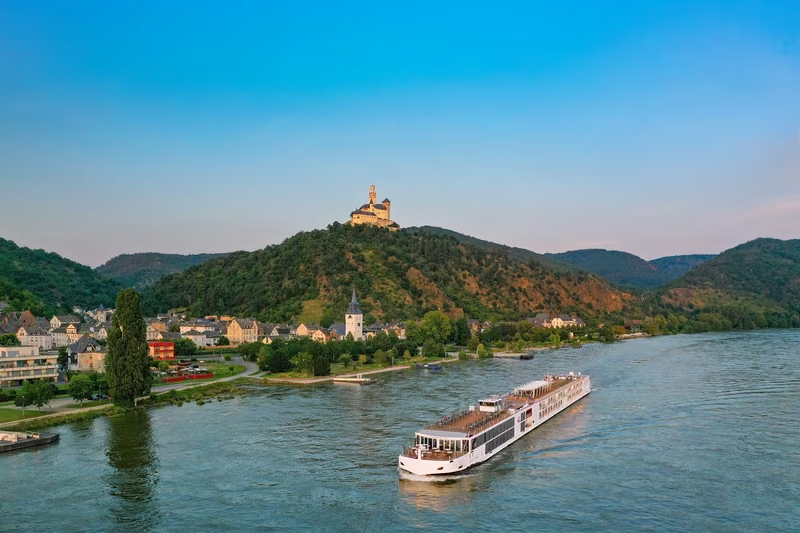
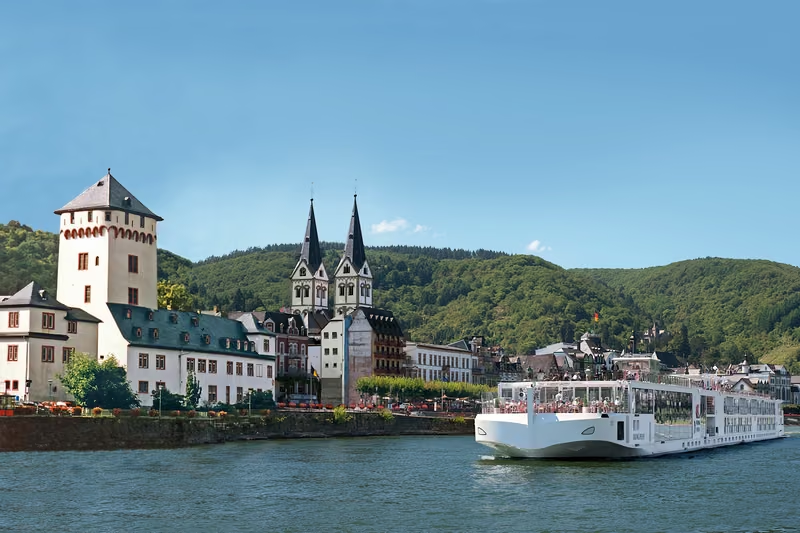
Sailing the Rhine Gorge is the obvious highlight, and it is best enjoyed with a coffee or a glass of Riesling on the top deck. Look out for the Marksburg, the hilltop castle that was never destroyed, the toll castle of Pfalzgrafenstein on its island, and the Lorelei rock, where legend says a siren lured boatmen onto the rocks with her singing. Wine towns such as Rüdesheim, Bacharach and Boppard line the banks.
Cologne Cathedral is one of the great Gothic buildings of Europe. Work began in 1248 and was not finished until 1880, and the cathedral is a UNESCO World Heritage Site. Strasbourg's cathedral, with its single lacy spire and astronomical clock, is just as memorable, and the Petite France quarter is lovely for a wander. Speyer's Romanesque cathedral, also listed by UNESCO, is the burial place of eight German emperors and kings.
Smaller stops have their own appeal. Breisach is the gateway to the Black Forest, Mainz is the city of Johannes Gutenberg, whose printing press changed the world, and Koblenz has the Deutsches Eck, the point where the Moselle meets the Rhine. At the northern end, the windmills of Kinderdijk and the canals of Amsterdam give the journey a very different, Dutch finish.
Ports and places to know
Basel, Switzerland
Switzerland's third city sits on the Rhine where Switzerland, France and Germany meet. It has a fine red sandstone cathedral, an attractive old town and some of the best art museums in Europe.
Breisach, Germany
This small town on a rocky hill is the usual stop for the Black Forest, with its forests, farmhouses and cuckoo clocks. It also makes an easy base for Colmar and the Alsace wine villages across the river.
Strasbourg, France
The capital of Alsace mixes French and German influences, from its sandstone cathedral to the timbered houses and canals of Petite France. Its historic centre, the Grande Île, is listed by UNESCO.
Speyer, Germany
Speyer is a quiet, attractive town dominated by its huge Romanesque cathedral, a UNESCO World Heritage Site. Eight German emperors and kings are buried in its crypt.
Mainz, Germany
Mainz stands opposite the mouth of the Main and is famous as the home of Johannes Gutenberg, who developed printing with movable type here. The Gutenberg Museum and the red sandstone cathedral are the main sights.
Rüdesheim, Germany
This wine town at the start of the Rhine Gorge is known for the Drosselgasse, a narrow lane of taverns and wine bars. A cable car climbs over the vineyards to the Niederwald Monument and wide views over the river.
Koblenz, Germany
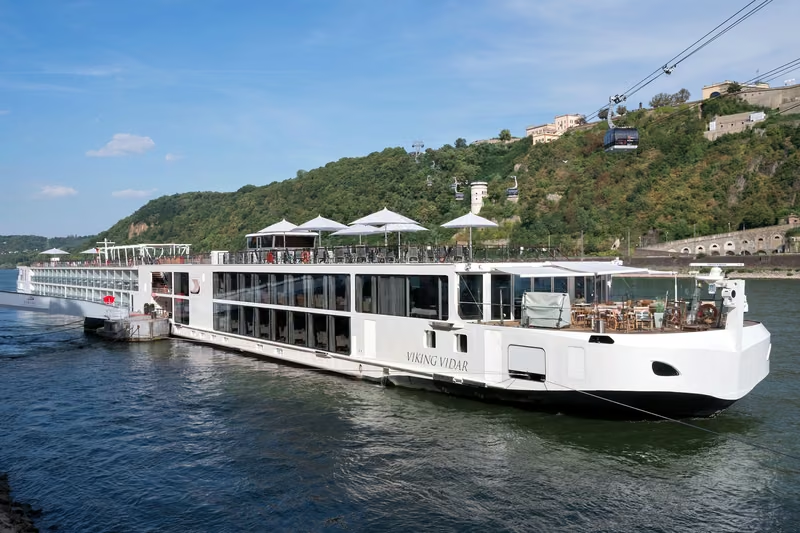
Koblenz sits where the Moselle joins the Rhine, marked by the Deutsches Eck and its huge equestrian statue. A cable car crosses the river to the Ehrenbreitstein Fortress high on the opposite bank.
Cologne, Germany
Cologne's twin-spired cathedral rises right beside the river and is one of the largest Gothic churches in Europe. The city also has excellent museums, a lively old town and its own beer, Kölsch.
Amsterdam, The Netherlands
Most Rhine cruises begin or end in Amsterdam, where the 17th-century canal ring is listed by UNESCO. It is a city to enjoy on foot or by canal boat, with the Rijksmuseum and Van Gogh Museum close at hand.
Food and wine
The Rhine is wine country for much of its length. The Rheingau around Rüdesheim and the steep slopes of the Middle Rhine are best known for Riesling, from bone dry to richly sweet. Across the river in Alsace, wines are labelled by grape variety, with Riesling, Gewürztraminer and Pinot Gris the stars. Rüdesheim is also home to Rüdesheimer coffee, made with flamed Asbach brandy, sugar, coffee and a generous cap of whipped cream.
Alsatian cooking is hearty and very good: choucroute (sauerkraut with sausages and pork), flammekueche (a thin tart topped with cream, onion and bacon) and kugelhopf cake. Cologne has its own beer, Kölsch, served in small straight glasses that keep being refilled until you put your beer mat on top. In the Netherlands, cheese, raw herring and hot bitterballen make good snacks between museums.
When to go
Rhine cruises run from about March to December. Spring brings blossom and fresh green vineyards, and in April the tulip season makes the Dutch end of the journey especially colourful. Summer is warm and busy, with long light evenings for sitting out on deck as you sail through the gorge.
September and October are harvest time, with wine festivals in many Rhine towns and fewer crowds than in summer. From late November the Christmas market cruises begin, with markets in Strasbourg, Cologne, Koblenz and Basel among others. In very dry years the Rhine can run low in late summer, which may mean changes to the itinerary, so it helps to book with someone who can explain what to expect.
The Rhine river cruises we offer
These are the cruises currently on our site that sail this river. We are adding more cruise lines, and each will appear here under its own heading.
Viking River Cruises
About Viking| Cruise | Length | From pp |
|---|---|---|
| Rhine Getaway | 8 days | £1,695 |
| Grand European Tour | 15 days | £3,995 |
| Paris to the Swiss Alps | 12 days | £2,790 |
| Cities of Light | 12 days | £2,790 |
| European Sojourn | 23 days | £7,440 |
| Rhine & Main Explorer | 11 days | £2,495 |
| Castles, Vineyards & Villages | 8 days | £1,795 |
| Lyon, Provence & the Rhineland | 15 days | £4,190 |
| Rhine, Main & Danube Odyssey | 18 days | £4,790 |
| Rhine & Moselle Discovery | 8 days | £2,395 |
| A Tale of Three Rivers | 8 days | £2,395 |
Lead-in fares per person, checked in October 2026.
Rhine Getaway
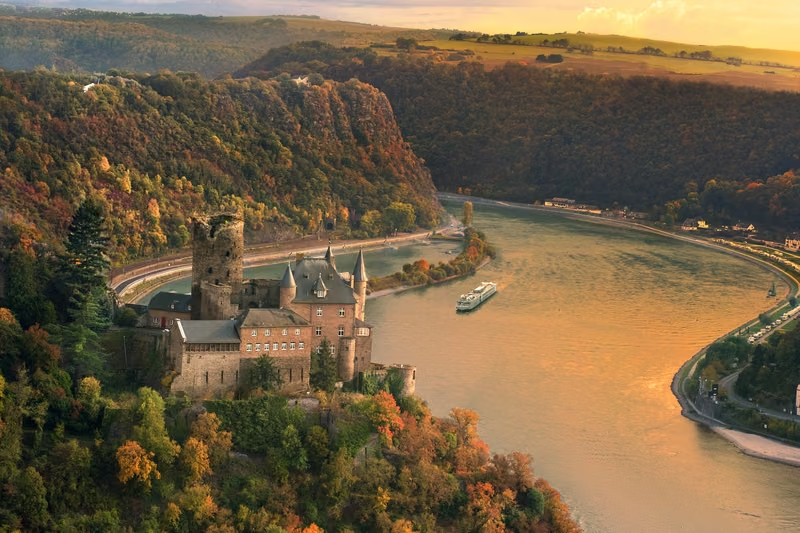
Eight days down the Rhine from the Swiss border to the canals of Amsterdam, with Alsace, the castle country of the Middle Rhine and Cologne along the way.
Grand European Tour
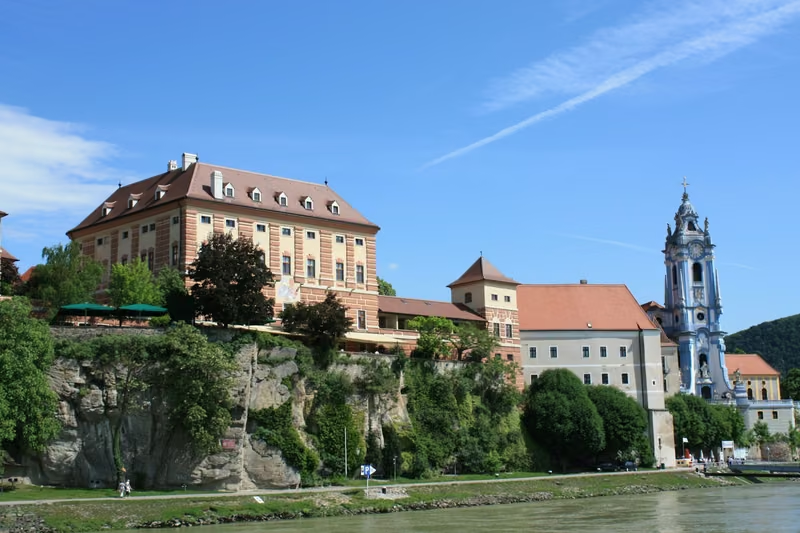
Fifteen days across the continent by water, from the bridges of Budapest to the canals of Amsterdam, linking the Danube, the Main and the Rhine.
Paris to the Swiss Alps
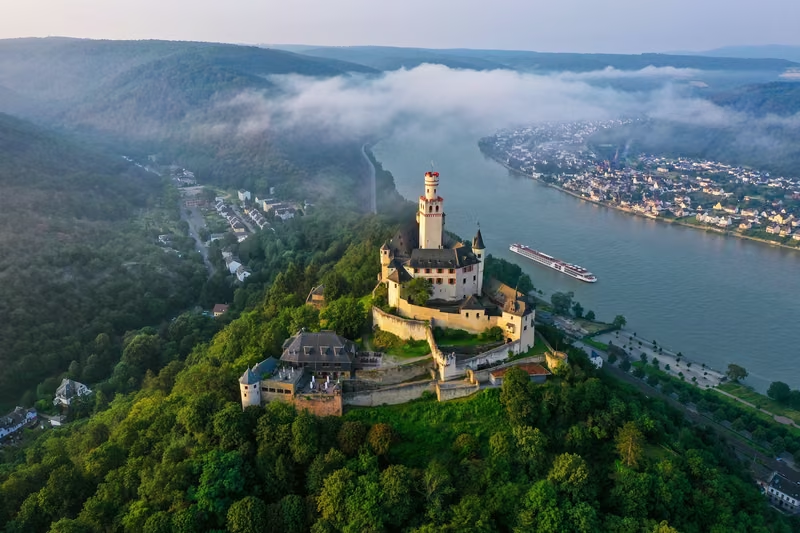
Start with two days in Paris, cruise the Moselle and Rhine through vineyards and castle country, and finish beside the lake in Zürich.
Cities of Light
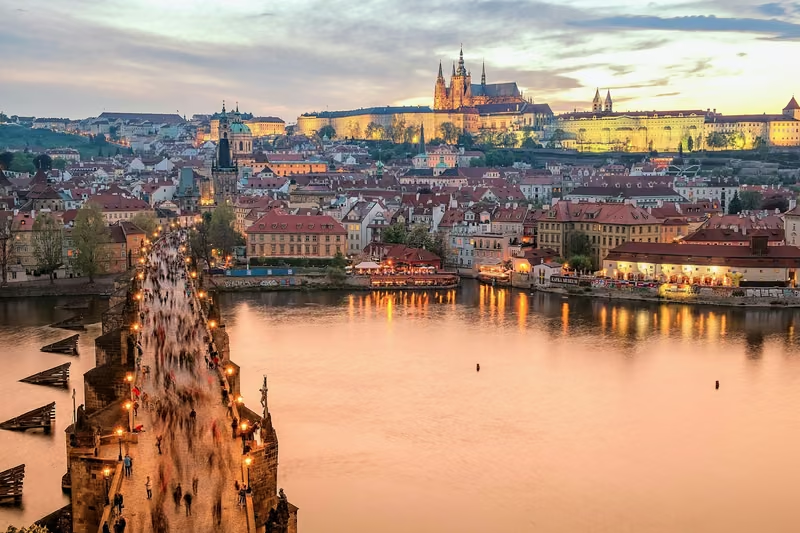
Twelve days from Paris to Prague, following the Moselle, Rhine and Main through Roman Trier, wine country and the old towns of Franconia.
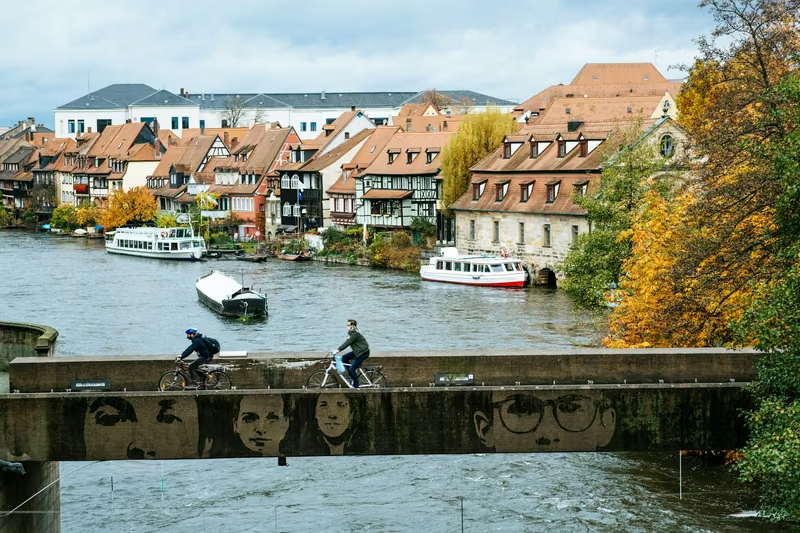
European Sojourn
Twenty-three days and three rivers, from the canals of Amsterdam to the boulevards of Bucharest, crossing eight countries without changing your style of travel.
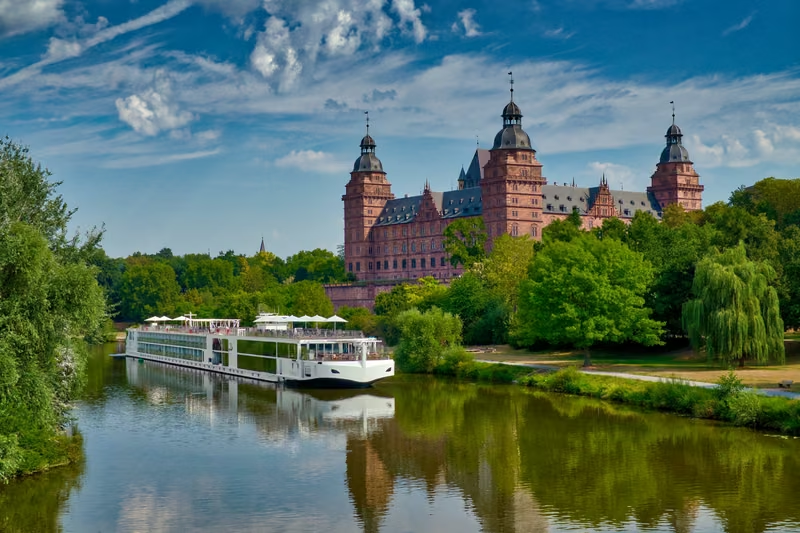
Rhine & Main Explorer
Eleven days from Nuremberg to Basel, through the wine towns of Franconia and down the Rhine to Alsace and the Swiss border.
The Rhine river cruises: questions answered
The classic Rhine cruise between Basel and Amsterdam takes about eight days and calls at around six or seven towns in Switzerland, France, Germany and the Netherlands. Shorter cruises are available on parts of the river, and longer itineraries of 12 to 15 days combine the Rhine with the Moselle, the Main, the Seine or the Rhône, often with a hotel stay in Paris or another city.
The Rhine Gorge, also called the Middle Rhine, between Rüdesheim and Koblenz is the most scenic stretch by far. In about 65 km you pass dozens of castles, terraced vineyards, small wine towns and the famous Lorelei rock. Cruise ships sail it in daylight, so you can enjoy the view from the sun deck. The whole valley is a UNESCO World Heritage Site.
April to June and September to October are lovely times to go, with pleasant weather and fewer crowds than midsummer. April is tulip season at the Dutch end of the river, and autumn brings the wine harvest and village wine festivals. Late November and December are for the Christmas markets, when towns such as Cologne and Strasbourg are at their most festive.
The Rhine is one of the gentler rivers for walking, with ships usually moored close to town centres and plenty of level ground. Some old towns have cobbles, and a few sights involve hills or steps, such as the Marksburg. Ships vary in their facilities, so please tell us about any needs and we will help you choose the right cruise and ship.
A typical cruise from Basel to Amsterdam visits Switzerland, France, Germany and the Netherlands. Germany takes up most of the journey, with stops in towns such as Speyer, Mainz, Rüdesheim, Koblenz and Cologne. France is represented by Strasbourg and the Alsace region, while the Netherlands usually brings Kinderdijk and Amsterdam.
The euro is used in Germany, France and the Netherlands, so you will only need one currency for most of the trip. Switzerland uses the Swiss franc, although euros and cards are widely accepted in Basel. Cards are accepted almost everywhere, but a few euros in coins are useful for small purchases, cafés and public toilets.
In very dry summers, especially from late July to October, the Rhine can run low in places. Cruise lines then have several options, including changing the order of ports, swapping passengers between ships or using coaches for part of the route. It does not happen every year, but good travel insurance is always wise. We can explain each cruise line's approach before you book.