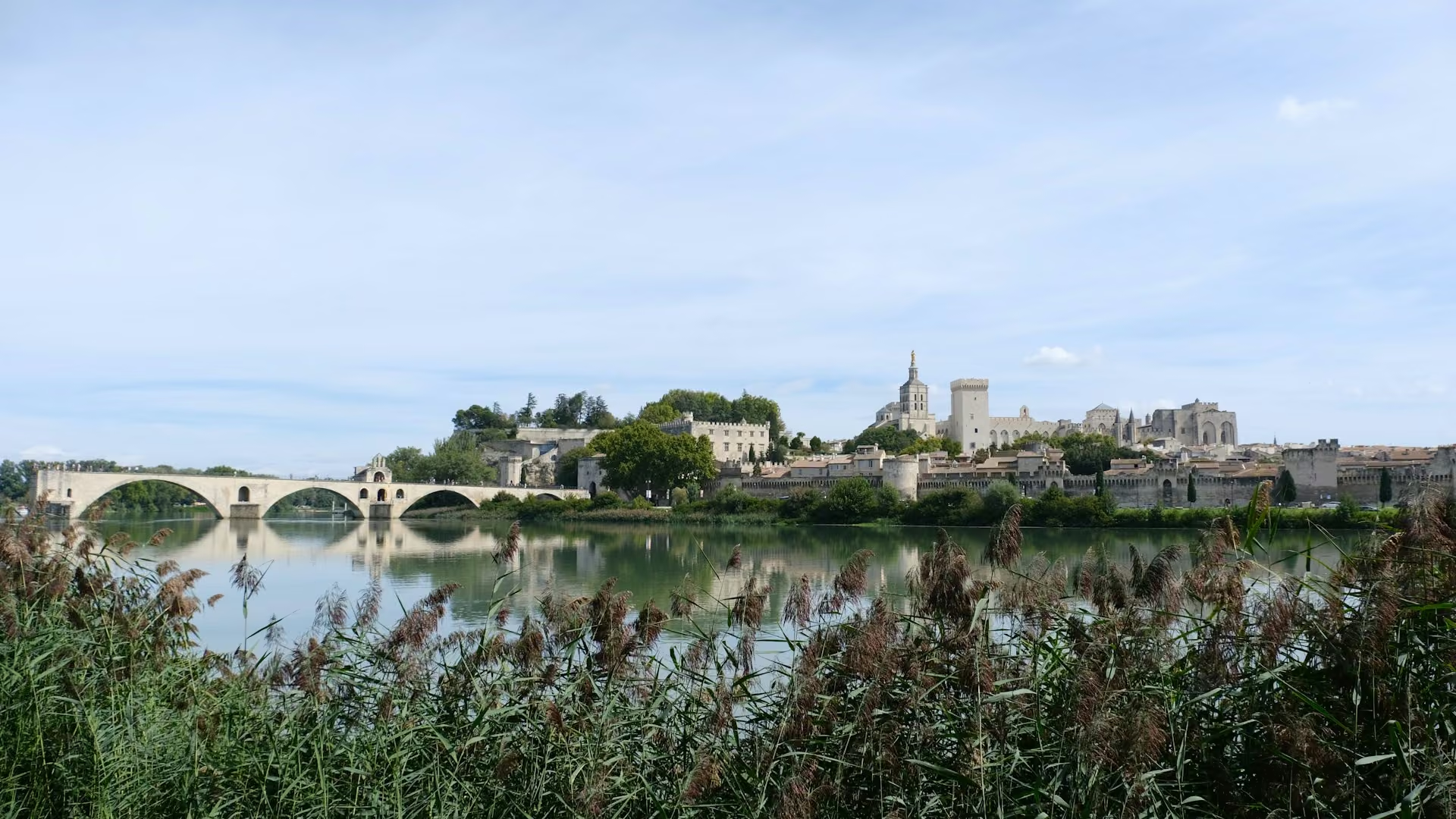
Few rivers offer such a satisfying change of scene in a single week. You begin in the gastronomic capital of France and end among olive groves, lavender and the Roman stones of Provence.
Cruising the Rhône and Saône
The Rhône rises in the Rhône Glacier in the Swiss Alps, flows through Lake Geneva and then heads south through France for the Mediterranean, a journey of about 813 km. At Lyon it is joined by the Saône, which flows about 473 km south from the Vosges through Burgundy. River cruises sail the stretch from Burgundy or Lyon down to Avignon and Arles, the gateway to the Camargue, where the Rhône splits into two arms and spreads into a wide delta before reaching the sea.
Lyon is the hinge of the journey. It has been a great city since Roman times, when it was the capital of Gaul, and its historic centre is a UNESCO World Heritage Site. North of Lyon, the Saône runs through the vineyards of the Mâconnais and Beaujolais, past quiet towns such as Mâcon and Chalon-sur-Saône. South of Lyon, the Rhône valley narrows between granite hills planted with Syrah vines before opening out into Provence, where the light turns golden and the cypress trees appear.
History is everywhere on this river. Vienne has a Roman temple still standing in its main square, Arles has an amphitheatre that once held around 20,000 spectators, and the Pont du Gard aqueduct is within easy reach of Avignon. In the 14th century the popes moved from Rome to Avignon and built the vast Palais des Papes, which still dominates the city. Later, Vincent van Gogh found the colours of Provence in Arles and painted some of his finest works there.
The Rhône also suits travellers who love food and wine. Lyon is famous for its cooking, the northern Rhône produces some of France's most prized reds, and Provence brings olive oil, herbs and rosé. Cruises usually last around a week, and many combine with the Seine and Paris for a longer journey through France. Below you will find a short history, highlights, food and wine, timing and the ports most cruises visit, followed by the Rhône cruises we currently offer.
River facts
| Length | Rhône about 813 km, Saône about 473 km |
|---|---|
| Source | Rhône: the Rhône Glacier in the Swiss Alps. Saône: Vioménil in the Vosges, France |
| Flows into | The Mediterranean, through the Camargue delta. The Saône joins the Rhône at Lyon |
| Countries | Switzerland and France (river cruises sail the French section) |
| Cruising season | March to December |
| Typical cruise | 8 to 15 days |
A short history of the Rhône and Saône
Greek traders from Marseille were the first to push up the Rhône, but it was the Romans who made the valley their own. Lugdunum, today's Lyon, was founded in 43 BC and became the capital of the Three Gauls, and the emperor Claudius was born there in 10 BC. The Romans built theatres, temples and aqueducts all along the river, and many of them survive. Arles, Orange and Vienne still have some of the finest Roman monuments outside Italy.
In 1309 Pope Clement V settled in Avignon, and for most of the 14th century the city was the seat of the papacy. The popes built the Palais des Papes, one of the largest Gothic palaces in Europe, and the town grew rich on the business of the church. The famous half-bridge, the Pont Saint-Bénezet, dates from the same era of prosperity. Along the Saône, the great abbeys of Burgundy, among them Cluny near Mâcon, made the region a centre of medieval religious life.
Lyon became a city of silk in the Renaissance, and its weavers worked in tall buildings linked by covered passageways called traboules, many of which you can still walk through. In 1895 the Lumière brothers filmed workers leaving their family factory in Lyon, one of the first films ever made, and the city is often called the birthplace of cinema. In the 20th century the Rhône was tamed by a series of dams and locks, making it reliably navigable from Lyon to the sea.
Highlights along the river
Lyon deserves at least a full day. Vieux Lyon, the old town along the Saône, is a maze of Renaissance courtyards and traboules, and the Basilica of Notre-Dame de Fourvière looks down over the city from its hill. The Presqu'île, between the two rivers, has elegant squares and excellent shops, and the city's bouchons serve hearty Lyonnais food in a cheerful, informal setting.
In Provence, Avignon's Palais des Papes and its medieval walls are the big draw, and the historic centre is listed by UNESCO. Arles has its Roman amphitheatre and theatre, both listed by UNESCO, and the streets where Van Gogh lived and worked in 1888 and 1889. The Pont du Gard, a three-tiered Roman aqueduct over the Gardon river, is one of the most impressive Roman structures anywhere.
Between Lyon and Provence, the Rhône valley has quieter pleasures. Vienne's Temple of Augustus and Livia is one of the best preserved Roman temples in France. Tournon and Tain-l'Hermitage face each other across the river below the famous Hermitage hill, and Viviers is a small, sleepy cathedral town of narrow lanes and old stone houses.
Ports and places to know
Lyon, France
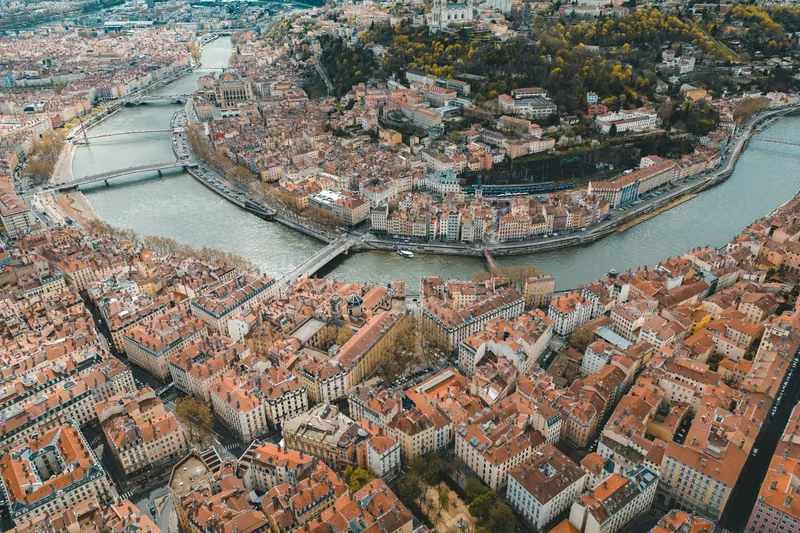
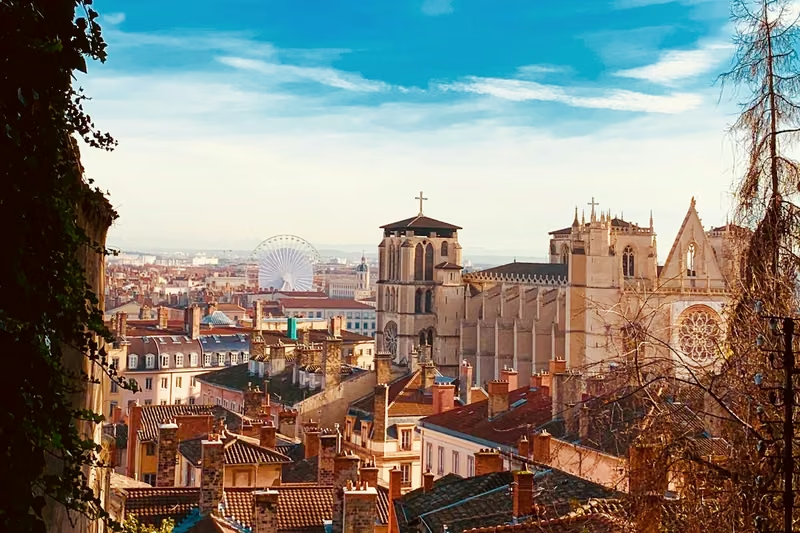
France's third city sits at the meeting of the Rhône and Saône, with a Roman and Renaissance past and a UNESCO-listed historic centre. It is famous for its food, its silk heritage and the hilltop Basilica of Fourvière.
Mâcon, France
Mâcon is a pleasant Burgundian town on the Saône, surrounded by the vineyards of the Mâconnais. It was the birthplace of the poet Alphonse de Lamartine, and the ruins of Cluny Abbey are a short drive away.
Chalon-sur-Saône, France
This Burgundian river town is the birthplace of Nicéphore Niépce, a pioneer of photography, whose work is honoured in a museum here. It is a good base for the wine villages of the Côte Chalonnaise and the Côte de Beaune.
Vienne, France
Vienne was an important Roman town, and its Temple of Augustus and Livia still stands in the middle of the old town. There is also a Roman theatre on the hillside and the Gothic Cathedral of Saint-Maurice.
Tournon and Tain-l'Hermitage, France
These twin towns face each other across the Rhône, linked by footbridges. Tain sits below the famous Hermitage vineyards and is home to the Valrhona chocolate company, while Tournon has a castle above the river.
Viviers, France
Viviers is a small medieval cathedral town on the edge of the Ardèche, with quiet lanes and old stone houses. It makes a peaceful stop between Lyon and Provence.
Avignon, France
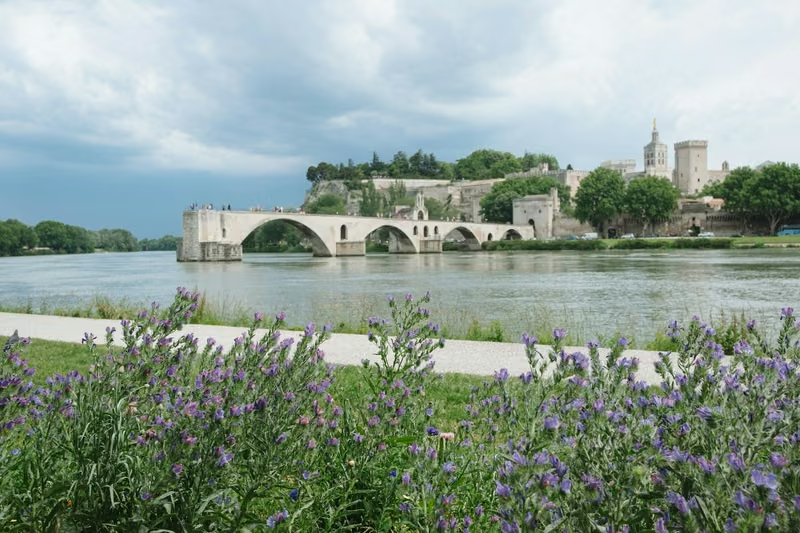
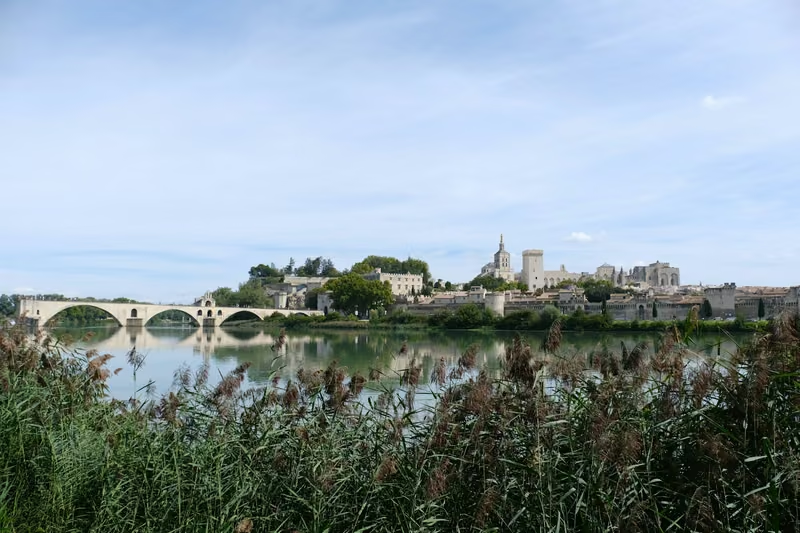
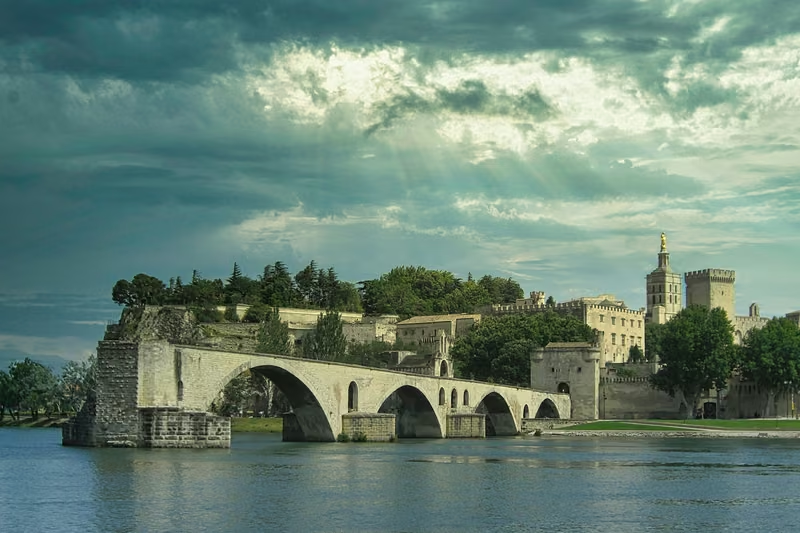
The city of the popes is enclosed by medieval walls and dominated by the Palais des Papes. The famous Pont Saint-Bénezet, which once crossed the whole river, now ends in the middle of the Rhône.
Arles, France
Arles has a Roman amphitheatre and theatre and a string of Romanesque monuments, all listed by UNESCO. Van Gogh lived here in 1888 and 1889, and the town is also the gateway to the Camargue.
Food and wine
Lyon is often called the food capital of France. Its bouchons serve dishes such as quenelles (light dumplings in a creamy sauce), saucisson, and salade lyonnaise topped with a poached egg and bacon. The great chef Paul Bocuse made his name here, and the covered market named after him is a delight. Poultry from nearby Bresse is considered the finest in France, and Tain-l'Hermitage is home to the chocolate maker Valrhona.
The wine changes as you travel. North of Lyon, the Saône runs through Burgundy's Mâconnais, known for Chardonnay, and Beaujolais, made from the Gamay grape. The northern Rhône produces powerful Syrah reds, such as Hermitage and Côte-Rôtie, and fragrant white Condrieu. Further south, Châteauneuf-du-Pape, named after the popes' summer castle, makes rich reds from a blend of grapes. In Provence, rosé, olive oil, herbs and lavender honey are everywhere.
When to go
Rhône cruises run from around March to December. Spring brings mild weather and fresh green vineyards, and is a lovely time to explore Provence before the heat of summer. In July and August the south can be very hot, so this is a time to plan sightseeing early in the day. Lavender fields are usually in flower from late June to early August.
Autumn is a wonderful time to go, with the grape harvest in September and early October and warm, golden days. In November, the new Beaujolais is released on the third Thursday of the month, and December cruises bring Christmas markets to Lyon. Be aware that the mistral, a strong cold wind from the north, can blow through the Rhône valley at any time of year.
The Rhône and Saône river cruises we offer
These are the cruises currently on our site that sail this river. We are adding more cruise lines, and each will appear here under its own heading.
Viking River Cruises
About Viking| Cruise | Length | From pp |
|---|---|---|
| Lyon & Provence | 8 days | £2,295 |
| France's Finest | 15 days | £4,690 |
| Lyon, Provence & the Rhineland | 15 days | £4,190 |
Lead-in fares per person, checked in October 2026.
Lyon & Provence
Eight days on the Rhône from the papal city of Avignon to Lyon, the capital of French gastronomy, through Roman Provence and terraced wine country.
France's Finest
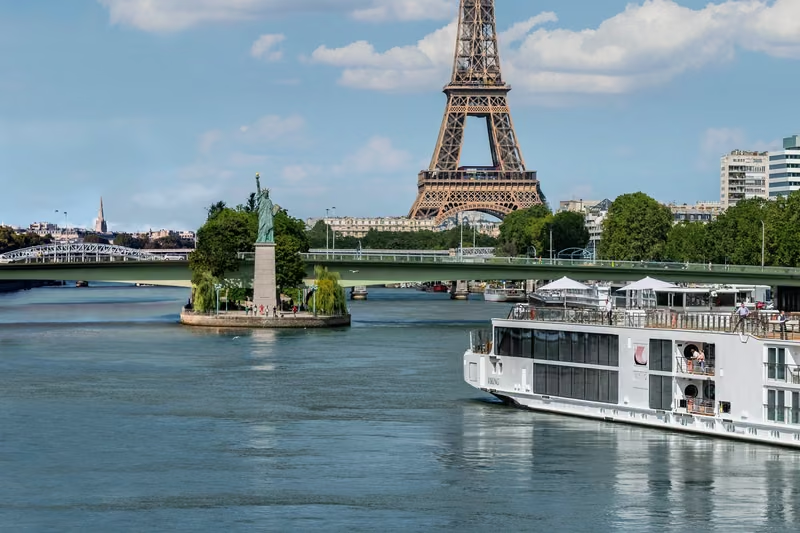
Fifteen days, two rivers and the best of France, from Paris and the Normandy beaches to the vineyards of the Rhône and the Roman towns of Provence.
Lyon, Provence & the Rhineland
Fifteen days from the papal city of Avignon to the canals of Amsterdam, sailing two great wine rivers and crossing four countries on the way.
The Rhône and Saône river cruises: questions answered
The Saône flows south through Burgundy and joins the Rhône at Lyon. The Rhône starts in the Swiss Alps and flows on from Lyon to the Mediterranean. Most cruises focus on the Rhône between Lyon and Provence, with some also sailing north of Lyon on the Saône into Burgundy and the Beaujolais.
Most Rhône cruises last around eight days, sailing between Lyon and Avignon or Arles. Longer itineraries of 12 to 15 days combine the Rhône with the Seine and Paris, or with the Rhine, and often include hotel nights or a high-speed train journey between rivers. Some cruises start or finish in Burgundy on the Saône.
Spring and autumn are ideal, with mild temperatures and fewer crowds. Late June to early August is lavender season in Provence, but summer can be very hot in the south. September and October bring the grape harvest and lovely light. December cruises offer Christmas markets in Lyon and a quieter, more local feel in Provence.
It is one of the best. Lyon is often called the food capital of France, and the river passes through Burgundy, Beaujolais, the northern Rhône and Châteauneuf-du-Pape, some of the most famous wine regions in the world. Provence adds olive oil, herbs and rosé. Expect plenty of chances to taste local food and wine along the way.
The Pont du Gard is about 25 km from Avignon, and it is a popular trip from the river, though not every itinerary includes it. This three-tiered Roman aqueduct is a UNESCO World Heritage Site and one of the most impressive Roman structures in Europe. Ask us which cruises include it or offer it as an optional excursion.
The mistral is a strong, cold north wind that funnels down the Rhône valley towards the Mediterranean. It can blow at any time of year and sometimes lasts several days, clearing the skies and making Provence sparkle. It can feel chilly even in sunshine, so a warm layer is useful, and on rare occasions it can affect sailing.
Yes. Several itineraries combine a Seine cruise from Paris with a Rhône cruise from Lyon, linking the two with a high-speed train journey or a coach transfer. It is a lovely way to see a wide sweep of France, from Normandy and Paris to Burgundy and Provence, in about two weeks.