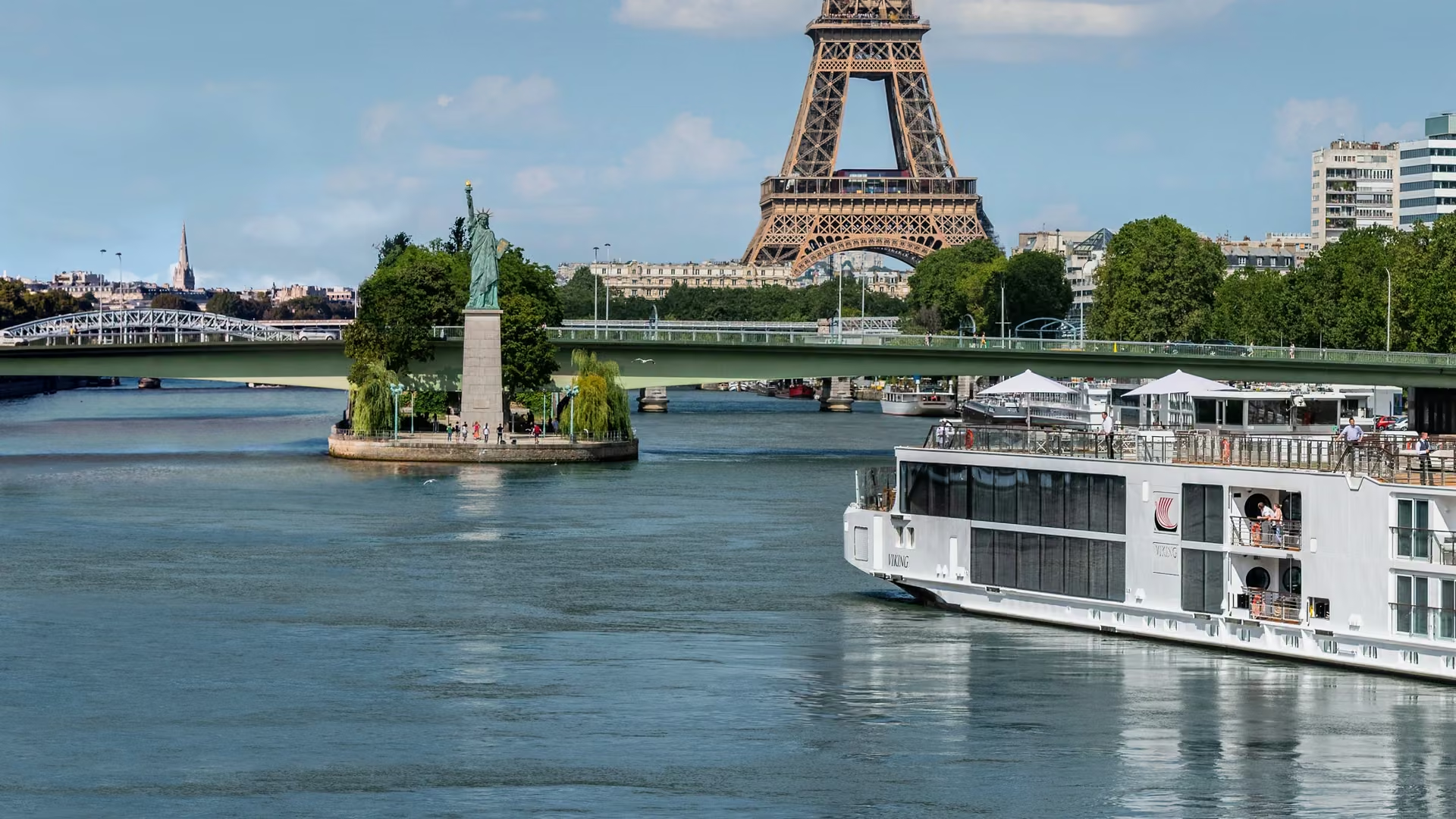
Paris and Prague are two of the most beautiful cities in Europe, and this trip links them by river. In between you sail three very different waterways, from the winding, vine-covered Moselle to the castle-lined Rhine and the quieter Main as it flows through the heart of Franconia.
The route
Paris · Reims · Trier · Bernkastel · Cochem · Koblenz · Middle Rhine · Heidelberg · Würzburg · Main River · Bamberg · Nuremberg · Prague
About the Cities of Light cruise
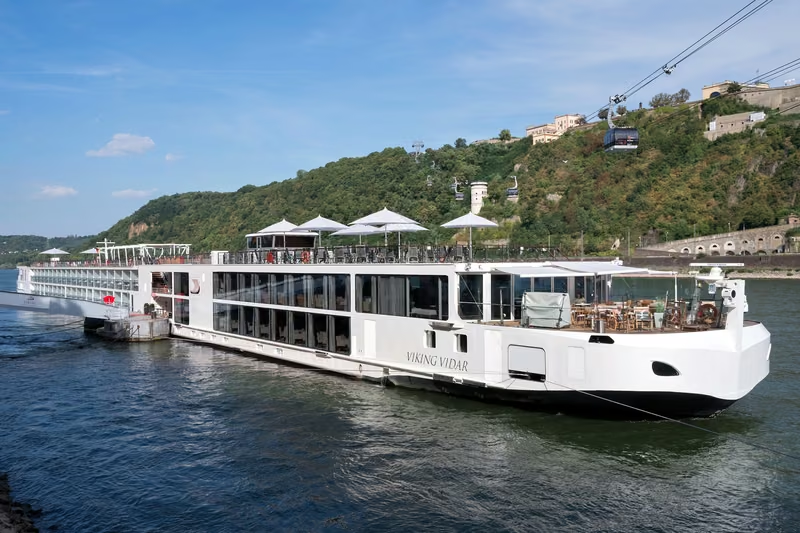
Cities of Light opens with two days in Paris before you head east by road, visiting Reims Cathedral and the Luxembourg American Cemetery on the way to Trier. There you board your Viking Longship for the Moselle, a river of tight bends and steep vineyards, where Riesling is king and almost every town has a castle above it. Trier itself, founded by the Romans, is the perfect first port. Allow time to taste the wine.
From Koblenz the ship joins the Rhine and sails through the Middle Rhine Gorge, with its castles, wine villages and the famous Lorelei Rock. Next comes Heidelberg, Germany's oldest university town, with its red sandstone castle ruin above the river. The ship then turns onto the Main, a gentler, greener river that leads into Franconia, the northern part of Bavaria. Heidelberg was much loved by the German Romantic poets, and Mark Twain wrote about its students in A Tramp Abroad.
Franconia is one of the less well known corners of Germany, but its cities are superb. Würzburg has the Residenz, one of the grandest baroque palaces in Europe. Bamberg is a medieval town of bridges and hills, known for its smoky rauchbier, and Nuremberg combines a handsome old town with some of the most important sites of 20th-century history. Nuremberg was also the city chosen by the Nazis for their rallies, and the place where their leaders were tried after the war, so expect a thought-provoking visit.
The journey finishes in Prague, the Czech capital, with time to explore its castle district, the Charles Bridge and the Old Town. Viking also includes Privileged Access to the Lobkowicz Palace, a privately owned palace inside the Prague Castle complex. Along the way you can taste French, German and Czech food and wine, and see how the history of all three countries is tied together. It is a long and varied holiday, but the pace on board is easy.
For more on the river itself, see our The Main and Moselle river cruise guide, The Rhine river cruise guide.
Cruise highlights
Paris to Prague
Two of Europe's great capitals bookend the trip, with time to explore each before and after the cruise.
Moselle Riesling
Taste the light, crisp wines of the Moselle in Bernkastel, one of the river's prettiest wine towns.
Heidelberg Castle
Walk through Germany's oldest university town and see its great red sandstone castle ruin above the Neckar.
Würzburg Residenz
Visit the Prince-Bishops' baroque palace, a UNESCO World Heritage Site with a staircase ceiling painted by Tiepolo.
Bamberg's smoked beer
Wander one of Germany's best preserved medieval towns and try rauchbier, the local beer brewed with smoked malt.
Privileged Access in Prague
Viking's Privileged Access takes you into the Lobkowicz Palace, whose collection includes Beethoven manuscripts and paintings by Canaletto and Bruegel.
Watch the Cities of Light cruise
Video: Cities of Light (Viking Cruises)
Day by day itinerary
Bonjour Paris
Your journey begins in Paris. After arriving and settling in, you have the rest of the day to explore. If it is your first visit, head for the big sights, the Eiffel Tower, the Arc de Triomphe at the top of the Champs-Élysées, or the Louvre with its vast collection of art. If you know the city already, perhaps revisit a favourite museum or take a stroll along the banks of the Seine. Either way, finish with a relaxed dinner and an early night ready for tomorrow.
Life in the French capital
Today is all about enjoying Paris at a gentle pace. Start the morning the Parisian way, with a coffee at a café, and then take to the streets. The flower stalls and bookstalls along the river, the gardens of the Tuileries and Luxembourg, and the quiet squares of the Marais are all lovely on foot. In the evening, join locals for an aperitif at a neighbourhood bar. It is a good way to soak up the atmosphere before you leave France tomorrow.
From Champagne to the Moselle
This morning you travel east to Reims, the main city of Champagne. Its magnificent Gothic cathedral is where most French kings were crowned, and its carved façade is one of the finest in France. Continue into Luxembourg to the American Cemetery at Hamm, where more than 5,000 American servicemen lie, among them General George S. Patton. By the afternoon you reach Trier and join your Longship. Before dinner there may be time to see the Porta Nigra, the huge Roman gate, and the early Gothic Liebfrauenkirche.
Roman Trier and the Moselle
Trier was once a capital of the Western Roman Empire, and this morning you learn how much of that city survives. The amphitheatre, which held up to 20,000 spectators, is still remarkably complete, and the remains of the Roman baths hint at the size of the place in its heyday. In the afternoon the ship sails downriver to Bernkastel, with its half-timbered houses, little market square and castle ruin. Take a wander through the lanes and sample some of the wines grown on the slopes around the town.
Castle, wine and mustard
Cochem's skyline is crowned by the Reichsburg, perched on a hill above the river. The castle you see today is largely a 19th-century rebuilding, as the medieval fortress was destroyed by the French in 1689. You can visit the castle and enjoy the view over the Moselle valley, then return to the town for a walk through its old gates and lanes. Cochem has its own mustard, made in a historic mustard mill, and it goes very well with a plate of local sausage.
Through the Rhine Gorge
In Koblenz, the Moselle meets the Rhine at the Deutsches Eck, or German Corner, where a giant statue of Kaiser Wilhelm I looks out over the meeting of the rivers. Explore the old town, then rejoin the ship for an afternoon of scenic sailing through the Middle Rhine, a UNESCO World Heritage Site. Castles and vineyards line both banks, and the little towns below them look much as they did centuries ago. Watch out for the Lorelei Rock, where a legendary siren was said to lure sailors to their doom.
Heidelberg's old town and castle
Heidelberg is one of the most romantic towns in Germany, with its old town squeezed between the River Neckar and wooded hills. Its university, founded in 1386, is the oldest in the country, and students still give the place a lively feel. Walk through the old town to the university buildings and the Old Bridge, then visit the castle above the town. Part palace, part fortress, it was badly damaged in the 17th century and the half-ruined red sandstone walls have drawn writers and painters ever since.
Baroque Würzburg
Würzburg sits among vineyards on the Main and is the gateway to Franconian wine country. Its great attraction is the Residenz, the palace of the Prince-Bishops, built in the 18th century and now a UNESCO World Heritage Site. Inside, the grand staircase is roofed by a vast fresco by the Venetian painter Giovanni Battista Tiepolo, showing the four continents then known to Europeans. Afterwards, look out for the local wine, sold in a flat, round bottle called a Bocksbeutel, and walk across the Old Main Bridge, lined with statues of saints.
Franconian forests and Bamberg
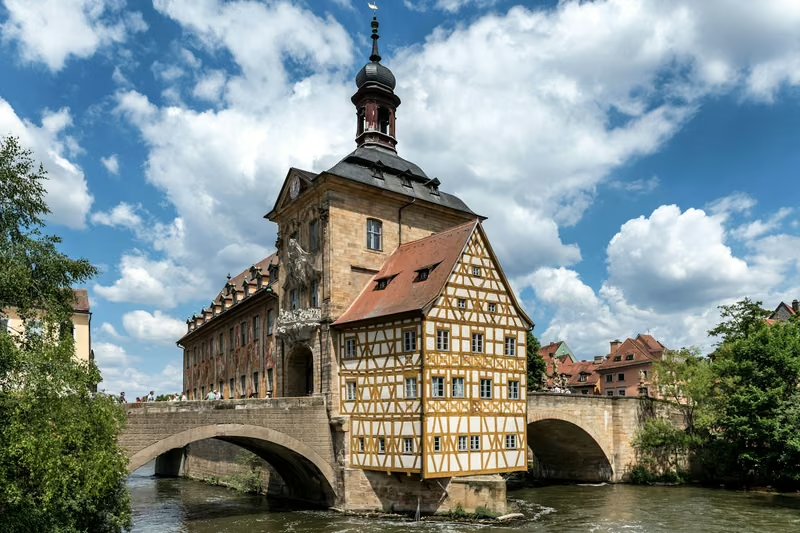
Spend the morning sailing the Main through Franconia, past the wooded hills of the Spessart, small villages and church spires. In the afternoon you reach Bamberg, a beautifully preserved medieval town spread over seven hills, whose old centre is listed by UNESCO. Its most famous sight is the Old Town Hall, built on an island in the middle of the river and covered with painted frescoes. Bamberg is also known for rauchbier, a dark beer brewed with malt dried over a wood fire, which gives it a distinctive smoky taste.
Nuremberg and on to Prague
Nuremberg was one of the great cities of the Holy Roman Empire, and later a centre of Nazi propaganda. Today you see the Palace of Justice, scene of the post-war Nuremberg Trials, as well as the old town and the Market Square with its Gothic Beautiful Fountain. Leaving the ship, you continue by road to Prague. Once there, learn about the city's Jewish history in the old Jewish quarter, explore the Old Town and watch the Astronomical Clock on the Old Town Hall, which has been telling the time since 1410.
The City of a Hundred Spires
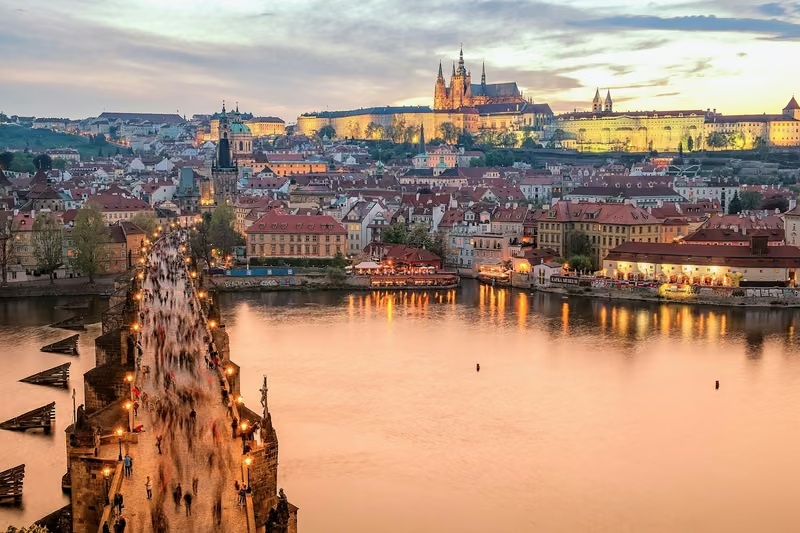
Prague is often called the City of a Hundred Spires, and today you see why. Start at Hradčany, the castle district high above the Vltava, where Prague Castle and St Vitus Cathedral dominate the skyline. Within the castle complex, Viking's Privileged Access takes you into the Lobkowicz Palace, home to an exceptional private collection of art and music. Then walk down through the Lesser Town to the Charles Bridge, built in the 14th century and lined with statues. In the evening, try some traditional Czech food and a glass of Czech beer.
Farewell to Prague
Your holiday comes to an end today. After breakfast, say goodbye to the friends you have made along the way. If you have booked Viking flights, you will be transferred to the airport for your journey home to the UK. If you would like to stay longer, Viking offers optional extensions so you can spend extra days in Prague or travel further. Prague is a city that rewards extra time, so it is worth thinking about. We can help you choose and arrange the right option.
Itineraries and shore excursions are set by Viking and can change, and may vary by departure.
The places you will visit
Franconia: Würzburg and Bamberg
Franconia is the northern part of Bavaria, and for centuries much of it was ruled by powerful prince-bishops. The Würzburg Residenz was built for them between 1720 and 1744, largely to designs by Balthasar Neumann, one of the great architects of the German baroque. Its rooms are full of stucco, gilding and mirrors, but the highlight is the ceiling over the main staircase. Painted by Tiepolo in the early 1750s, it is one of the largest ceiling frescoes in the world, and it survived the bombing of the city in 1945.
Bamberg was spared most of the damage of the Second World War, so its medieval and baroque streets survive almost intact. The town was built across seven hills, like Rome, and has a cathedral that holds the tomb of the Holy Roman Emperor Henry II and his wife Kunigunde. Bamberg is also a brewing town, and rauchbier is its speciality. The best known is made by the Schlenkerla tavern, which has been serving beer in the old town for generations. If you are not a beer drinker, it is still worth trying.
Nuremberg, from emperors to trials
Nuremberg's Imperial Castle, on a sandstone ridge above the old town, was one of the most important residences of the Holy Roman emperors, and the emperors stayed there regularly between the 11th and 16th centuries. The city was also a centre of art and invention in the Renaissance, and the painter Albrecht Dürer was born and worked here. His house, below the castle, is now a museum. Nuremberg's Christmas market, the Christkindlesmarkt, is one of the oldest and best known in Germany.
In the 1930s the Nazi Party chose Nuremberg for its huge annual rallies, and the vast, unfinished rally grounds on the edge of the city are now home to a documentation centre that explains their history. After the war, the Allies held the main trials of Nazi leaders in Courtroom 600 at the Palace of Justice, beginning in November 1945. The trials laid foundations for modern international criminal law, and a memorial and exhibition at the courthouse tell the story.
Prague and the Lobkowicz Palace
Prague grew up around its castle, founded in the ninth century, and much of its beauty comes from the period when Emperor Charles IV made it the capital of the Holy Roman Empire in the 14th century. He founded the university, began St Vitus Cathedral and commissioned the stone bridge that now bears his name. Across the river, the Old Town Square is surrounded by Gothic and baroque buildings, and the Josefov district preserves the synagogues, the Old Jewish Cemetery and the town hall of the former Jewish town.
The Lobkowicz Palace, inside the Prague Castle complex, is the only privately owned building there. It was built in the 16th century and came to the Lobkowicz family by marriage. The palace was confiscated by the Nazis in 1939 and again by the Communists in 1948, and was not returned to the family until 2002. Its collection includes Bruegel's The Hay Harvest, two large views of London by Canaletto and original manuscripts by Beethoven, whose patron was the 7th Prince Lobkowicz.
What is included
Viking prices its river cruises to include most of what you need, so there are few extras to budget for once you are on board.
Return flights
Return flights from London and selected regional airports, with ground transfers included when you fly with Viking.
A shore excursion in every port
One included shore excursion in each port of call, usually a guided walking or coach tour, with optional extras to buy.
All meals on board
Breakfast, lunch and dinner every day you are on board, including al fresco dining on the Aquavit Terrace.
Drinks with lunch and dinner
Beer, wine and soft drinks served with lunch and dinner, plus specialty coffee, tea and bottled water at any hour.
Free Wi-Fi
Wi-Fi is included on board at no extra charge, though speeds can vary as the ship moves along the river.
Port taxes and fees
Port taxes and fees are built into the fare, so there are no extra charges waiting at the end.
Onboard gratuities
Gratuities for the crew on board are included in the fare.
Enrichment and performances
Talks on the history and culture of your route, plus local performers who bring the destinations to life on board.
Your stateroom, the ship and its facilities are covered on our Viking Longships page.
Fares
| Cruise | Duration | From, per person |
|---|---|---|
| Cities of Light, Paris to Prague | 12 days | £2,790 |
Lead-in fare per person, checked in October 2026. Viking's fares change with the date, direction of sailing and stateroom grade, so please email us for live prices and availability on the departure you have in mind.
Interested in the Cities of Light? Email us your preferred month and we will send dates and prices.
Email an enquiry- The season runs from spring to autumn. Late summer and early autumn are good for the wine harvest on the Moselle and Main, while spring brings fresh green vineyards and fewer crowds.
- The trip starts with two days in Paris and ends in Prague, with road journeys from Paris to Trier on day 3 and from Nuremberg to Prague on day 10.
- There is a fair amount of walking on cobbled streets and some hills, particularly in Cochem, Heidelberg and Prague's castle district.
- Because it starts and ends in different cities, it is easy to add extra nights in Paris or Prague at either end.
- It suits travellers who enjoy history and great cities, and who want to see a less familiar side of Germany in Franconia.
Cities of Light: your questions answered
The price includes return flights from London and selected regional airports, one shore excursion in every port, all meals on board, beer, wine and soft drinks with lunch and dinner, 24-hour specialty coffee, tea and bottled water, free Wi-Fi, port taxes and fees, onboard gratuities, and enrichment lectures and performances. Ground transfers are included with Viking flights, and you also get Privileged Access to the Lobkowicz Palace in Prague.
You sail on one of Viking's Longships, the ships used on the Rhine, Main, Moselle and Danube. All staterooms face the river, and the ships have a panoramic lounge and an outdoor Aquavit Terrace at the front, which is a lovely spot during the scenic sailing days.
Prices start from £2,790 per person. This price was checked in October 2026 and changes with the departure date and stateroom category. Email us at enquiries@rivercruiseworld.co.uk and we will send you current fares for the dates you have in mind.
On day 3 you travel by road from Paris, stopping at Reims and the Luxembourg American Cemetery, and join the ship in Trier. At the other end, you leave the ship in Nuremberg on day 10 and continue by road to Prague, where the holiday ends.
Departures run from spring to autumn. May and June are fresh and green, July and August are warmest, and September and October bring the wine harvest and autumn colour on the vineyard slopes. Prague and Paris are busy in high summer, so the shoulder months can be a little calmer.
You should be comfortable walking for an hour or two on cobbled and sometimes hilly streets. Heidelberg Castle, Cochem's Reichsburg and Prague Castle all involve some climbing, although there are usually ways to reduce the walking. Let us know about any mobility needs and we can advise.
Yes. Viking offers optional extensions at the end of the trip, so you can spend more time in Prague or travel further. Many guests also like to arrive in Paris early. Get in touch and we will help you plan it.
You might also like
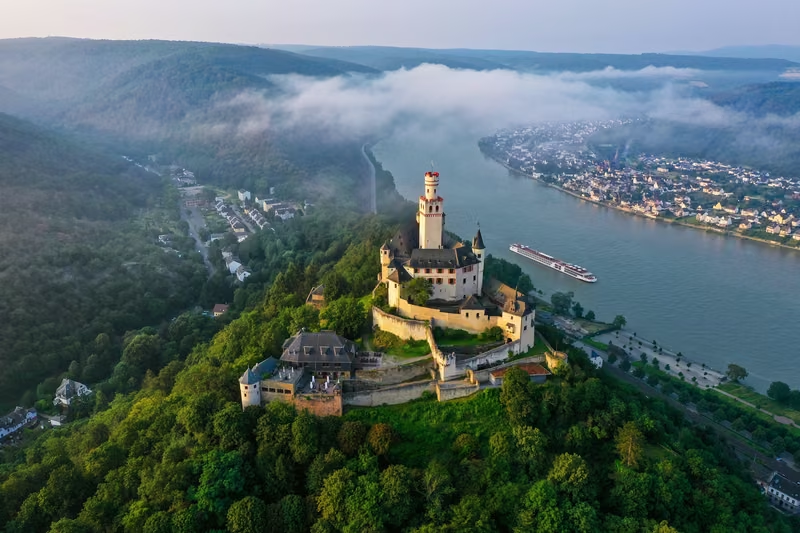
Paris to the Swiss Alps
Start with two days in Paris, cruise the Moselle and Rhine through vineyards and castle country, and finish beside the lake in Zürich.
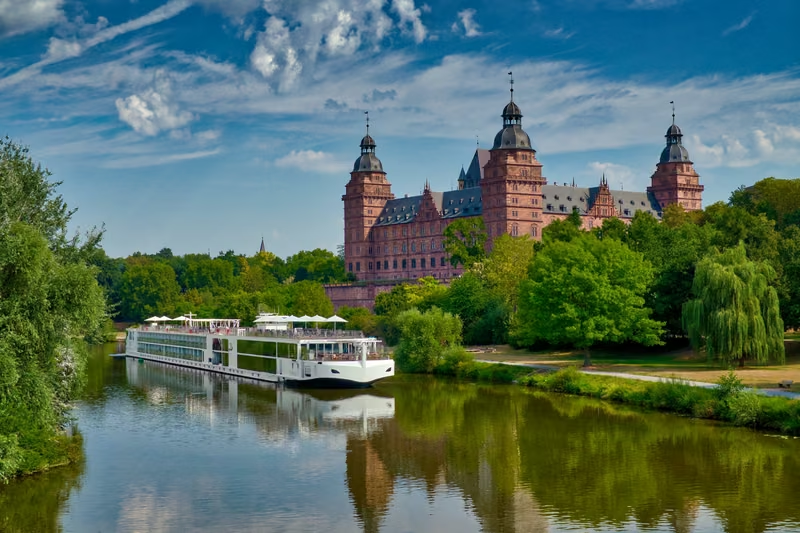
Rhine & Main Explorer
Eleven days from Nuremberg to Basel, through the wine towns of Franconia and down the Rhine to Alsace and the Swiss border.
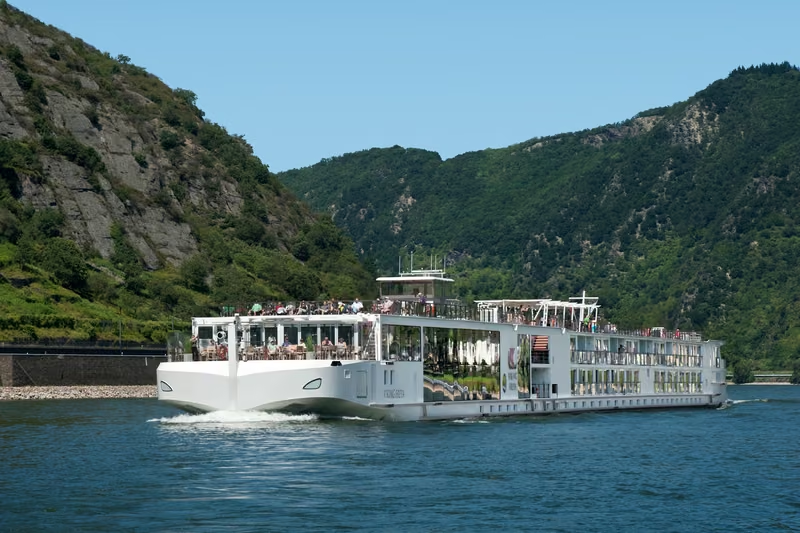
Rhine & Moselle Discovery
Eight days from Roman Trier to Basel, following the winding Moselle to the Rhine and sailing south through the castle country of the Rhine Gorge.