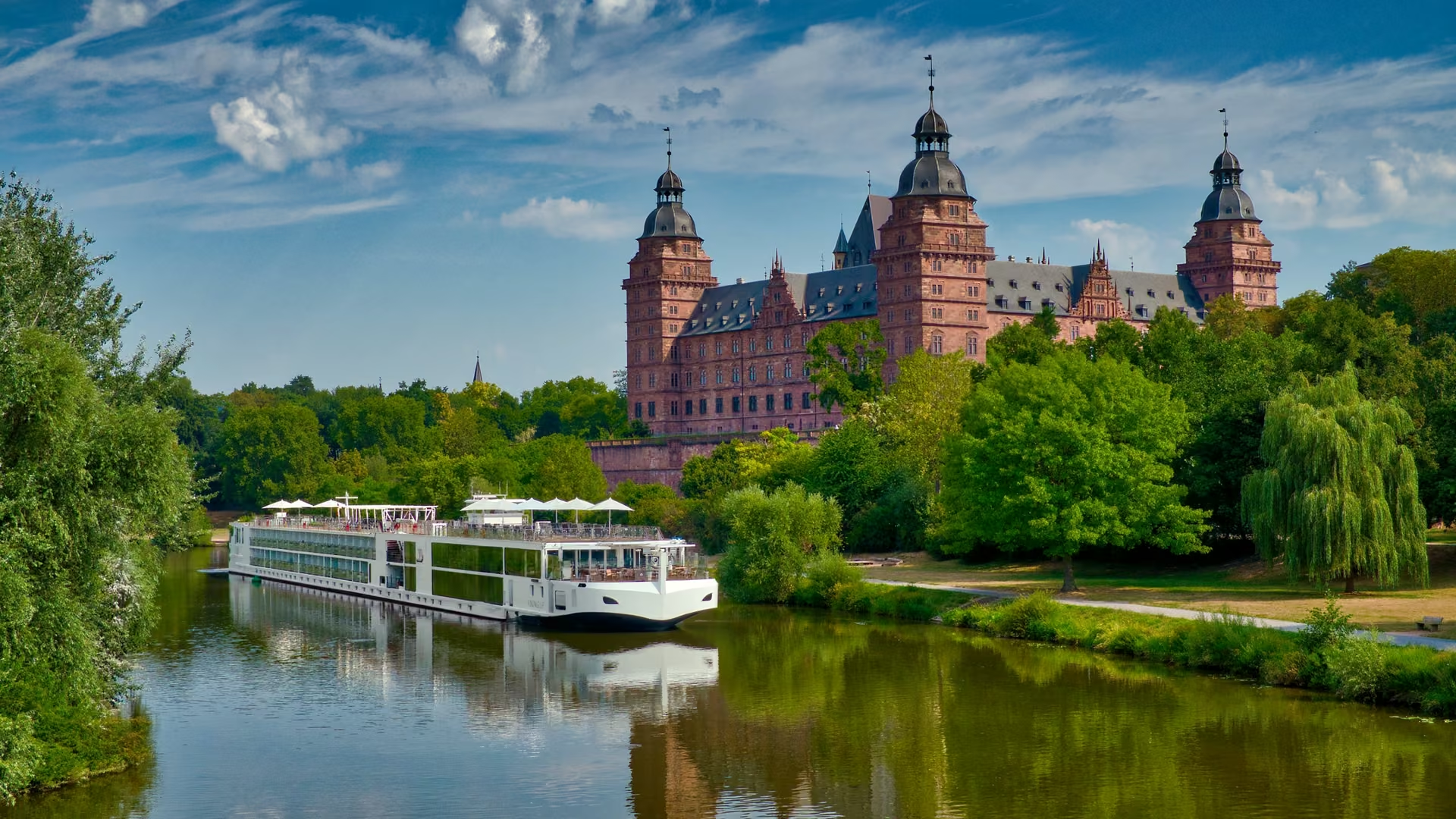
This route takes the road less travelled into the Rhine. Instead of starting in Amsterdam, you begin in Bavaria's historic Nuremberg, follow the Main through Franconia's baroque and half-timbered towns, then join the Rhine for spa town Baden-Baden, Strasbourg and the Black Forest before ending in Basel.
The route
Nuremberg · Bamberg · Würzburg · Marktheidenfeld · Main River, Spessart · Frankfurt · Baden-Baden · Strasbourg · Breisach · Basel
About the Rhine & Main Explorer cruise
Rhine & Main Explorer is an 11-day Viking river cruise from Nuremberg to Basel, crossing southern Germany and touching France and Switzerland. You spend two days in Nuremberg, then visit Bamberg, Würzburg and the small Franconian town of Marktheidenfeld, with a scenic sailing through the wooded Spessart hills. After Frankfurt, the route turns south along the Rhine to Baden-Baden, Strasbourg and Breisach on the edge of the Black Forest, finishing in Basel, where the borders of three countries meet.
What sets this cruise apart is its focus on towns that many Rhine itineraries miss. Bamberg is one of the best preserved old towns in Germany. Würzburg has one of Europe's grandest baroque palaces. Marktheidenfeld offers a taste of everyday Franconian life and food. Then there is Baden-Baden, the elegant spa town that drew European royalty in the 19th century, and Strasbourg, where French and German culture have mixed for centuries. It is a route for people who enjoy good food and wine as much as history and architecture.
You sail on a Viking Longship, where every stateroom has a river view. The fare includes return flights from London and selected regional airports, one shore excursion in every port of call, all meals on board, beer, wine and soft drinks with lunch and dinner, specialty coffee, tea and bottled water around the clock, free Wi-Fi, port taxes and fees, enrichment talks and onboard gratuities. Ground transfers are included when you book Viking's flights.
Prices start from £2,495 per person. We checked this in October 2026, and fares change with the departure date and stateroom. At eleven days it is a comfortable length for a first river cruise, and it works well as a second trip for anyone who has already done the classic Rhine route from Basel to Amsterdam. Viking offers pre-cruise extensions to Prague and to Innsbruck and the Bavarian Alps, and post-cruise stays in Lucerne or a Swiss Alps rail extension.
For more on the river itself, see our The Main and Moselle river cruise guide, The Rhine river cruise guide.
Cruise highlights
Two days in Nuremberg
Medieval walls and the Imperial Castle, the Market Square and the Palace of Justice, scene of the post-war trials.
Bamberg and its smoked beer
A UNESCO-listed old town with a town hall built on an island in the river, and a beer with a taste all its own.
Würzburg's Residenz
The prince-bishops' baroque palace, with Tiepolo's enormous fresco above the staircase, plus Franconian wine.
Franconia and the Spessart
Regional cooking in Marktheidenfeld and a peaceful sailing through the forested Spessart hills.
Baden-Baden's spa elegance
The Kurhaus and the thermal waters that made this little town one of the great resorts of 19th-century Europe.
Strasbourg, the Black Forest and Basel
Strasbourg's cathedral and Alsatian food, the Black Forest scenery around Breisach, then Basel where three countries meet.
Day by day itinerary
Welcome to Nuremberg
Your cruise begins in Nuremberg, the second city of Bavaria and once one of the most important cities of the Holy Roman Empire. Its old town is still ringed by medieval walls and watched over by the Imperial Castle on its sandstone ridge. Today you see the Market Square, home of the Gothic Beautiful Fountain and, in December, one of Germany's best known Christmas markets. You also see the Palace of Justice, where leading Nazis were tried by the Allies in 1945 and 1946. Courtroom 600, where the trials took place, now forms part of a memorial and museum that explains their lasting importance for international law.
Nuremberg through the ages
A second day lets you look more closely at Nuremberg's long and complicated history. In the Middle Ages, it was a wealthy trading city and a centre of craft and invention, and the painter Albrecht Dürer was born here in 1471. His timber-framed house near the castle is now a museum. The 20th century brought darker chapters, as the Nazis staged their huge party rallies here, and the unfinished Congress Hall on the old rally grounds now houses a documentation centre. The city rebuilt its old town after heavy wartime damage. For lunch, try the small Nuremberg sausages served six or more to a plate, and look out for Lebkuchen, the city's famous spiced gingerbread.
Bamberg and its town hall
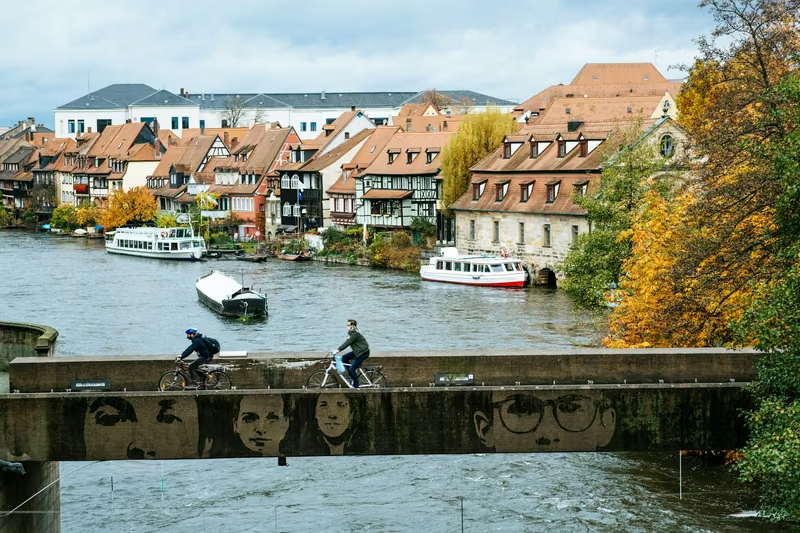
Bamberg came through the Second World War largely unscathed, and its old town, spread over seven hills like Rome, is a UNESCO World Heritage Site. The city's great sight is the Old Town Hall, which sits on an island in the Regnitz. The story goes that the bishop would not give the townspeople any land for it, so they built it in the river instead. Its walls are covered in painted frescoes. Bamberg is also known for rauchbier, a smoked beer brewed from malt dried over beech wood fires. The taste is unusual and often compared to smoked ham, and it is worth trying at least once in one of the old taverns.
Würzburg and the Bishops' Residenz
Würzburg was ruled for centuries by prince-bishops, and in the 18th century they built themselves the Residenz, one of the finest baroque palaces in Europe and a UNESCO World Heritage Site. Balthasar Neumann was its main architect, and his staircase is covered by a vast ceiling fresco by the Venetian painter Giovanni Battista Tiepolo, showing the four continents then known to Europe. Remarkably, the vault survived the bombing of 1945. Würzburg is the capital of Franconian wine, mostly dry Silvaner sold in the flat, round Bocksbeutel bottle. On a fine evening, locals gather on the Old Main Bridge with a glass in hand, which is a good tradition to follow.
Franconian flavours and the Spessart
Marktheidenfeld is a small, friendly town on the Main in Lower Franconia, well away from the big tourist routes. Today you get a taste of regional life and the hearty cooking of the area, such as roast pork with dumplings, sausages, local cheeses and a glass of Franconian wine or beer. Then the ship sails through the Spessart, a large forested upland that the Main loops around on its way to Frankfurt. It is a quiet stretch of river, perfect for time on deck. The Spessart is rich in folk tales, and the nearby town of Lohr am Main even claims to be the real home of Snow White.
Old and new Frankfurt
Frankfurt is best known today as a financial centre, home to the European Central Bank and a skyline of towers that has earned it the nickname Mainhattan. But it has a long history too. Holy Roman Emperors were elected here, and from 1562 crowned in St Bartholomew's Cathedral. Today you can walk the riverside path along the Main or explore the historic old town around the Römer, the city hall, where the area between the cathedral and the Römer has been carefully rebuilt. The writer Goethe was born in Frankfurt in 1749, and his family home is open to visitors. In the Sachsenhausen district, try the local apple wine and green sauce.
The spa town of Baden-Baden
Baden-Baden lies at the edge of the Black Forest, and its hot springs have drawn visitors since Roman times. In the 19th century it became one of the most fashionable resorts in Europe, frequented by royalty, aristocrats and writers. Its centrepiece is the Kurhaus, a neoclassical building from the 1820s that houses the famous casino, where Dostoevsky lost heavily at roulette. The Friedrichsbad, opened in 1877, combines Roman and Irish bathing traditions, while the modern Caracalla Spa is more relaxed. Since 2021 Baden-Baden has been part of the Great Spa Towns of Europe, a UNESCO World Heritage Site. Brahms spent summers here too.
Strasbourg and Alsace
Strasbourg, the capital of Alsace, has passed between France and Germany several times, and its food, architecture and dialect show both influences. Its cathedral is a Gothic masterpiece of pink sandstone, and from 1647 to 1874 its spire made it the tallest building in the world. Inside, the astronomical clock still draws crowds. The old town island, the Grande Île, is a UNESCO World Heritage Site, and the half-timbered houses of Petite France line the canals. Strasbourg is also home to the European Parliament. Alsatian cooking is a joy, from choucroute garnie and tarte flambée to kougelhopf cake, all best enjoyed with a glass of local Riesling.
Breisach and the Black Forest
Breisach is a small town on the German bank of the Rhine, facing Alsace across the water. Its St Stephen's Minster stands on a hill above the town, and inside you can see a striking Last Judgement fresco by the 15th-century artist Martin Schongauer. Breisach is also a gateway to the Black Forest, a region of rolling green hills, dense woods and farmhouses with deep sloping roofs. It is famous for its cuckoo clocks, smoked ham and Black Forest gateau, made with cherries and kirsch. Nearby, the Kaiserstuhl, an old volcanic hill, is one of the warmest corners of Germany and a fine wine growing area.
Basel, where three countries meet
Basel stands at the bend of the Rhine where Switzerland, France and Germany meet, and it is where the Rhine leaves Switzerland on its way to the North Sea. Its old town climbs from the riverbank to the red sandstone Minster, where the scholar Erasmus is buried. He died in Basel in 1536. The city has one of the oldest public art collections in the world at the Kunstmuseum, and it hosts Art Basel, the international art fair, each summer. Little ferries cross the Rhine using only the current. In summer, locals float down the river in waterproof bags, which shows how relaxed and confident this city is.
Farewell to Basel
Your cruise ends in Basel, and it is time to say goodbye to your fellow guests and the crew before your flight home. If you would like to see more of Switzerland, Viking offers a post-cruise stay in Lucerne, with its lake, covered wooden bridge and mountain views, and a fully guided Swiss Alps extension with a scenic train journey. Basel itself is a fine city for an extra day. Look out for the Basler Läckerli, a spiced honey biscuit that makes an easy gift to take home, and the red facade of the town hall on the Marktplatz.
Itineraries and shore excursions are set by Viking and can change, and may vary by departure.
The places you will visit
Nuremberg, from emperors to the trials
In the Middle Ages, Nuremberg was one of the richest cities north of the Alps, thanks to its trade and its skilled craftsmen. It was a free imperial city, answering only to the emperor, and every newly elected emperor was expected to hold his first imperial diet here. The imperial regalia were kept in the city for centuries. Nuremberg's workshops were famous for metalwork, globes, scientific instruments and early pocket watches. Albrecht Dürer, the great artist of the German Renaissance, was born here, and his self-portraits and prints are still admired around the world.
That proud history made Nuremberg a symbol for the Nazis, who chose it for their party rallies and passed the notorious Nuremberg Laws here in 1935. The city was heavily bombed in the war, and its old town was later rebuilt. In 1945 the Allies chose the Palace of Justice for the trial of leading Nazis, partly because the building had survived and partly for its symbolic value. The trials set principles of international law still used today. The city now faces its past openly, through the Documentation Centre and the Memorium Nuremberg Trials.
Würzburg, Bamberg and the wines of Franconia
Franconia is the northern part of Bavaria, and its people have a strong sense of their own identity, with their own dialect and traditions. For centuries the region was a patchwork of small states, many ruled by churchmen. The prince-bishops of Würzburg and Bamberg built grand palaces and churches, and some, like the Schönborn family, held both titles at once. Their love of baroque architecture left the Residenz in Würzburg and much of the beauty of Bamberg, and they employed the finest artists of the day, from Balthasar Neumann to Tiepolo.
Franconian wine is different from the sweeter Rhine wines many British drinkers remember. It is mostly dry, and the Silvaner grape grows particularly well on the limestone slopes along the Main. The wine comes in the Bocksbeutel, a flat, round bottle protected by law for the region. Beer is just as important. Upper Franconia, around Bamberg, has one of the highest densities of breweries in the world, many of them small family businesses. Bamberg's smoked rauchbier is the most famous, but the local lagers and dark beers are just as good.
Strasbourg, Alsace and the meeting of cultures
Strasbourg has been French and German in turn. It was part of the Holy Roman Empire for centuries, became French in 1681 under Louis XIV, was taken by Germany in 1871, returned to France after the First World War, and was occupied again during the Second. Each period left its mark. The medieval and Renaissance old town sits next to the Neustadt, the grand imperial German quarter built after 1871, which was added to the UNESCO listing in 2017. Johannes Gutenberg worked here in the 1430s and 1440s before printing his famous Bible in Mainz.
France's national anthem has Strasbourg roots too. In 1792 Claude Joseph Rouget de Lisle composed a war song for the Army of the Rhine in the city, and it later became famous as La Marseillaise. After 1945, Strasbourg became a symbol of reconciliation between France and Germany, and it is now home to the Council of Europe and the European Parliament. Alsatian food reflects this mix, with German-style sausages, sauerkraut and beer alongside French cooking, cheese and wine. The region's dry white wines, including Riesling and Gewurztraminer, are among the best in France.
What is included
Viking prices its river cruises to include most of what you need, so there are few extras to budget for once you are on board.
Return flights
Return flights from London and selected regional airports, with ground transfers included when you fly with Viking.
A shore excursion in every port
One included shore excursion in each port of call, usually a guided walking or coach tour, with optional extras to buy.
All meals on board
Breakfast, lunch and dinner every day you are on board, including al fresco dining on the Aquavit Terrace.
Drinks with lunch and dinner
Beer, wine and soft drinks served with lunch and dinner, plus specialty coffee, tea and bottled water at any hour.
Free Wi-Fi
Wi-Fi is included on board at no extra charge, though speeds can vary as the ship moves along the river.
Port taxes and fees
Port taxes and fees are built into the fare, so there are no extra charges waiting at the end.
Onboard gratuities
Gratuities for the crew on board are included in the fare.
Enrichment and performances
Talks on the history and culture of your route, plus local performers who bring the destinations to life on board.
Your stateroom, the ship and its facilities are covered on our Viking Longships page.
Fares
| Cruise | Duration | From, per person |
|---|---|---|
| Rhine & Main Explorer, Nuremberg to Basel | 11 days | £2,495 |
Lead-in fare per person, checked in October 2026. Viking's fares change with the date, direction of sailing and stateroom grade, so please email us for live prices and availability on the departure you have in mind.
Interested in the Rhine & Main Explorer? Email us your preferred month and we will send dates and prices.
Email an enquiry- The season runs from spring to autumn. May, June and September are lovely for walking in the old towns, and late season departures may coincide with grape harvest time in Franconia and Alsace.
- Nuremberg is easy to reach and has plenty to see, while Viking's pre-cruise extensions to Prague or Innsbruck and the Bavarian Alps add another dimension.
- The pace is steady, with a port every day and plenty of walking on cobbled streets. Comfortable shoes are essential, and Würzburg's Residenz has a lot of stairs.
- This is a good choice for food and wine lovers, and for anyone who has already sailed the classic Rhine route and wants to see more of southern Germany.
- Basel is well placed for further travel in Switzerland, and Viking offers post-cruise extensions to Lucerne and the Swiss Alps.
Rhine & Main Explorer: your questions answered
The fare includes return flights from London and selected regional airports, one shore excursion in every port of call, all meals on board, beer, wine and soft drinks with lunch and dinner, 24-hour specialty coffee, tea and bottled water, free Wi-Fi, port taxes and fees, enrichment talks, destination performances and onboard gratuities. Ground transfers are included with Viking Air.
This cruise uses one of Viking's Longships, the ships Viking designed specifically for European rivers. All staterooms have a river view, and many have a veranda or French balcony. The Aquavit Terrace at the bow is a pleasant spot for the Spessart sailing and for watching the Rhine go by.
Prices start from £2,495 per person. We checked this in October 2026, and fares vary with departure date and stateroom category. Email enquiries@rivercruiseworld.co.uk and we will check live availability and prices for the dates that suit you, and help you choose the right stateroom.
Rhine Getaway follows the Rhine from Basel to Amsterdam, including the Middle Rhine castles and the Netherlands. Rhine & Main Explorer starts in Nuremberg and spends more time in Franconia on the Main, then visits Baden-Baden, Strasbourg and Breisach before ending in Basel. It suits travellers who want southern Germany, Alsace and smaller towns rather than the full length of the Rhine.
Spring to autumn is the main season. May and June bring long days and fresh green countryside, and September and October are popular for the wine harvest in Franconia and Alsace. July and August are the warmest months. Spring and autumn are also quieter in the old towns than the height of summer.
You should be happy walking for an hour or two on cobbled streets, sometimes on hills, such as up to the minster in Breisach or around Bamberg. The Würzburg Residenz has a grand staircase. If you have any concerns, contact us before you book and we can look at the details of each day together.
Yes. Before the cruise, Viking offers a fully guided Innsbruck and Bavarian Alps extension, and stays in Prague, either standard or premium. After the cruise, you can spend more time in Switzerland with a Lucerne stay or a fully guided Swiss Alps extension that includes a scenic train journey. Options vary, so ask us for the current list.
You might also like
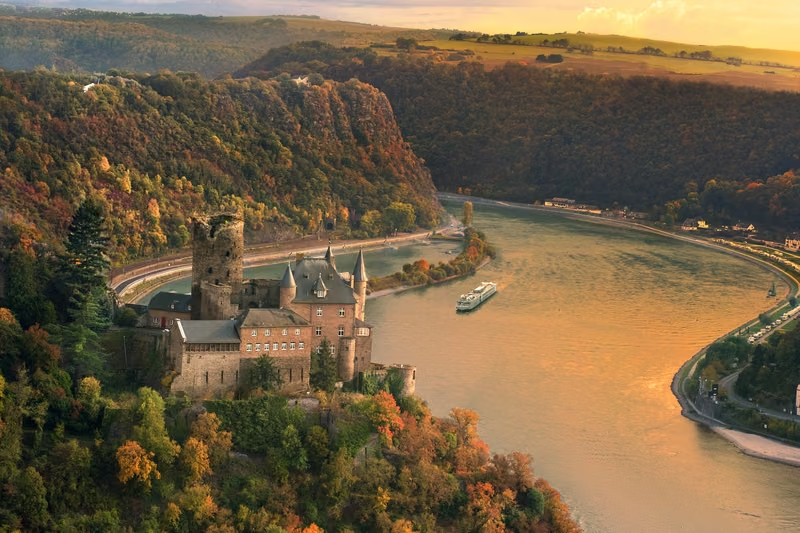
Rhine Getaway
Eight days down the Rhine from the Swiss border to the canals of Amsterdam, with Alsace, the castle country of the Middle Rhine and Cologne along the way.
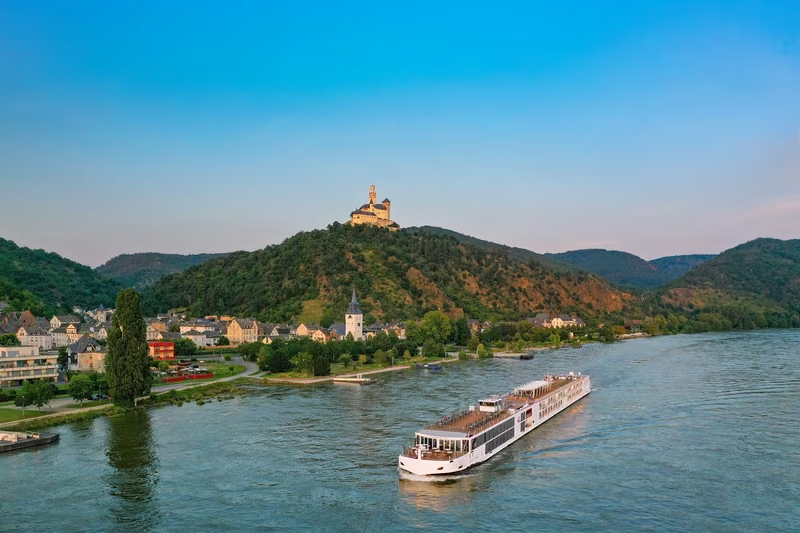 New
Castles, Vineyards & Villages
Eight days from Bavaria to Amsterdam, along the vine-covered Main and through the castle country of the Middle Rhine.
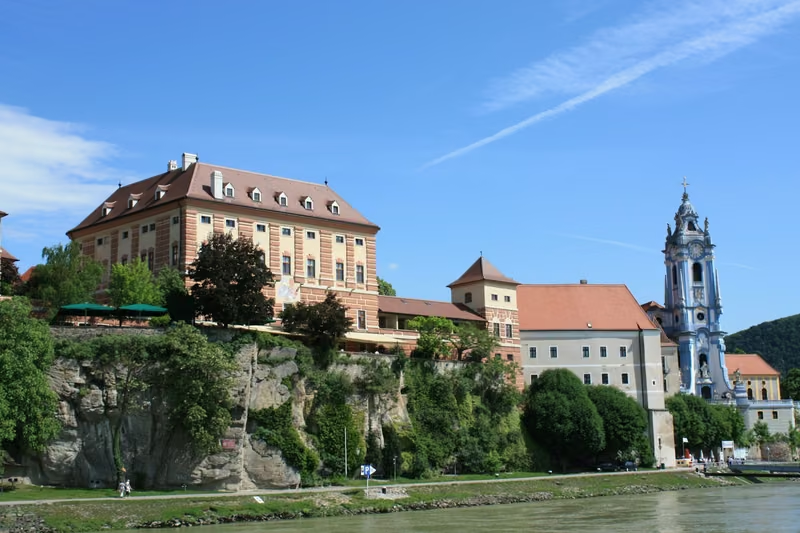 New
Rhine, Main & Danube Odyssey
Eighteen days by river from Budapest to Basel, crossing the heart of Europe on the Danube, the Main and the Rhine.