This is the river journey that crosses Europe from one side to the other. You start on the Danube in Hungary, climb over the continental watershed on the Main-Danube Canal and finish on the Rhine delta in Holland, with old imperial capitals, Franconian wine towns and castle-lined gorges in between.
The route
Budapest · Vienna · Wachau Valley · Melk · Passau · Regensburg · Main-Danube Canal · Nuremberg · Bamberg · Würzburg · Wertheim · Middle Rhine · Koblenz · Cologne · Kinderdijk · Amsterdam
About the Grand European Tour cruise
The Grand European Tour links three great rivers in one unhurried fortnight. From Budapest you sail upstream on the Danube to Vienna, through the vineyards of the Wachau and on to Passau and Regensburg in Bavaria. Then the ship turns into the Main-Danube Canal, rising through its locks over the ridge that divides water flowing to the Black Sea from water flowing to the North Sea. From there you follow the Main through Franconia and join the Rhine for the final run to Amsterdam.
What makes the route special is how much changes along the way. Budapest and Vienna are grand Habsburg-era capitals with coffee houses, concert halls and palaces. Regensburg and Bamberg are medieval cities that came through the Second World War remarkably intact. Nuremberg carries the weight of 20th-century history, while Würzburg shows off one of the finest baroque palaces in Europe. Then come the castles of the Middle Rhine, the spires of Cologne and the windmills of Kinderdijk, with a different landscape on almost every day.
You travel on a Viking Longship carrying 190 guests, and every stateroom has a river view. A guided shore excursion is included in every port, along with all meals on board, beer, wine and soft drinks with lunch and dinner, Wi-Fi, port taxes and onboard gratuities. Return flights from London and selected UK regional airports are included, with transfers when you book Viking's flights. Fares start from £3,995 per person, checked in October 2026, and change with departure date and stateroom.
For more on the river itself, see our The Danube river cruise guide, The Main and Moselle river cruise guide, The Rhine river cruise guide.
Cruise highlights
Two days in Budapest
Time to explore both Buda's hilltop Castle District and the busy boulevards of Pest, with the chance to try one of the city's famous thermal baths.
Vienna at leisure
Two days in the old Habsburg capital for its palaces, museums, music and, of course, its pastries.
Melk Abbey and the Wachau
A scenic sailing through the UNESCO-listed Wachau Valley and a visit to the vast baroque Benedictine abbey at Melk.
Crossing Europe's watershed
The Main-Danube Canal lifts the ship through 16 locks over the divide between the Black Sea and North Sea river systems.
Franconian treasures
Bamberg's island town hall and smoked beer, followed by Würzburg's Residenz, a baroque palace and UNESCO site.
Rhine finale
Hilltop castles on the Middle Rhine, Cologne's Gothic cathedral and the windmills of Kinderdijk before you reach Amsterdam.
Watch the Grand European Tour cruise
Video: Grand European Tour (Viking Cruises)
Day by day itinerary
Arrive in Budapest
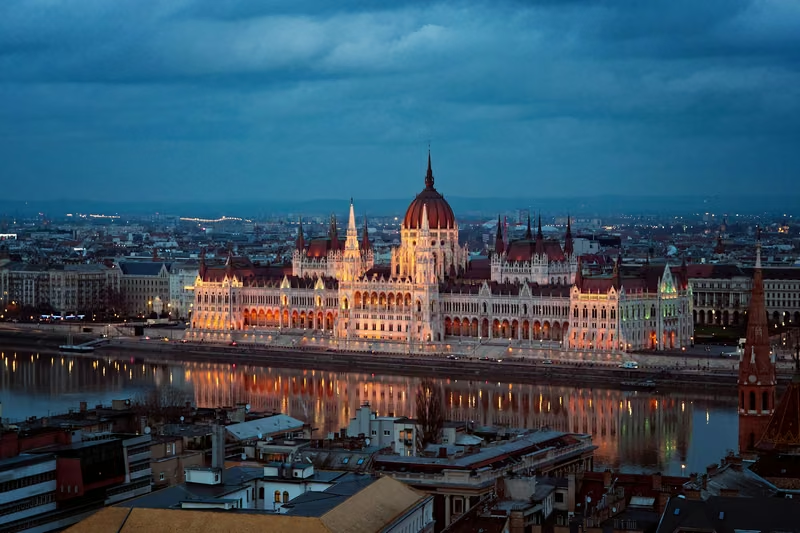
Your journey begins in Budapest, a city split by the Danube into two very different halves. Buda, on the west bank, is hilly and historic, crowned by the Castle District with its royal palace, Matthias Church and the white turrets of the Fisherman's Bastion. Pest, on the flat east bank, is the lively commercial side, with grand 19th-century avenues, cafés and the enormous neo-Gothic Parliament on the riverfront. The two were only formally united as one city in 1873. Settle into your stateroom and, if you can, step out on deck after dark, when the bridges and the Parliament are floodlit.
Bridges, baths and museums
A full day to get to know the city. The Chain Bridge, opened in 1849, was the first permanent crossing between Buda and Pest, designed by the English engineer William Tierney Clark and built under the Scottish engineer Adam Clark. Cross it on foot for some of the best views in town. You might then choose a museum, such as the Hungarian National Gallery in the old royal palace, or do as the locals do and soak in a thermal bath. Budapest sits on dozens of hot springs, and its bathing culture goes back to the Romans and the Ottoman Turks.
Imperial Vienna
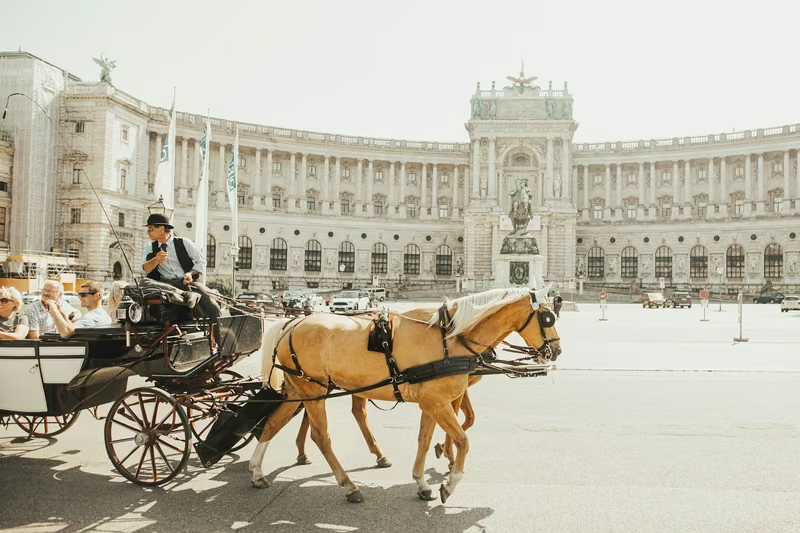
Overnight the ship sails upstream to Vienna, for more than six centuries the seat of the Habsburgs. The city's architecture tells that story, from the Gothic spire of St Stephen's Cathedral to the sprawling Hofburg palace and the grand buildings that line the Ringstrasse, the boulevard laid out after Emperor Franz Joseph ordered the old city walls pulled down in 1857. Music is never far away. Mozart, Haydn, Beethoven, Schubert and the Strauss family all lived and worked here, and Johann Strauss II wrote The Blue Danube waltz in 1867. Today is your introduction to that musical heritage.
A second day in Vienna
With another day in port you can explore Vienna at your own pace. The Kunsthistorisches Museum holds the Habsburgs' extraordinary art collection, including the world's largest group of paintings by Pieter Bruegel the Elder, and the Belvedere is home to Klimt's The Kiss. Or simply settle into one of the city's traditional coffee houses, where a single coffee buys you as long as you like at a marble table with the newspapers. Order a slice of Sachertorte or apple strudel, and you will understand why the Viennese coffee house tradition is recognised as part of Austria's cultural heritage by UNESCO.
Wachau vineyards and Melk Abbey
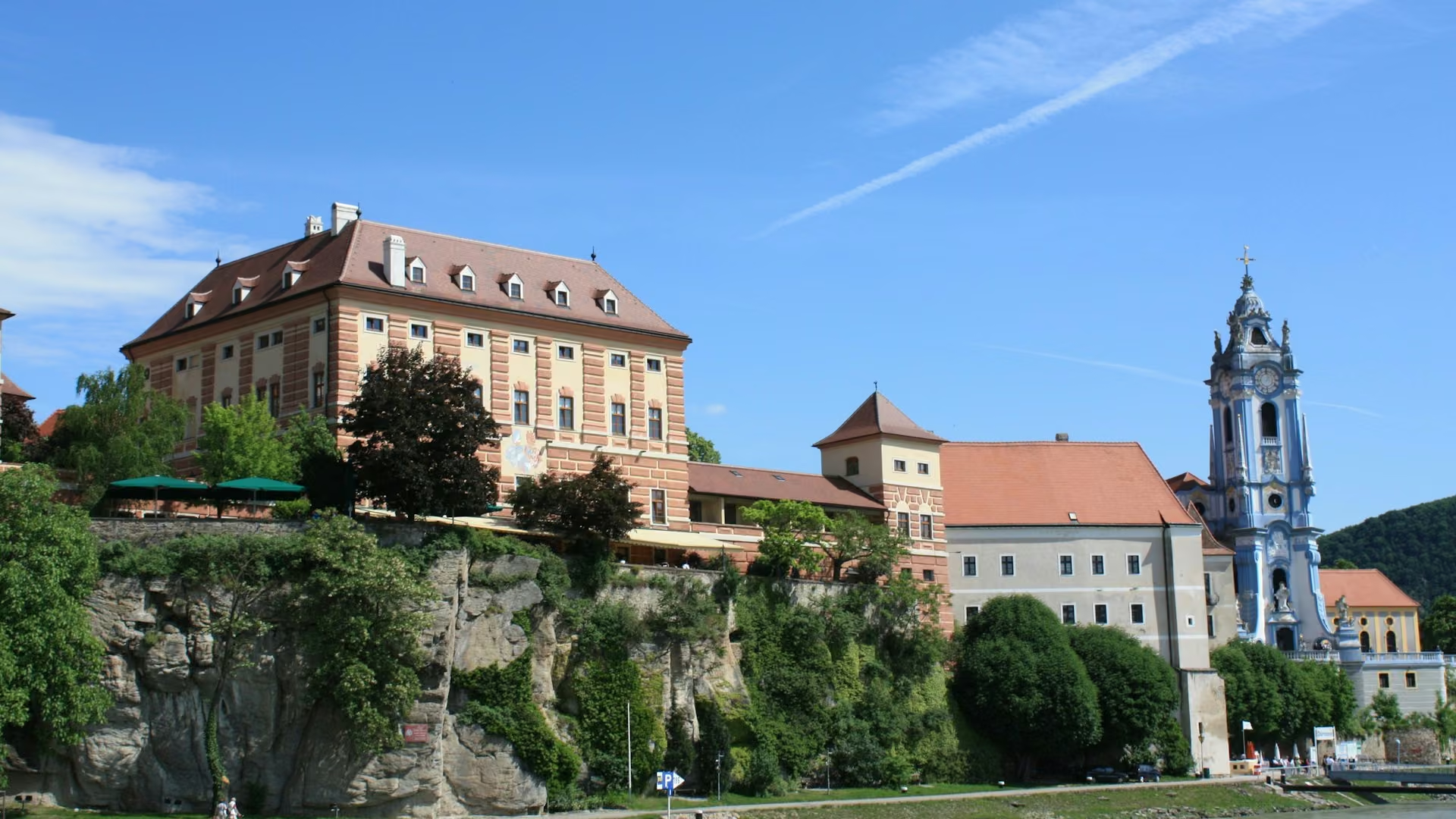
Today's scenic sailing takes you through the Wachau, a stretch of the Danube between Krems and Melk listed by UNESCO in 2000. Terraced vineyards and apricot orchards climb the slopes, and you pass Dürnstein, where Richard the Lionheart was held prisoner in the castle above the town in 1192 and 1193. The Wachau is known for its dry Grüner Veltliner and Riesling. At Melk the ship moors below the great yellow Benedictine abbey, rebuilt in baroque style between 1702 and 1736. Inside you can admire its painted ceilings and the library, with its shelves of medieval manuscripts.
Passau, city of three rivers
You cross into Germany at Passau, where the Danube is joined by the Inn from the south and the smaller Ilz from the north, and on a clear day you can see the different colours of the rivers meeting. After a fire in 1662 destroyed much of the town, it was rebuilt by Italian architects, which is why the old town feels so Italian, with its pastel patrician houses and arcaded lanes. Its highlight is St Stephen's Cathedral, a lavish baroque church of white stucco and frescoes, home to one of the largest church organs in the world.
Medieval Regensburg
Regensburg is one of the best-preserved medieval cities in Germany, and its old town has been a UNESCO World Heritage Site since 2006. The Romans built a fortress here in 179 AD, and later the city became a wealthy trading centre and, from 1663 to 1806, the seat of the Holy Roman Empire's Perpetual Imperial Diet. On a walk you will see the Gothic cathedral of St Peter, tall merchants' towers and the 12th-century Stone Bridge across the Danube. Beside the bridge is the Historic Sausage Kitchen, which has been grilling small pork sausages for centuries, a good place to stop for lunch.
The canal and Nuremberg
Today the ship leaves the Danube at Kelheim and enters the Main-Danube Canal, a 106-mile waterway with 16 locks running to Bamberg. Opened in 1992, it completed the link between the Danube and the Rhine that Charlemagne had attempted with his own canal in 793, this time on a scale large enough for modern river ships. You stop at Nuremberg, a city with a long and complicated story. Its imperial castle and old town recall its importance in the Holy Roman Empire, while the Palace of Justice was the scene of the trials of leading Nazis in 1945 and 1946. Walk the old town and the Market Square, home to the gilded Beautiful Fountain.
Bamberg and its smoked beer
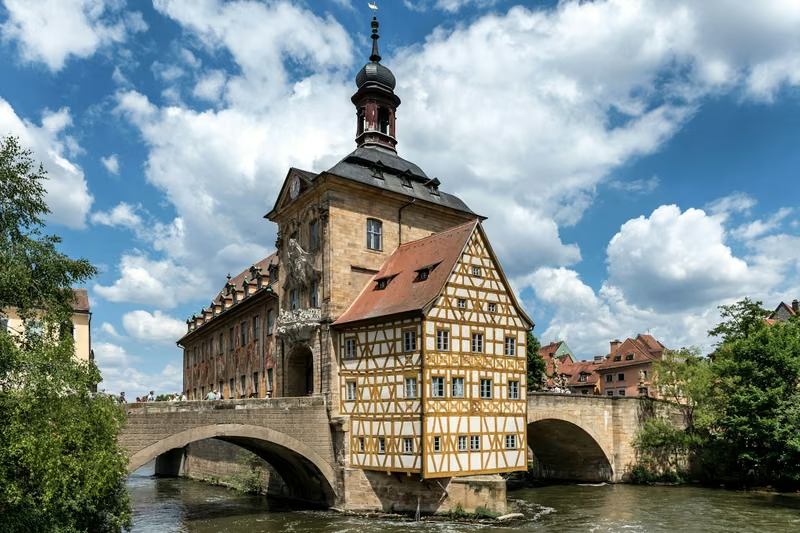
Bamberg is often called the Franconian Rome, as it was built on seven hills, and its whole old town is a UNESCO site. The most famous sight is the Old Town Hall, which sits on a little island in the middle of the Regnitz river, its walls covered in painted frescoes. Legend says the bishop would not give the townspeople land, so they built in the river instead. The cathedral holds the tomb of Emperor Henry II and the only papal tomb in Germany. Before you leave, try Rauchbier, the city's distinctive smoked beer, which tastes rather like bacon.
Würzburg and the Residenz
Würzburg is a handsome university and wine town on the Main, and its great showpiece is the Residenz, the palace of the Prince-Bishops. Built between 1720 and 1744 to designs by Balthasar Neumann, it is one of the finest baroque palaces in Europe and a UNESCO site. Its grand staircase is covered by a vast ceiling fresco painted by Giovanni Battista Tiepolo, showing the four continents then known to Europeans. Würzburg is also the home of Franconian wine, especially Silvaner, sold in its flat, round Bocksbeutel bottle. In 1895 Wilhelm Röntgen discovered X-rays at the university here.
Wertheim and the Spessart
Wertheim stands where the Tauber flows into the Main, a small town of half-timbered houses and crooked lanes beneath the red sandstone ruins of its hilltop castle. It is known for glass. A glass industry grew up here after the Second World War, founded by businessmen from Thuringia, and the town has a dedicated glass museum. Later in the day you sail on along the Main through the Spessart, a range of wooded hills in the Franconia region. It is a peaceful stretch of river, ideal for an afternoon on the sun deck with a book and the passing villages and forests for company.
Castles of the Middle Rhine
Having joined the Rhine at Mainz, today the ship sails one of Europe's most famous stretches of river, the Upper Middle Rhine Valley. This UNESCO-listed gorge is lined with castles, terraced vineyards and small villages. Watch for the Lorelei, the slate cliff where, in legend, a maiden's singing lured boatmen onto the rocks. In the afternoon you reach Koblenz, founded by the Romans at the meeting of the Rhine and the Moselle. Its German Corner, the Deutsches Eck, marks the spot where the two rivers meet, and you explore the historic old town with its squares and churches.
Cologne and its cathedral
Cologne began life as a Roman colony and grew into one of the richest cities of medieval Germany. Its great Gothic cathedral, begun in 1248 and finished in 1880, holds the golden Shrine of the Three Kings and is a UNESCO World Heritage Site. It survived the bombing of the Second World War while much of the city around it was destroyed. Your walk takes you through the old town near the river, where there are plenty of traditional brewhouses. Order a Kölsch, the city's own light beer, served in slim glasses that are replaced as soon as they are empty.
Dutch waterways and windmills
Today the scenery turns Dutch as the ship sails the Waal and the Merwede, two of the channels through which the Rhine reaches the sea. The land is flat and wide, criss-crossed with dykes and farmland, and the skies seem bigger here. Then comes Kinderdijk, where 19 windmills, most built around 1740, stand along the drainage channels of the polders. They were built to keep this low land dry, and the site has been on the UNESCO list since 1997. Some mills are still lived in, and others can be visited to see how the millers lived and worked.
Farewell in Amsterdam
Your Grand European Tour ends in Amsterdam, where you say goodbye to the crew and your fellow guests. If you have booked Viking's flights, a transfer takes you to the airport for your return to the UK. Should you have more time, or have added an extension, the city is well worth it. The 17th-century canal ring is a UNESCO site, and the Rijksmuseum, the Van Gogh Museum and the Anne Frank House are among the best-known sights. A canal boat trip is the easiest way to see the tall, gabled merchants' houses, many of them leaning gently with age.
Itineraries and shore excursions are set by Viking and can change, and may vary by departure.
The places you will visit
Vienna, music and the Habsburgs
For more than six centuries Vienna was the home of the Habsburgs, the dynasty that ruled over much of central Europe until 1918. Their wealth paid for the Hofburg, the sprawling winter palace in the city centre, and Schönbrunn, the summer palace on the edge of the city. In 1857 Emperor Franz Joseph ordered the old walls to be demolished, and in their place came the Ringstrasse, a broad boulevard lined with the State Opera, the Parliament, the City Hall and great museums. A tram ride round the Ring is still one of the best ways to see them.
The court also drew musicians. Haydn spent much of his later life in Vienna, Mozart moved here in 1781 and stayed until his death ten years later, and Beethoven arrived in 1792 and never left. Schubert was born in the city. In the 19th century the Strauss family made the waltz the sound of Vienna, and The Blue Danube, written by Johann Strauss II in 1867, became its unofficial anthem. The city's traditions are still very much alive, from the New Year's Concert to the coffee houses, which UNESCO has recognised as part of Austria's intangible cultural heritage.
Crossing Europe's watershed on the Main-Danube Canal
The idea of joining the Danube to the Rhine is more than twelve centuries old. In 793 Charlemagne set his men to dig a channel, known as the Fossa Carolina, between two tributaries, and traces of it can still be seen in Bavaria. In the 19th century King Ludwig I of Bavaria built the Ludwig Canal, but it was too narrow for modern shipping and fell out of use. The present Main-Danube Canal was finally opened in 1992, creating a continuous waterway from the North Sea to the Black Sea that large modern vessels can use.
Sailing it is a quiet pleasure. The canal runs for 106 miles from Kelheim on the Danube to Bamberg on the Regnitz, close to the Main, and its 16 locks lift ships to a summit of around 406 metres above sea level on the European watershed. On one side, rain flows towards the Black Sea, and on the other towards the North Sea. Some locks raise or lower the ship by around 25 metres, and it is fascinating to watch from the deck as the walls close in and the water pours in or drains away beneath you.
Nuremberg, Bamberg and Würzburg
Franconia, the northern part of Bavaria, packs a great deal of history into a short stretch of river. Nuremberg was one of the most important cities of the Holy Roman Empire, and its imperial castle was a regular residence of the emperors. The painter Albrecht Dürer was born here in 1471, and his house below the castle is now a museum. The city's later history is darker. The Nazis held their mass rallies here, and after the war the Palace of Justice hosted the international trials of leading Nazis. Courtroom 600, where they took place, can still be visited.
Bamberg and Würzburg tell a gentler story of prince-bishops and patrons. Bamberg was largely spared in the Second World War, so its medieval and baroque centre has survived almost whole, and its cathedral holds the famous stone sculpture known as the Bamberg Horseman. In Würzburg, the prince-bishops built the Residenz to rival the palaces of France and Austria, and the Venetian painter Tiepolo decorated its staircase with one of the largest ceiling frescoes ever painted. Both towns are rightly proud of their food and drink, from Bamberg's smoked beer to Würzburg's dry Franconian wines.
What is included
Viking prices its river cruises to include most of what you need, so there are few extras to budget for once you are on board.
Return flights
Return flights from London and selected regional airports, with ground transfers included when you fly with Viking.
A shore excursion in every port
One included shore excursion in each port of call, usually a guided walking or coach tour, with optional extras to buy.
All meals on board
Breakfast, lunch and dinner every day you are on board, including al fresco dining on the Aquavit Terrace.
Drinks with lunch and dinner
Beer, wine and soft drinks served with lunch and dinner, plus specialty coffee, tea and bottled water at any hour.
Free Wi-Fi
Wi-Fi is included on board at no extra charge, though speeds can vary as the ship moves along the river.
Port taxes and fees
Port taxes and fees are built into the fare, so there are no extra charges waiting at the end.
Onboard gratuities
Gratuities for the crew on board are included in the fare.
Enrichment and performances
Talks on the history and culture of your route, plus local performers who bring the destinations to life on board.
Your stateroom, the ship and its facilities are covered on our Viking Longships page.
Fares
| Cruise | Duration | From, per person |
|---|---|---|
| Grand European Tour, Budapest to Amsterdam | 15 days | £3,995 |
Lead-in fare per person, checked in October 2026. Viking's fares change with the date, direction of sailing and stateroom grade, so please email us for live prices and availability on the departure you have in mind.
Interested in the Grand European Tour? Email us your preferred month and we will send dates and prices.
Email an enquiry- Best time to go: April to October. Spring is fresh and green, summer is warm and lively, and autumn brings the grape harvest to the Wachau, Franconia and the Rhine.
- Budapest is a wonderful starting point. Arriving a day or two early gives you time for a thermal bath and the city's coffee houses before you sail.
- At 15 days this is a longer cruise, but the pace is steady, with scenic sailing days that give you time to rest between busy city stops.
- It suits travellers who want to see a lot of Europe in a single trip without packing and unpacking, and those who enjoy history and architecture.
- Fares start from £3,995 per person, checked in October 2026. Prices change with departure date and stateroom grade.
Grand European Tour: your questions answered
Your fare includes return flights from London and selected UK regional airports, a river view stateroom, all meals on board, beer, wine and soft drinks with lunch and dinner, specialty coffee, tea and bottled water at any time, Wi-Fi, port taxes, onboard gratuities and one guided shore excursion in every port. Transfers are included when you book Viking's flights.
The Grand European Tour uses one of Viking's Longships, designed for the rivers and locks of Europe. They carry 190 guests, and every stateroom has a river view. The exact ship depends on the departure you choose, and we can confirm it when you enquire.
The season runs from spring to autumn. Spring is quieter, with blossom in the Wachau orchards. Summer offers long, warm evenings on deck. September and October are lovely for wine lovers, as the harvest is under way in Austria, Franconia and along the Rhine. Water levels on the canal and rivers can occasionally affect plans.
Most guests find the time passes quickly. The route changes country, river and scenery several times, and the scenic sailing days through the Wachau, the canal, the Spessart and the Middle Rhine give you natural rest days. If you would prefer a shorter trip, the Danube or Rhine sections are sold as separate eight-day cruises.
You should be comfortable walking on cobbled streets and climbing some steps, as most guided tours explore old towns on foot. Places like Bamberg and Passau have some slopes. You can always take things at your own pace or stay on board, and the crew are used to helping guests with limited mobility.
Yes. Return flights are included from London and selected UK regional airports, flying out to Budapest and back from Amsterdam. Choices vary by departure, so let us know your preferred airport and we will check availability. Booking Viking's flights also includes transfers between the airport and the ship.
Viking offers pre and post-cruise extensions on this route, so you could spend longer in Budapest at the start or in Amsterdam at the end. Options change from season to season, so ask us what is available for your dates and we will send you the details.
You might also like
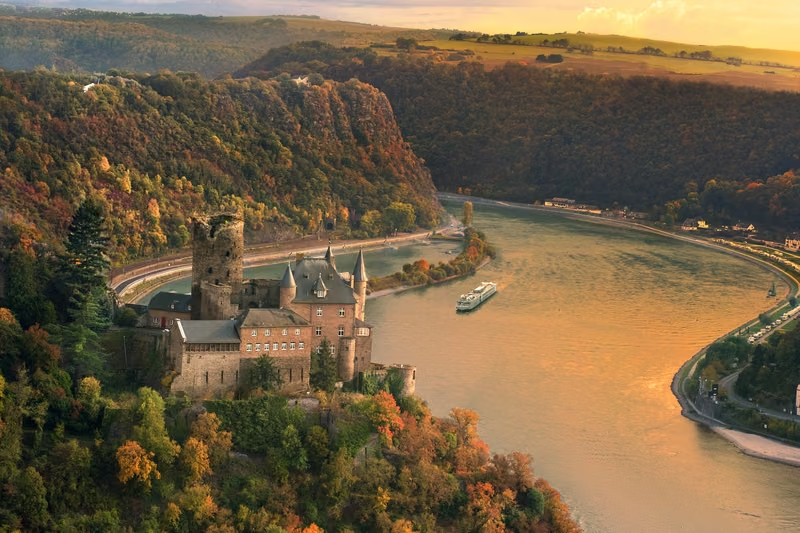
Rhine Getaway
Eight days down the Rhine from the Swiss border to the canals of Amsterdam, with Alsace, the castle country of the Middle Rhine and Cologne along the way.
Danube Waltz
A week on the Danube from Budapest to Passau, taking in four countries, two capitals that rarely get the attention they deserve and the vineyards of the Wachau.
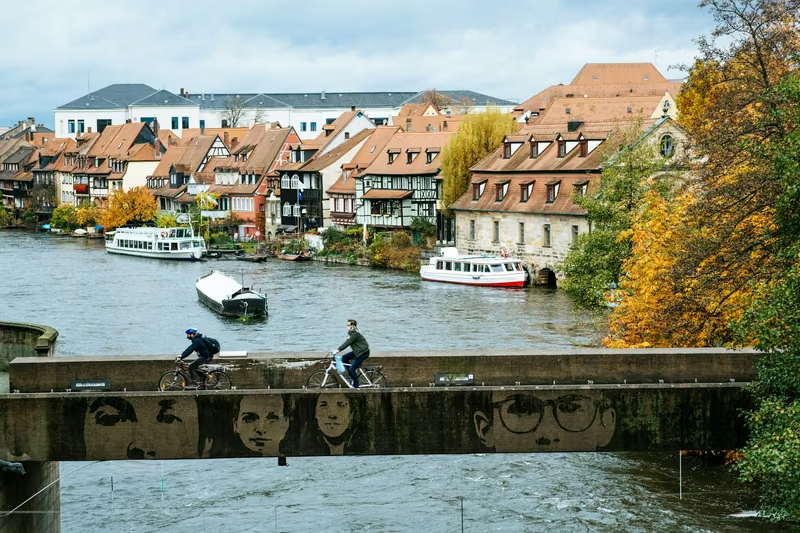
European Sojourn
Twenty-three days and three rivers, from the canals of Amsterdam to the boulevards of Bucharest, crossing eight countries without changing your style of travel.