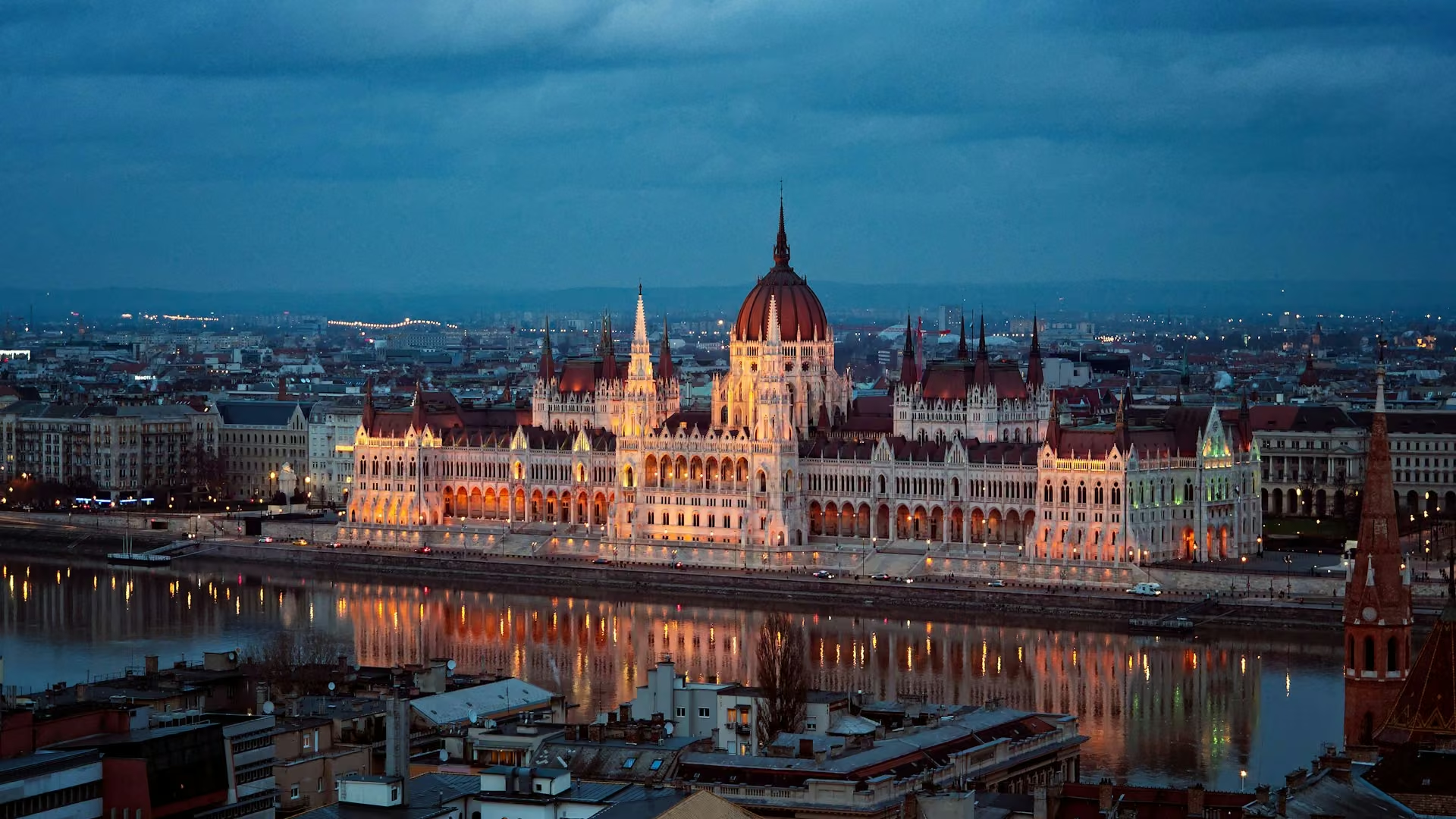
The Danube Waltz is a lovely mix of the famous and the less familiar. Budapest and Vienna need no introduction, but Bratislava, Linz and Passau are just as rewarding, and this route gives each of them a day of its own.
The route
Budapest · Bratislava · Vienna · Krems · Linz · Passau
About the Danube Waltz cruise
Viking's Danube Waltz starts with two days in Budapest, long enough to explore both banks of the city and to try a traditional thermal bath, which the programme includes. The ship then sails upstream to Bratislava, the compact Slovak capital, and on to Vienna, where you can learn to waltz at a Viennese dance school. Along the way you have the chance to try Austro-Hungarian cooking, from hearty goulash to delicate pastries, the food of an empire that once tied these cities together.
From Krems you make an exclusive visit to Göttweig Abbey, a working Benedictine monastery, for a rare look at the daily life of the monks. The Wachau Valley, a UNESCO World Heritage Site, unfolds around you with its terraced vineyards and orchards. Then come two cities many visitors overlook. Linz is a lively cultural centre with a fine old main square, and Passau, where three rivers meet, is a baroque gem of a town on the German border, where your cruise ends.
You sail on a Viking Longship carrying 190 guests, and every stateroom has a river view. A guided shore excursion is included in every port, together with all meals on board, beer, wine and soft drinks with lunch and dinner, Wi-Fi, port taxes and onboard gratuities. Return flights from London and selected UK regional airports are included, and transfers come with Viking's flights. Fares start from £1,795 per person, checked in October 2026, and vary with departure date and stateroom.
For more on the river itself, see our The Danube river cruise guide.
Cruise highlights
A thermal bath in Budapest
Soak in naturally hot spring water, a Budapest tradition that goes back to the Romans and the Ottomans.
Bratislava's old town
Walk the lanes of the former Hungarian coronation city, with Habsburg-era palaces and the castle high above the river.
Learn to waltz in Vienna
Take to the floor at a Viennese dance school in the city that gave the waltz to the world.
Inside Göttweig Abbey
An exclusive visit to a working Benedictine monastery, with its imperial staircase, frescoed ceilings, library and church.
Linz and Mozart
See the main square, the Market Hall and the Mozarthaus, where the composer wrote his Linz Symphony.
Passau's three rivers
End in the baroque Bavarian town where the Danube, Inn and Ilz meet below a lavish cathedral.
Watch the Danube Waltz cruise
Video: Danube Waltz (Viking Cruises)
Day by day itinerary
Arrive in Budapest
Your cruise begins in Budapest, where the Danube runs between two quite different halves of the city. Hilly Buda, on the west bank, is home to the Castle District, with the old royal palace, Matthias Church and the white lookout towers of the Fisherman's Bastion. Pest, on the flat east bank, is the busy commercial heart, with wide 19th-century avenues, cafés and the vast neo-Gothic Parliament on the water's edge. The city was only formed in 1873, when Buda, Pest and Óbuda were united. After you have settled into your stateroom, try to be on deck after dark to see the riverfront floodlit.
Bridges and thermal baths
Today is yours to enjoy Budapest more fully. Walk across the Chain Bridge, opened in 1849 as the first permanent bridge between Buda and Pest, and enjoy the views of the Parliament and the castle hill. You might spend time in a museum, but this is also the day to experience the city's bathing culture. Budapest stands on a great many hot springs, and its baths range from domed pools built in the Ottoman era of the 16th century to the grand, palatial Széchenyi bath in City Park. A long soak in warm mineral water is a very Budapest way to spend an afternoon.
Bratislava's palaces and castle
Bratislava has been the capital of independent Slovakia only since 1993, but its history runs much deeper. From 1563 to 1830, Hungarian kings and queens were crowned in St Martin's Cathedral here, Maria Theresa among them. The compact old town is full of palaces built for Habsburg-era nobles, including the Primate's Palace, where the Treaty of Pressburg was signed after the Battle of Austerlitz in 1805. Above it all stands Bratislava Castle, a square white building with a tower at each corner, rebuilt after a fire in 1811 left it in ruins. Look out, too, for the bronze statues that pop up in the streets.
Imperial and musical Vienna
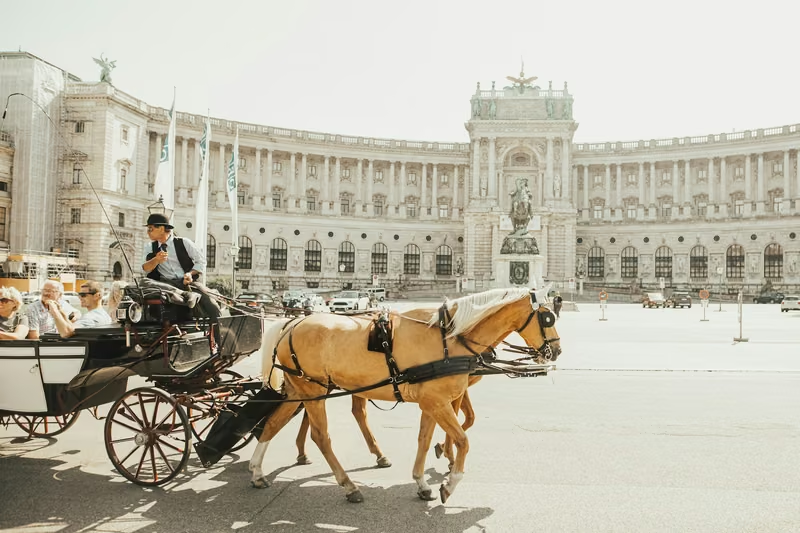
Vienna was the Habsburg capital for more than six centuries, and you see it everywhere: the Hofburg palace, the Gothic St Stephen's Cathedral and the grand buildings of the Ringstrasse, laid out after the city walls came down in the 1850s and 1860s. Today you explore the city's architecture and its musical heritage. Mozart, Haydn, Beethoven and Schubert all worked here, and Johann Strauss II wrote The Blue Danube waltz in 1867. It is a fitting place for the programme's waltz lesson at a Viennese dance school. Leave time for a coffee house, too, where you can linger over a coffee and a slice of Sachertorte.
Göttweig Abbey and the Wachau
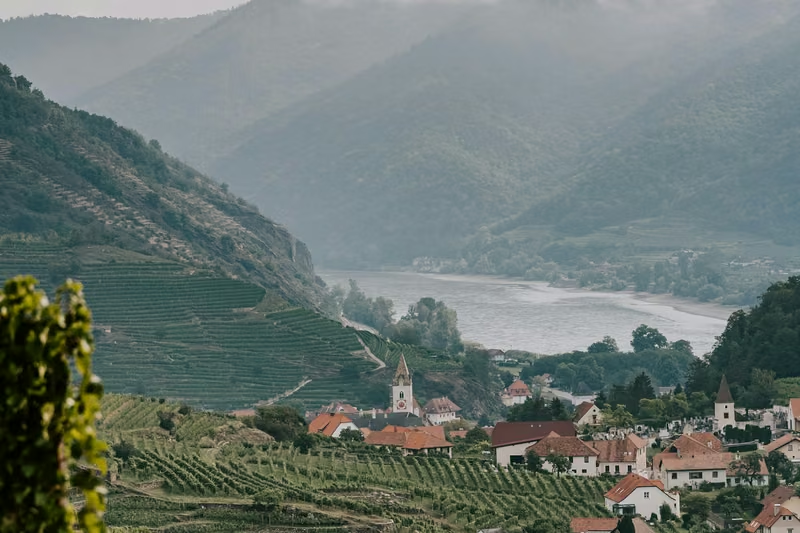
Krems, an old wine town at the eastern end of the Wachau, is the base for today's visit to Göttweig Abbey on its hilltop above the valley. Founded in 1083 and still home to a community of Benedictine monks, it was rebuilt in baroque style after a fire in 1718. This exclusive visit offers a rare insight into monastic life, as well as the imperial staircase with Paul Troger's ceiling fresco of Emperor Charles VI as Apollo, the library and the abbey church. Around you lies the Wachau, a UNESCO-listed valley of terraced vineyards and apricot orchards, best known for its Grüner Veltliner and Riesling wines.
Linz and its old quarter
Linz, the capital of Upper Austria, is a cultural city that surprises many visitors. Its Hauptplatz, the main square of the old quarter, is lined with handsome baroque facades and centred on the white marble Trinity Column, raised in 1723 in thanks for the city's escape from plague, war and fire. Close by is the Mozarthaus, where Mozart stayed in 1783 and wrote his Linz Symphony in just a few days, and the Market Hall is a good place to see local produce. The composer Anton Bruckner was cathedral organist here. Before you leave, try a slice of Linzer Torte, the city's lattice-topped almond tart filled with redcurrant jam.
Passau, city of three rivers
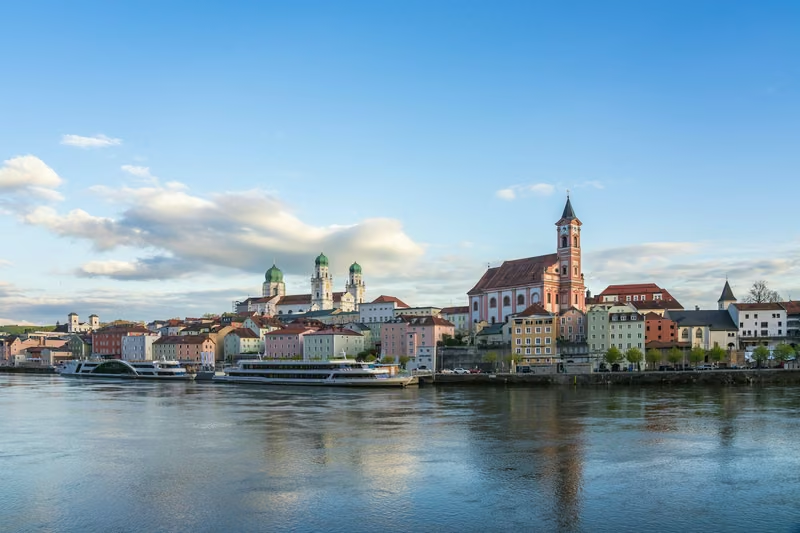
You cross into Bavaria at Passau, where the Danube is joined by the green Inn from the Alps and the darker Ilz from the Bavarian Forest. After much of the town burned in 1662, Italian architects rebuilt it, and the old town still feels southern, with colourful patrician houses, arcades and narrow lanes running down to the water. The highlight is St Stephen's Cathedral, a baroque church of white stucco and frescoes, home to one of the largest church organs in the world. High on the opposite bank stands the Veste Oberhaus, the fortress of the prince-bishops who once ruled the town.
Farewell in Passau
Your cruise ends in Passau. Say goodbye to the crew and your fellow guests, and if you have booked Viking's flights, a transfer will take you to the airport for your flight home to the UK. If you have time to spare, or have chosen an extension, take a last stroll to the point where the three rivers meet, at the tip of the old town. It is a peaceful spot, and on a sunny day the different colours of the water show clearly. The cafés along the Inn promenade are a pleasant place for a final coffee before you go.
Itineraries and shore excursions are set by Viking and can change, and may vary by departure.
The places you will visit
Bratislava, the Hungarian coronation city
Bratislava, known for centuries in German as Pressburg and in Hungarian as Pozsony, sits right at the meeting point of Austria, Hungary and Slovakia, and Vienna is less than 60 kilometres away. When the Ottomans took much of Hungary in the 16th century, the city became the Hungarian capital and the place where its kings and queens were crowned. Between 1563 and 1830 the coronations took place in St Martin's Cathedral, Maria Theresa's among them in 1741. A small gilded crown on top of the cathedral spire still marks that history.
The old town is small enough to explore on foot in a morning, with baroque palaces, cobbled lanes and pavement cafés. The Primate's Palace has a fine Hall of Mirrors, where Napoleon and Austria signed the Treaty of Pressburg in December 1805 after the Battle of Austerlitz. Above the town, the castle was gutted by fire in 1811 and stood as a ruin for well over a century before it was rebuilt in the 1950s and 1960s. Bratislava became the capital of an independent Slovakia when Czechoslovakia split peacefully in 1993.
Linz, Mozart and Bruckner
Linz has a long musical history. In the autumn of 1783 Mozart and his wife Constanze stopped here on their way back to Vienna, staying with Count Thun in the house now called the Mozarthaus. The count arranged a concert, and Mozart, having brought no symphony with him, wrote a new one in only a few days. It is still known as the Linz Symphony. Anton Bruckner, one of Austria's great composers, spent years in Linz as organist at the Old Cathedral, and the city's main concert hall, the Brucknerhaus, is named after him.
The city also has strong links with science and innovation. The astronomer Johannes Kepler lived and taught in Linz for more than a decade in the early 17th century, and he completed important work here. More recently Linz has reinvented itself as a centre for digital art, with the Ars Electronica Center on the riverbank, and in 2009 it was a European Capital of Culture. For visitors, though, the simplest pleasures are the main square, the old lanes and a slice of Linzer Torte, one of the oldest cake recipes known.
Passau, city of three rivers
Passau stands on a narrow tongue of land at the meeting of three rivers. The Danube flows in from the west, the Inn arrives from the south after its journey from the Swiss and Austrian Alps, and the small Ilz flows in from the Bavarian Forest to the north. The Inn's glacial water is green, while the Ilz is dark from the moorland it drains, so at the confluence you can often see the rivers flowing side by side before they mix. For centuries the town was ruled by powerful prince-bishops whose diocese once stretched far down the Danube.
Most of the medieval town was lost in fires in the 17th century, the worst in 1662. The prince-bishops brought in Italian architects and craftsmen to rebuild, and the result is a baroque town that feels almost Mediterranean. St Stephen's Cathedral is its masterpiece, rebuilt to a plan by Carlo Lurago, with frescoes by Carpoforo Tencalla and an interior of brilliant white stucco. Its organ, with more than 17,000 pipes, is one of the largest church organs in the world, and organ recitals are a regular feature in the summer months.
What is included
Viking prices its river cruises to include most of what you need, so there are few extras to budget for once you are on board.
Return flights
Return flights from London and selected regional airports, with ground transfers included when you fly with Viking.
A shore excursion in every port
One included shore excursion in each port of call, usually a guided walking or coach tour, with optional extras to buy.
All meals on board
Breakfast, lunch and dinner every day you are on board, including al fresco dining on the Aquavit Terrace.
Drinks with lunch and dinner
Beer, wine and soft drinks served with lunch and dinner, plus specialty coffee, tea and bottled water at any hour.
Free Wi-Fi
Wi-Fi is included on board at no extra charge, though speeds can vary as the ship moves along the river.
Port taxes and fees
Port taxes and fees are built into the fare, so there are no extra charges waiting at the end.
Onboard gratuities
Gratuities for the crew on board are included in the fare.
Enrichment and performances
Talks on the history and culture of your route, plus local performers who bring the destinations to life on board.
Your stateroom, the ship and its facilities are covered on our Viking Longships page.
Fares
| Cruise | Duration | From, per person |
|---|---|---|
| Danube Waltz, Budapest to Passau | 8 days | £1,795 |
Lead-in fare per person, checked in October 2026. Viking's fares change with the date, direction of sailing and stateroom grade, so please email us for live prices and availability on the departure you have in mind.
Interested in the Danube Waltz? Email us your preferred month and we will send dates and prices.
Email an enquiry- Best time to go: April to October. Spring is fresh and green, summer is warm and sociable, and September and October bring the grape harvest to the Wachau.
- Budapest is easy to reach from the UK, and adding a night before the cruise gives you more time for the baths and the riverside.
- The pace is gentle, with one main port each day. Expect cobbles and a few slopes, especially in Buda's Castle District and Passau.
- It suits travellers who enjoy music, history and food, and those who like to see lesser-known cities as well as the famous ones.
- Fares start from £1,795 per person, checked in October 2026. Prices change with departure date and stateroom grade.
Danube Waltz: your questions answered
Your fare includes return flights from London and selected UK regional airports, a river view stateroom, all meals on board, beer, wine and soft drinks with lunch and dinner, specialty coffee, tea and bottled water at any time, Wi-Fi, port taxes, onboard gratuities and one guided shore excursion in every port. Transfers are included with Viking's flights.
The Danube Waltz uses one of Viking's Longships, designed for the rivers of Europe. They carry 190 guests, and every stateroom has a view of the river. The specific ship depends on your departure, and we can confirm it when you enquire.
The cruise starts in Budapest with two days in the Hungarian capital, then calls at Bratislava in Slovakia, Vienna and Krems in Austria, and Linz, before finishing in Passau in Germany. That is four countries in eight days, with a visit to Göttweig Abbey and the vineyards of the Wachau along the way.
Both cruises start in Budapest and include Vienna, Göttweig Abbey and Passau. The Danube Waltz adds Bratislava and Linz and ends in Passau, with one day in Vienna. The Romantic Danube spends two days in Vienna, sails the Danube Bend and continues to Regensburg. Both are eight days long.
The season runs from spring to late autumn. April and May are pleasantly mild and less busy, while summer offers long, warm evenings. September and October are a favourite with wine lovers, as the Wachau harvest is under way. River levels occasionally affect sailing plans, and the crew keep guests informed.
You should be comfortable walking for an hour or two on cobbled streets, with some steps and slopes, particularly in Buda's Castle District and Passau. You can take tours at your own pace or simply stay on board and enjoy the view. If you have mobility concerns, please ask us before you book.
Yes, return flights from London and selected UK regional airports are included, and transfers come with Viking's flights. Viking also offers pre and post-cruise extensions on this itinerary, such as extra time before you sail. Options vary by season, so ask us what is available for your dates.
You might also like
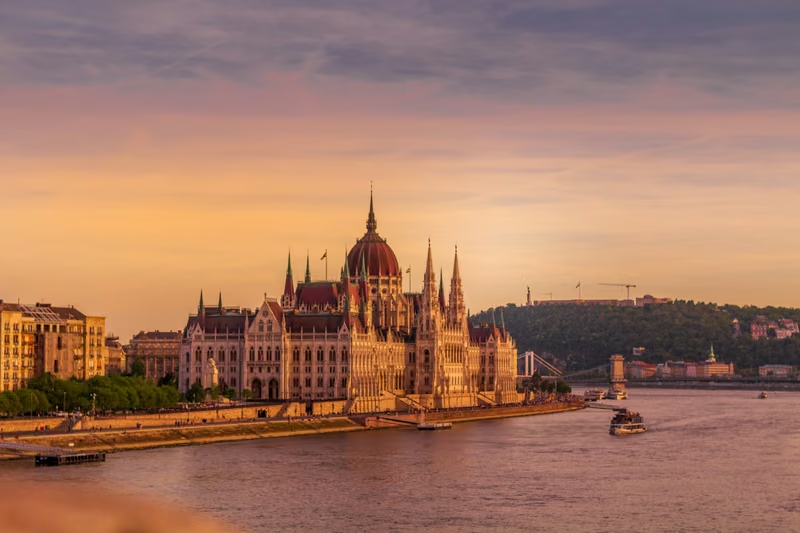
Romantic Danube
Eight days on the Danube from Budapest to medieval Regensburg, with two full days in Vienna and a slow sail through the vineyards of the Wachau.
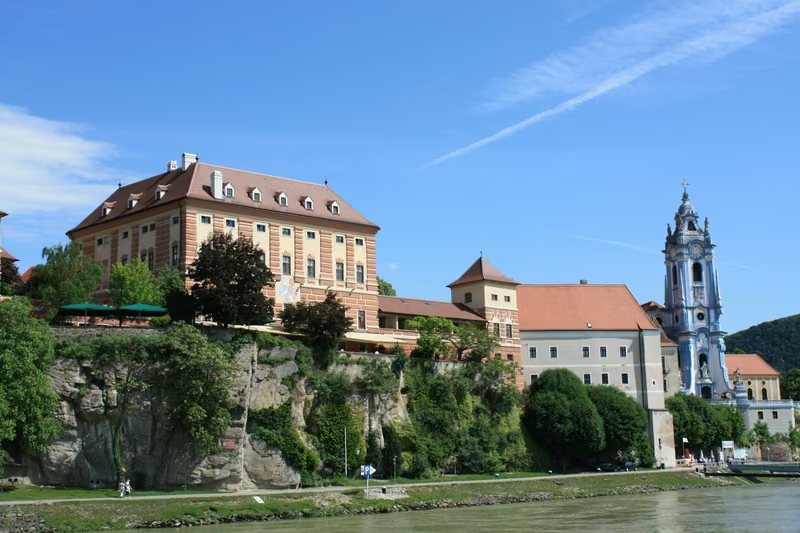
Grand European Tour
Fifteen days across the continent by water, from the bridges of Budapest to the canals of Amsterdam, linking the Danube, the Main and the Rhine.
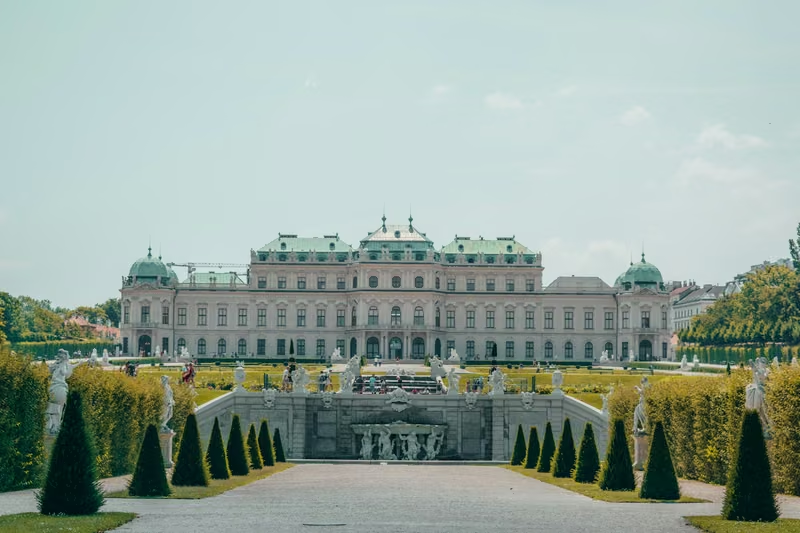
Capitals of Eastern Europe
Seventeen days down the Danube from Vienna to Bucharest, with five capital cities, the Iron Gate gorges and a final run towards the Black Sea.