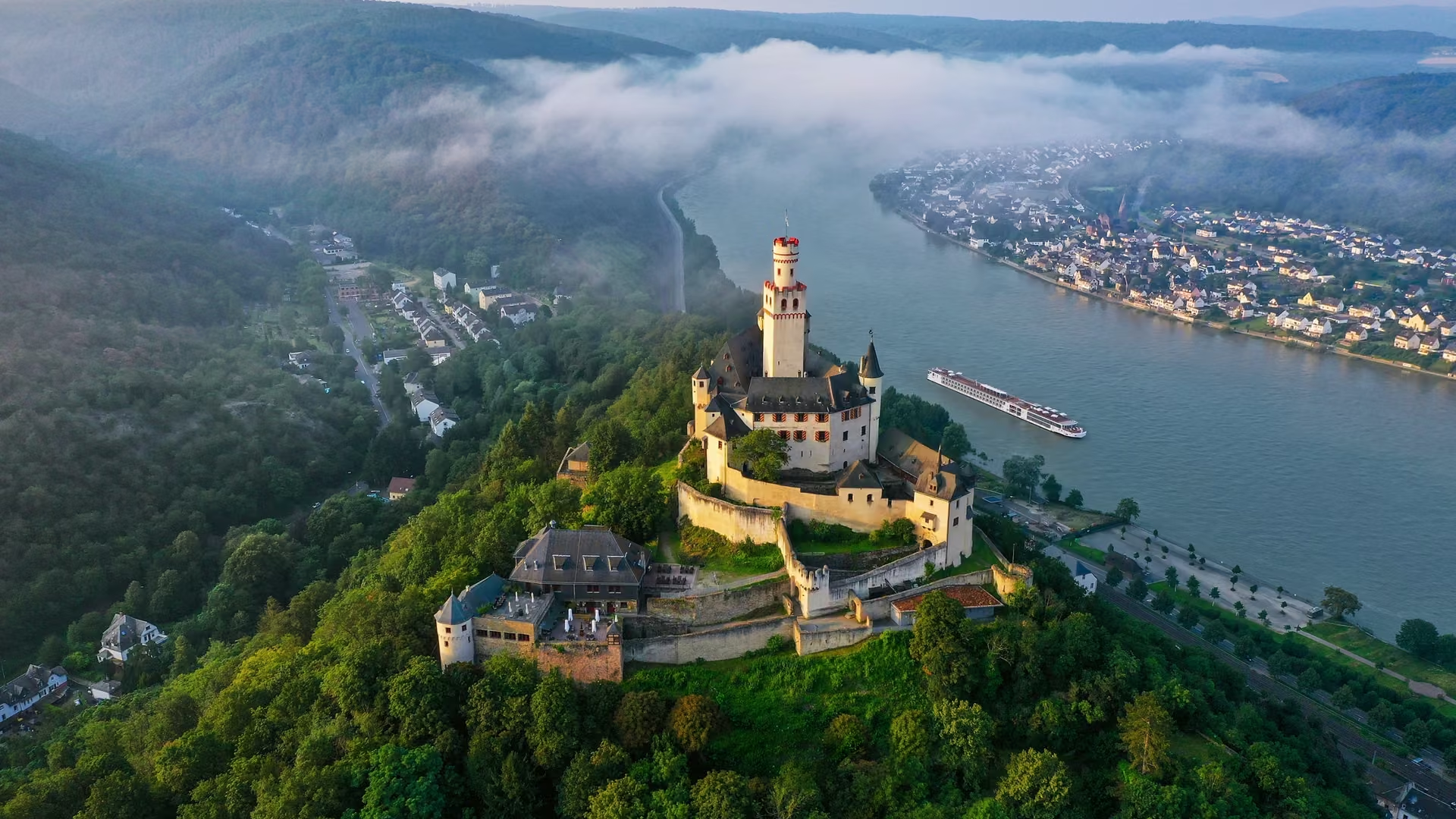
This trip strings together three very different worlds. There is Paris first, then the steep Riesling slopes and Roman remains of the Moselle, and finally the Rhine as it climbs south through Germany and Alsace towards the mountains of Switzerland.
The route
Paris · Reims · Trier · Bernkastel · Cochem · Koblenz · Middle Rhine · Mainz · Speyer · Strasbourg · Basel · Zürich
About the Paris to the Swiss Alps cruise
Paris to the Swiss Alps is a cruisetour, meaning it combines hotel stays with a river cruise. You spend your first two days in Paris, then travel east by road through Champagne, stopping at Reims Cathedral and the Luxembourg American Cemetery before joining your Viking Longship in Trier. At the other end, you leave the ship in Basel and continue to Zürich for a hotel stay beside its lake, with the Alps on the skyline.
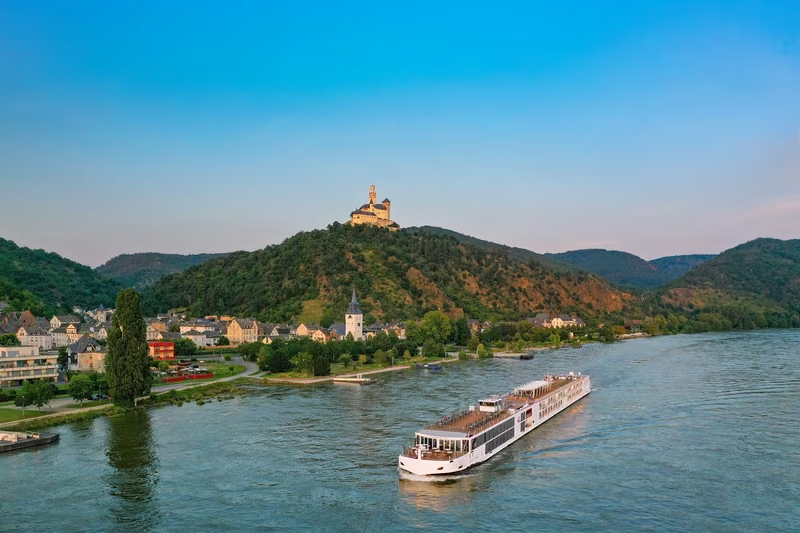
The Moselle is one of the most beautiful rivers in Europe, twisting between slopes so steep that the vines seem to hang from them. Trier, founded by the Romans, has some of the finest Roman remains north of the Alps, while Bernkastel and Cochem are classic Moselle wine towns of half-timbered houses, narrow lanes and castles on the hill. The wine here is mostly Riesling, light, fresh and often a little sweet.
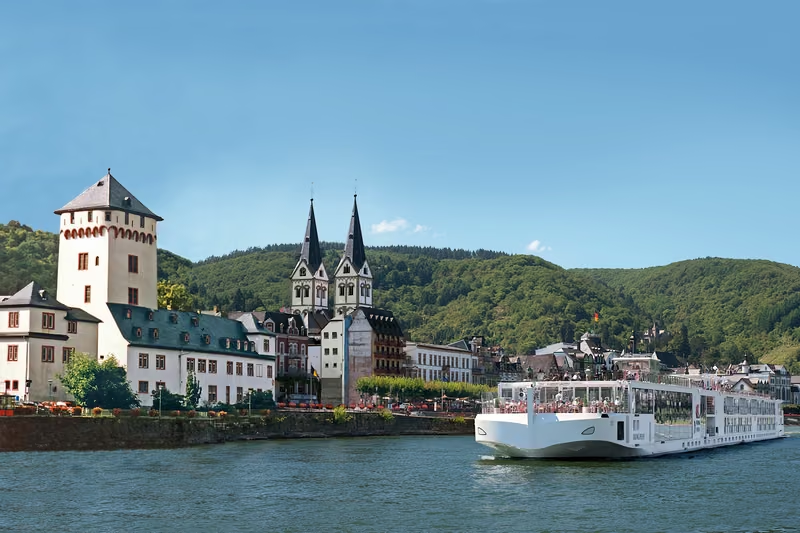
At Koblenz the Moselle joins the Rhine, and the ship turns upstream into the Middle Rhine Gorge, a UNESCO World Heritage Site where castles appear on almost every bend. Beyond the gorge come the cathedral cities of Mainz and Speyer, both closely linked to the Holy Roman Empire, and then Strasbourg, where French and German culture have mixed for centuries. Mainz is the city of Johannes Gutenberg, and Speyer's huge Romanesque cathedral holds the tombs of medieval emperors and kings. In Strasbourg, the cathedral and the canals of Petite France are the highlights.
The cruise ends in Basel, where France, Germany and Switzerland meet, and the last part of the holiday is spent in Zürich. It is a well-rounded trip for anyone who wants great cities as well as quiet river scenery, and there is plenty of wine along the way. Zürich is clean, efficient and surprisingly relaxed, with a lovely old town along the River Limmat, fine churches and some excellent chocolate shops. A sail on the lake is a gentle way to end the holiday before the flight home.
For more on the river itself, see our The Main and Moselle river cruise guide, The Rhine river cruise guide.
Cruise highlights
Two days in Paris
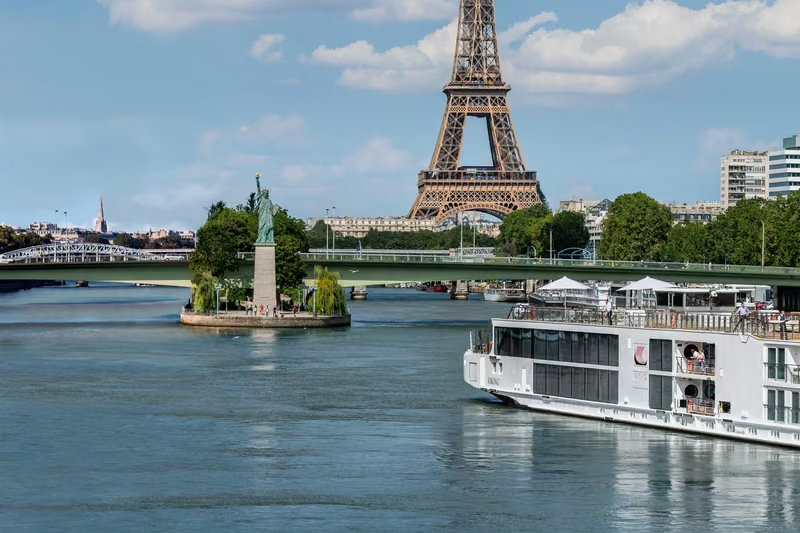
Begin with a hotel stay in Paris, with time for the Eiffel Tower, the Arc de Triomphe or the Louvre.
Reims and Luxembourg
See the coronation cathedral of the French kings at Reims and pay your respects at the Luxembourg American Cemetery, where General Patton is buried.
Roman Trier
Germany's oldest city still has its great Roman gate, the Porta Nigra, as well as an amphitheatre that once held 20,000 people and the remains of huge Roman baths.
Moselle wine country
Taste Riesling in Bernkastel and climb to the Reichsburg above Cochem, a fairy-tale castle rebuilt in the 19th century.
The Middle Rhine Gorge
Sail through the castle-lined UNESCO stretch of the Rhine and look out for the Lorelei Rock.
Zürich by the lake
Finish with time in Switzerland's largest city, its old town, churches and chocolate shops, and a sail on Lake Zürich.
Watch the Paris to the Swiss Alps cruise
Video: Paris to the Swiss Alps (Viking Cruises)
Day by day itinerary
Arrive in Paris
Your holiday begins in Paris with a hotel stay in the French capital. After you have checked in, the rest of the day is free. The Eiffel Tower and the Arc de Triomphe are the obvious first sights, and both are worth seeing up close. If art is more your thing, the Louvre is a good place to start, though it is so big that it pays to choose a few galleries rather than try to see everything. In the evening, find a bistro for your first taste of French cooking.
Paris at leisure
A second full day in Paris gives you time to slow down and enjoy the city as Parisians do. Start with a coffee and a croissant at a café terrace, then explore a neighbourhood on foot. The Left Bank around Saint-Germain-des-Prés, the islands in the Seine and the old streets of the Marais all reward a wander. As evening falls, join the locals for a drink before dinner. Tomorrow you head east towards Germany, so make the most of your last night in the city.
Champagne, remembrance and the Moselle
Leave Paris for the Champagne region and the city of Reims, whose Gothic cathedral saw the coronation of most of France's kings. Joan of Arc stood here in 1429 when Charles VII was crowned. The journey continues to Luxembourg and the American Cemetery at Hamm, the resting place of more than 5,000 American servicemen, including General George S. Patton. In the afternoon you reach Trier, where your Longship is waiting. There is time to see the Porta Nigra, the Roman city gate, and the Liebfrauenkirche, one of Germany's earliest Gothic churches.
Roman remains and Riesling
Spend the morning discovering the Roman side of Trier, which was once one of the great cities of the empire. The amphitheatre held as many as 20,000 spectators, and the ruins of the Roman baths give a sense of the scale of life here 1,700 years ago. Later the ship sails on to Bernkastel, a picture-perfect wine town of steep-roofed timber houses around a little market square. Wander its cobbled streets and taste wines from the surrounding vineyards, including the famous Doctor slope above the town.
The castle above Cochem
Cochem is one of the most photographed towns on the Moselle, thanks to the Reichsburg on the hill above it. The original medieval castle was blown up by French troops in 1689 and lay in ruins until a Berlin businessman, Louis Ravené, rebuilt it in Gothic Revival style in the 1870s. Today you can visit the castle and then explore the town below, with its riverside promenade and old gateways. Cochem is also known for mustard, still ground in a historic mill in the town, so try a little while you are here.
Where two rivers meet
Koblenz stands where the Moselle flows into the Rhine, at a point known as the Deutsches Eck, or German Corner, marked by a huge equestrian statue of Kaiser Wilhelm I. Explore the old town, with its churches and pleasant squares, before the ship heads up the Rhine. In the afternoon you sail through the Middle Rhine Gorge, a UNESCO World Heritage Site, past castles, vineyards and little wine villages. Keep watch for the Lorelei Rock, where legend says a siren lured boatmen onto the rocks with her song.
Gutenberg's city
Mainz is the capital of Rhineland-Palatinate and one of Germany's oldest cities. It was here, around 1450, that Johannes Gutenberg developed printing with movable type, and the Gutenberg Museum holds original copies of his famous Bible. The red sandstone cathedral, more than 1,000 years old, dominates the old town. Mainz is also at the centre of Germany's largest wine region, Rheinhessen, and is known for its white wines. Today is a good chance to sample a few in one of the city's traditional wine taverns.
The emperors' cathedral
Speyer is a quiet, attractive town with a long main street leading up to its cathedral. Consecrated in 1061, the cathedral is one of the largest Romanesque churches in Europe and a UNESCO World Heritage Site. For centuries it was the burial place of German emperors and kings, whose tombs lie in the crypt. Beyond the cathedral, Speyer has a fine medieval gate tower, the Altpörtel, and a few streets of shops and cafés. It is an easy, gentle day before Strasbourg.
Strasbourg and Alsace
Strasbourg, the capital of Alsace, has passed between France and Germany several times, and you can see both cultures in its food, architecture and language. Its pink sandstone cathedral, with a single soaring spire, was once the tallest building in the world. Inside you will find a remarkable astronomical clock. Take time to wander through Petite France, the old tanners' quarter, where half-timbered houses lean over the canals. Then sample Alsatian cooking, perhaps tarte flambée or choucroute, with a glass of local Riesling or Gewürztraminer.
Into Switzerland
This morning you arrive in Basel, where the borders of France, Germany and Switzerland meet on the Rhine. After saying goodbye to the ship, you travel on to Zürich for the final part of the holiday. Switzerland's largest city sits at the north end of Lake Zürich, and its old town spreads along both banks of the River Limmat. See landmarks such as the baroque Rathaus, built over the river, and the city's great churches, the twin-towered Grossmünster and the Fraumünster. Then enjoy a sail on the lake.
Art, culture and chocolate
A free day in Zürich lets you explore at leisure. The city has a lively arts scene, with the Kunsthaus, one of Switzerland's leading art museums, and plenty of small galleries. In the Fraumünster you can see the stained glass windows designed by Marc Chagall. Shopping on the Bahnhofstrasse, a walk along the lake and coffee in the old town are all good ways to spend the time. Before you leave, visit one of Zürich's chocolatiers, some of which have been making chocolate here for well over a century.
Journey home
Your holiday ends today. After breakfast, say goodbye to the friends you have made on the trip, and if you have booked Viking flights, transfer to the airport for your flight home to the UK. If you would like to see more of Switzerland before going home, Viking offers optional extensions that let you add extra days. It is worth considering if you have never been to the Alps, as the mountain scenery is not far from Zürich. Ask us about the options when you book.
Itineraries and shore excursions are set by Viking and can change, and may vary by departure.
The places you will visit
Trier, Rome's capital in the north
Trier was founded by the Romans around 16 BC as Augusta Treverorum, and is often called Germany's oldest city. By the late third century it had become one of the capitals of the Western Roman Empire, and Constantine the Great lived here for several years before he became sole emperor. The city's surviving Roman monuments, together with its cathedral and the Liebfrauenkirche, are listed as a UNESCO World Heritage Site, and few places north of the Alps give such a clear picture of Roman life.
The best known monument is the Porta Nigra, the Black Gate, a massive sandstone city gate built around AD 170. It survived because it was turned into a church in the Middle Ages. Nearby are Constantine's Basilica, a vast brick throne hall, the Imperial Baths and the amphitheatre, where crowds of up to 20,000 watched games and fights. Trier is also the birthplace of Karl Marx, who was born here in 1818, and the house where he was born is now a museum.
Moselle Riesling and the river towns
The Moselle is one of Germany's oldest wine regions, and the Romans planted vines here almost 2,000 years ago. The river winds so much that it travels far further than the straight distance between its towns, and the vineyards cling to slate slopes that face the sun. Those slopes are some of the steepest in Europe and much of the work is still done by hand. The slate soil holds the warmth and gives Moselle Riesling its fresh, mineral character.
Bernkastel is famous for the Doctor vineyard above the town. According to legend, a sick Archbishop of Trier, Bohemond II, was cured by a glass of its wine, which explains the name. Across the bridge in Kues, the philosopher Nicholas of Cusa was born in 1401 and later founded the St Nikolaus Hospital, which still has its library and wine cellar. Further downstream, Cochem is quieter in the evenings once the day visitors leave, and it is a lovely place for a stroll along the river.
Reims, Strasbourg and the French connection
Reims has been linked to the French monarchy since about 496, when Clovis, King of the Franks, was baptised here. From the Middle Ages onwards most French kings were crowned in its cathedral, a Gothic masterpiece famous for the smiling angel carved by the west door. In 1429 Joan of Arc led Charles VII here for his coronation. The cathedral was badly damaged by shelling in the First World War and has been restored. It is a UNESCO World Heritage Site, and the city is also the capital of Champagne.
Strasbourg tells a different story. Alsace changed hands between France and Germany four times between 1871 and 1945, and the city's mix of French elegance and German half-timbering reflects that. The cathedral's spire made it the tallest building in the world from 1647 until 1874. Johannes Gutenberg lived in Strasbourg before returning to Mainz, and today the city is home to the European Parliament. Its historic centre, the Grande Île, is a UNESCO World Heritage Site, ringed by the River Ill.
What is included
Viking prices its river cruises to include most of what you need, so there are few extras to budget for once you are on board.
Return flights
Return flights from London and selected regional airports, with ground transfers included when you fly with Viking.
A shore excursion in every port
One included shore excursion in each port of call, usually a guided walking or coach tour, with optional extras to buy.
All meals on board
Breakfast, lunch and dinner every day you are on board, including al fresco dining on the Aquavit Terrace.
Drinks with lunch and dinner
Beer, wine and soft drinks served with lunch and dinner, plus specialty coffee, tea and bottled water at any hour.
Free Wi-Fi
Wi-Fi is included on board at no extra charge, though speeds can vary as the ship moves along the river.
Port taxes and fees
Port taxes and fees are built into the fare, so there are no extra charges waiting at the end.
Onboard gratuities
Gratuities for the crew on board are included in the fare.
Enrichment and performances
Talks on the history and culture of your route, plus local performers who bring the destinations to life on board.
Your stateroom, the ship and its facilities are covered on our Viking Longships page.
Fares
| Cruise | Duration | From, per person |
|---|---|---|
| Paris to the Swiss Alps, Paris to Zürich | 12 days | £2,790 |
Lead-in fare per person, checked in October 2026. Viking's fares change with the date, direction of sailing and stateroom grade, so please email us for live prices and availability on the departure you have in mind.
Interested in the Paris to the Swiss Alps? Email us your preferred month and we will send dates and prices.
Email an enquiry- May to early October is the main season. Late September and October are lovely for the grape harvest along the Moselle, while December departures may bring Christmas markets.
- This is a cruisetour with hotel stays in Paris at the start and Zürich at the end, so you will pack and unpack at the hotels as well as on the ship.
- Day 3 is a long travel day by road from Paris to Trier, with stops at Reims and the Luxembourg American Cemetery.
- Expect cobbled streets and some steep paths, especially up to the Reichsburg in Cochem. You can choose how much walking to do each day.
- It suits wine lovers, history enthusiasts and anyone who wants city stays as well as river scenery.
Paris to the Swiss Alps: your questions answered
Viking includes return flights from London and selected regional airports, one shore excursion in every port of call, all meals on board, beer, wine and soft drinks with lunch and dinner, round-the-clock specialty coffee, tea and bottled water, free Wi-Fi, port taxes and fees, onboard gratuities, and enrichment lectures and performances. Ground transfers are included with Viking flights. You also have hotel stays in Paris and Zürich.
The river section is sailed by one of Viking's Longships, the same design used across the Rhine, Main, Moselle and Danube. Every stateroom faces the river, and the ships have a glass-walled lounge and an Aquavit Terrace at the bow for watching the scenery go by.
Prices start from £2,790 per person. This was checked in October 2026, and fares change with the departure date and stateroom you choose. Email enquiries@rivercruiseworld.co.uk and we will send you current prices for your preferred dates. The price covers everything listed in the inclusions above.
On day 3 you travel by road from Paris towards Germany, visiting Reims Cathedral and the Luxembourg American Cemetery on the way. You join your Longship in Trier on the Moselle that afternoon. It is a full day, but the stops break it up well.
Late spring and early summer bring long days and green vineyards, while September and October are harvest time on the Moselle and Rhine, with wine festivals in many towns. The summer months are warmer and busier. All departures include the same ports, so choose the season that suits you.
Most days include a walking tour of a town or city, often on cobbled streets. Some sights, such as the Reichsburg above Cochem, involve a climb, although you can choose whether to go up. If you have any mobility concerns, let us know and we will talk through each day with you.
Yes. Viking offers optional extensions after the time in Zürich, so you can spend a few more days in Switzerland. It is a good way to add some mountain scenery to the trip. We can arrange this when you book.
You might also like
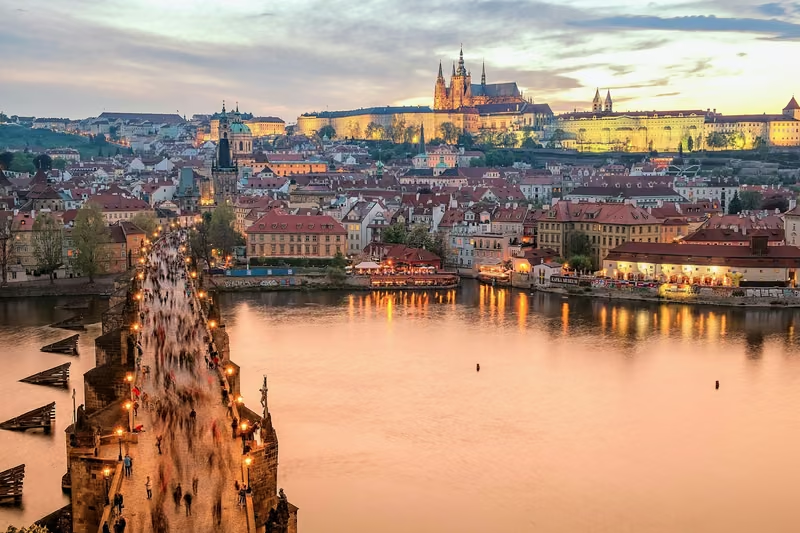
Cities of Light
Twelve days from Paris to Prague, following the Moselle, Rhine and Main through Roman Trier, wine country and the old towns of Franconia.
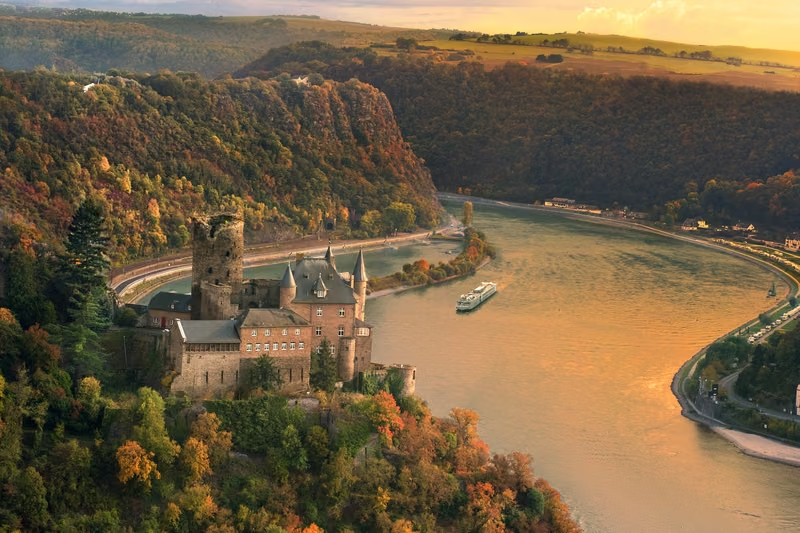
Rhine Getaway
Eight days down the Rhine from the Swiss border to the canals of Amsterdam, with Alsace, the castle country of the Middle Rhine and Cologne along the way.
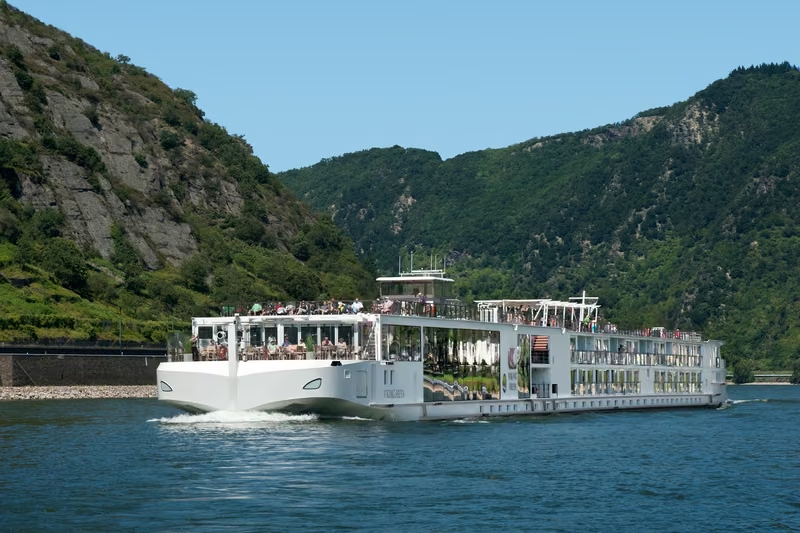
Rhine & Moselle Discovery
Eight days from Roman Trier to Basel, following the winding Moselle to the Rhine and sailing south through the castle country of the Rhine Gorge.