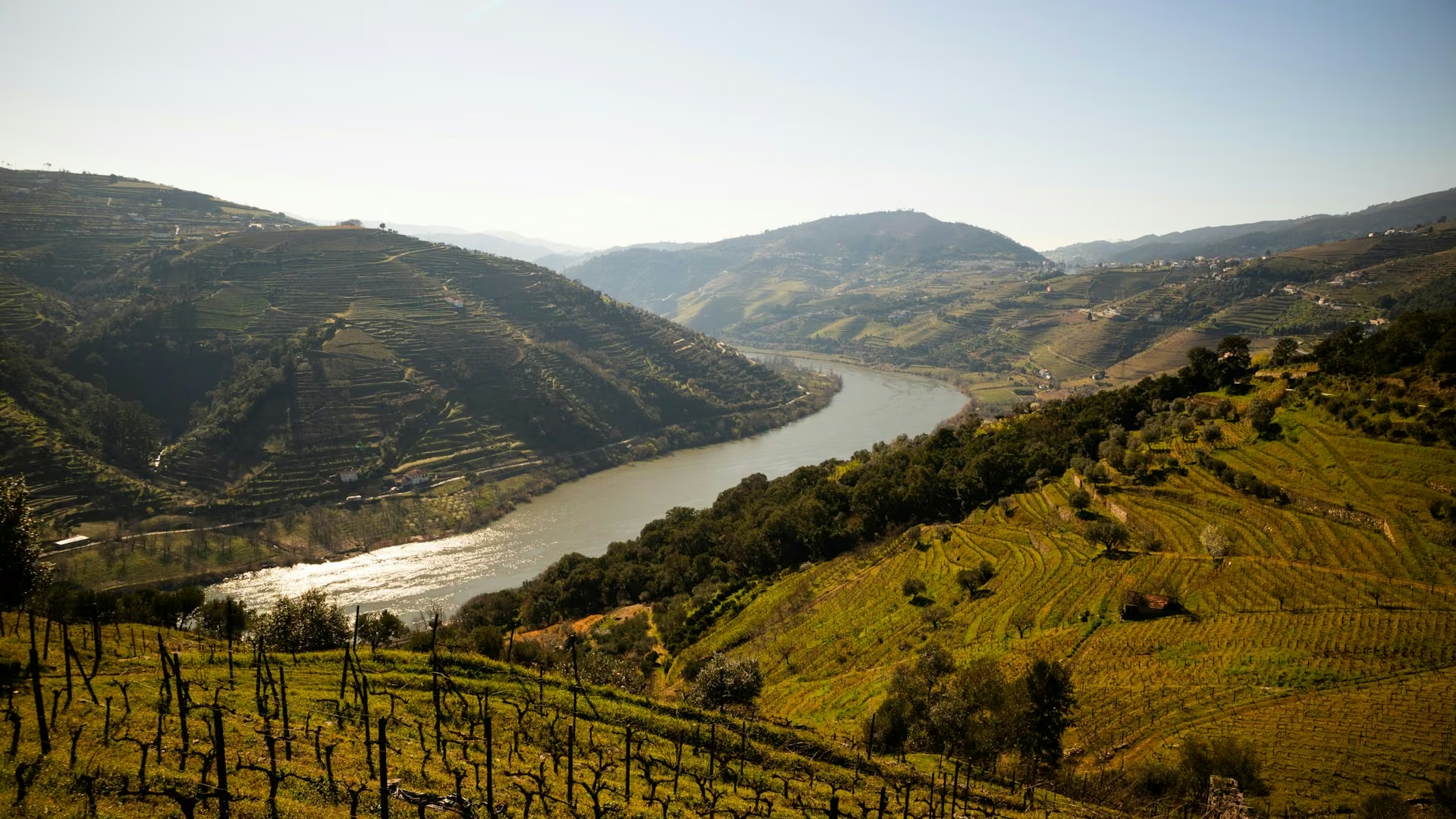
The Douro starts in Spain and runs west across northern Portugal to the sea at Porto, cutting a deep valley through granite and schist. Its steep sides have been terraced for vines over centuries, and the result is one of the most dramatic wine landscapes anywhere.
The route
Lisbon · Porto · Régua · Pinhão · Douro River · Barca d'Alva · Salamanca · Pinhão · Régua · Porto
About the Portugal's River of Gold cruise
Your holiday begins with two days in Lisbon, Portugal's capital, a hilly, sunny city of tiled façades, old trams and sweeping views over the River Tagus. You see the great monuments of Belém, built in the age when Portuguese explorers sailed to India and Brazil, and the lively Bairro Alto. Then you travel north to Porto to join your Viking ship for a round trip along the Douro. Lisbon is a city of viewpoints, and it is worth climbing up to one at sunset.
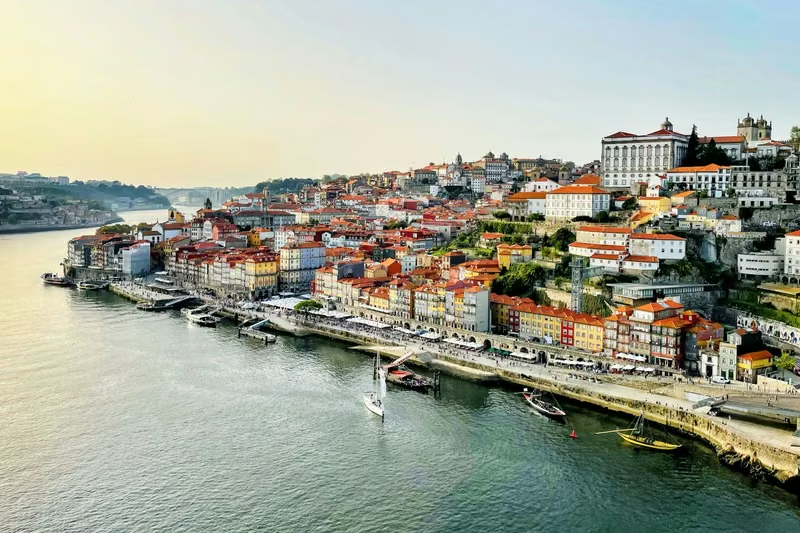
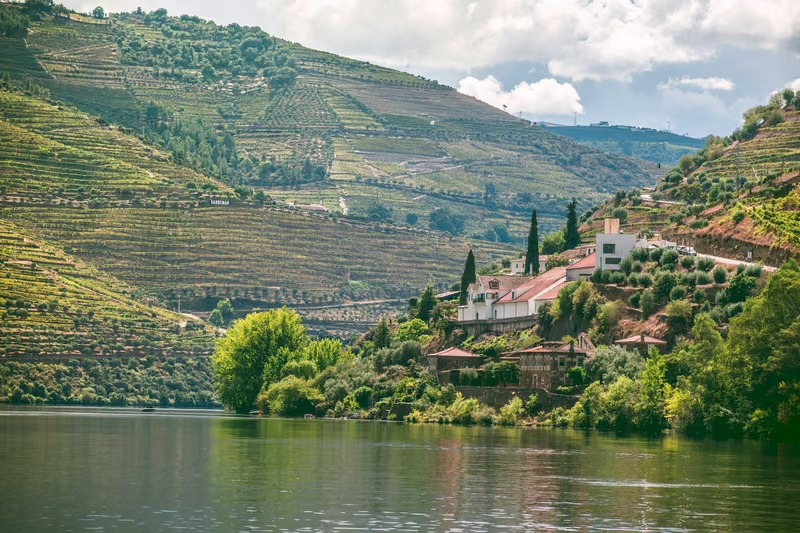
Porto is an old merchant city of steep streets, baroque churches and blue and white azulejo tiles, with the port wine lodges lining the opposite bank in Vila Nova de Gaia. From here the ship sails upstream into the Douro Valley, the oldest demarcated wine region in the world and a UNESCO World Heritage Site, where quintas, the wine estates, sit among terraced vineyards. The scenery changes as you go, from the green, gentle lower valley to the hot, rugged landscape near Spain.
Along the way you visit the baroque Mateus Palace near Vila Real, the wine town of Pinhão and the tiny medieval fortress of Castelo Rodrigo, close to the Spanish border. A day trip takes you into Spain to Salamanca, a golden sandstone city with one of the oldest universities in Europe and one of the finest squares in Spain. You also taste local wines, olive oil, cheeses and sausages at stops along the river, and visit quintas near Régua to see how the wine is made.
The ship then sails back down the valley to Porto, where you have time to enjoy port wine, the local cooking and the melancholy sound of fado. The Douro is a smaller, quieter river than the Rhine or Danube, and Viking's Douro ships are built specially for it. It is a very scenic cruise, and many guests rate it among their favourites. It is a good choice for a first river cruise, as distances are short and the scenery is never far away.
For more on the river itself, see our The Douro river cruise guide.
Cruise highlights
Lisbon and Belém
Start with two days in Lisbon, including the UNESCO-listed Jerónimos Monastery and Belém Tower from Portugal's great age of exploration.
Port wine in Porto
Explore Porto's UNESCO-listed old town and learn the story of the fortified wine that carries the city's name.
The Douro Valley
Sail through the world's oldest demarcated wine region, past terraced vineyards and dramatic rocky gorges.
Mateus Palace
Admire the ornate baroque façade and gardens of the country house near Vila Real that gave its name to Mateus Rosé.
Salamanca
Cross into Spain to see Salamanca's 13th-century university, the House of Shells and the grand Plaza Mayor.
Quintas and local food
Visit wine estates around Régua and Pinhão and taste Portuguese olive oil, cheese, sausages and sweets.
Watch the Portugal's River of Gold cruise
Video: Portugal’s River of Gold (Viking Cruises)
Day by day itinerary
Arrive in Lisbon
Your holiday starts in Lisbon, the Portuguese capital, built over a series of hills above the wide estuary of the Tagus. Today you visit the riverside district of Belém, where the Jerónimos Monastery and the Belém Tower, both UNESCO-listed, celebrate the voyages of Portugal's great navigators. The monastery holds the tomb of Vasco da Gama, who reached India by sea in 1498. Later, head up to the Bairro Alto, a hilltop quarter of narrow streets that comes alive in the evening with bars, restaurants and fado houses.
Lisbon and the Age of Discovery
Today you learn more about the Age of Discovery, when Portugal led the way in exploring the oceans and built a trading empire that stretched from Brazil to Asia. Prince Henry the Navigator, who sponsored many early voyages, is honoured in the huge Monument to the Discoveries in Belém. Spend some time in the Alfama, the oldest part of the city, with its tangle of lanes below the São Jorge Castle. Ride one of the old yellow trams, and be sure to try a pastel de nata, Lisbon's famous custard tart.
Porto and its namesake wine
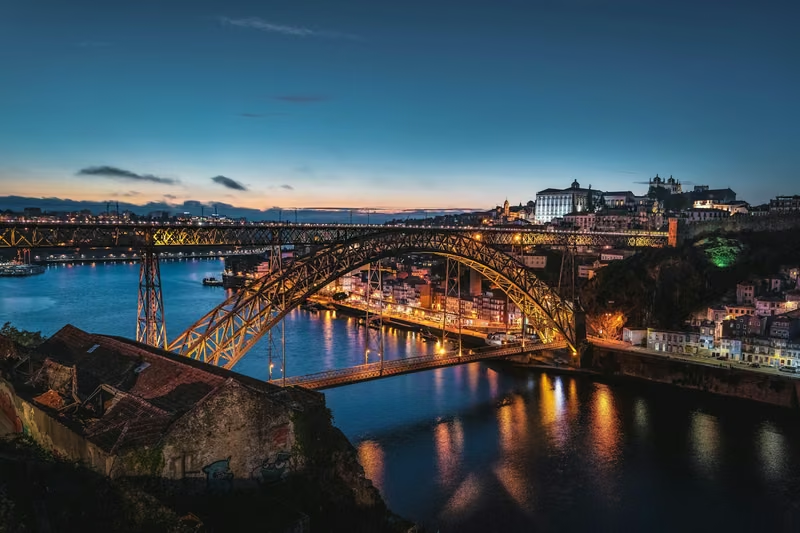
Today you head north to Porto, Portugal's second city and the place that gave port wine its name. Its historic centre, rising steeply from the Ribeira waterfront, is a UNESCO World Heritage Site, full of granite churches, tiled houses and narrow stairways. Across the double-decker Dom Luís I Bridge, the port lodges of Vila Nova de Gaia have aged and shipped the wine for centuries. You learn how port is made and why it became so popular in Britain. This evening you settle into your ship.
Mateus Palace and port country
From Régua you travel to Vila Real to visit the Mateus Palace, an elegant 18th-century country house with a richly decorated baroque façade, formal gardens and a reflecting pool. Its image will be familiar from bottles of Mateus Rosé. Afterwards, sample some local wines. Later the ship continues to Pinhão, a small town in the centre of the port wine country, surrounded by some of the most famous quintas of the Douro. Look out for the blue and white tile panels at the railway station, showing scenes of the harvest.
Gorges and a hilltop fortress
Spend the morning on deck as the ship sails further upriver, where the valley becomes wilder and the terraced vineyards give way to rocky outcrops and steep gorges. In the afternoon you arrive in Barca d'Alva, almost on the Spanish border. Try some of the local drinks and then visit Castelo Rodrigo, a tiny walled village on a hilltop with the ruins of its medieval castle and fine views across the countryside. It is a quiet, atmospheric place, very different from the cities at the start of the trip.
A day in Salamanca
Today you cross into Spain for a day in Salamanca, a beautiful city built from a warm, golden sandstone that glows in the late afternoon light. Its university, founded in 1218, is the oldest surviving university in Spain and one of the oldest in Europe, and its ornate entrance is covered in carvings. You also see the House of Shells, whose walls are studded with hundreds of carved scallop shells, and the Plaza Mayor, a vast 18th-century square often described as the most beautiful in Spain. Return to the ship in the evening.
Olive oil and quintas
The ship begins its journey back down the Douro, returning to Pinhão in the Alto Douro, the upper part of the valley. Here you discover another of the region's specialities, Portuguese olive oil, made from olives grown on the drier slopes alongside the vines. Later, near Régua, you visit one or more of the valley's quintas to learn how grapes are grown and turned into wine on these steep terraces. Many estates still tread some of their grapes by foot in stone lagares, an old tradition that is kept up at harvest time.
A taste of Portugal and back to Porto
In Régua this morning, enjoy a taste of Portugal with local cheeses, cured sausages and traditional sweets. Then sail back down the Douro to Porto, passing through the river's locks and the gentler green scenery of the lower valley. Back in the city, you see more of Porto's sights, including its bridges, baroque churches and walls covered in decorative azulejo tiles. The São Bento railway station, with its great tile panels showing scenes from Portuguese history, is well worth a look.
Ruby port and Porto life
A final day in Porto gives you the chance to taste the city's famous fortified wine, from deep red ruby port to aged tawny. Many of the old lodges in Vila Nova de Gaia offer tours and tastings, and a walk along the riverside on either bank is a pleasure. You might also try a francesinha, Porto's hearty local sandwich, or listen to some fado, Portugal's soulful traditional music. In the evening, enjoy a last dinner on board with your fellow guests.
Adeus Porto
Your holiday comes to an end in Porto this morning. After breakfast, say goodbye to the crew and the friends you have made during the trip. If you have booked Viking flights, your transfer will take you to the airport for your flight home to the UK. If you would like more time in Portugal, Viking offers optional extensions so you can stay on. Porto is an easy city to spend a few extra days in, with plenty still to discover.
Itineraries and shore excursions are set by Viking and can change, and may vary by departure.
The places you will visit
Lisbon and the Age of Discovery
In the 15th and 16th centuries, Portugal, a small country on the edge of Europe, led the world in ocean exploration. Prince Henry the Navigator sponsored voyages down the coast of Africa, Bartolomeu Dias rounded the Cape of Good Hope in 1488, and ten years later Vasco da Gama reached India. Pedro Álvares Cabral landed in Brazil in 1500. The spices, gold and trade that followed made Lisbon one of the richest cities in Europe, and the wealth paid for grand buildings such as the Jerónimos Monastery.
The monastery and the Belém Tower are the finest examples of the Manueline style, named after King Manuel I. It is a uniquely Portuguese form of late Gothic decoration, with carved ropes, anchors, sea creatures and other maritime details. Much of the rest of Lisbon was destroyed by the great earthquake of 1755, followed by a tsunami and fires. The Baixa district was rebuilt on a grid plan under the Marquis of Pombal, which is why the lower city looks so orderly compared with the old Alfama above it.
Port wine and the Douro Valley
British merchants have been involved in the port trade since the 17th century, when war with France made French wine hard to get in England. To help the wine survive the sea voyage, brandy was added, stopping fermentation and leaving it sweet and strong. In 1756 the Marquis of Pombal drew the boundaries of the Douro wine region to protect its quality, making it the world's first officially demarcated wine region. The Alto Douro Wine Region was listed by UNESCO in 2001.
For centuries the wine was carried downriver to Porto in flat-bottomed boats called rabelos, which you can still see moored by the lodges in Vila Nova de Gaia. Today the river is tamed by a series of dams and locks, which allow cruise ships to sail far upstream. The vineyards are among the hardest to work anywhere, planted on narrow terraces held up by stone walls, and the summer heat in the upper valley can be intense. Many port houses still have British names, such as Taylor's, Graham's and Cockburn's.
Salamanca, the golden city
Salamanca is one of Spain's great university cities. King Alfonso IX of León founded its university in 1218, and by the 16th century it was one of the leading centres of learning in Europe. Its scholars debated international law and the rights of the native peoples of the Americas. The ornate Plateresque façade of the main university building is famous for its carving, and students traditionally try to find a small frog hidden among the decoration. Salamanca is still a busy university city, and many students come here from abroad to learn Spanish.
The old city, listed by UNESCO, is built almost entirely from a local sandstone that turns golden in the sun. The Plaza Mayor was built in the 18th century and is surrounded by arcades, cafés and the town hall, and it remains the city's meeting place. The House of Shells, built around 1500, is decorated with carved scallop shells, a symbol of the Order of Santiago and the pilgrimage to Santiago de Compostela. Salamanca also has two cathedrals, an old Romanesque one and a newer Gothic one, joined together.
What is included
Viking prices its river cruises to include most of what you need, so there are few extras to budget for once you are on board.
Return flights
Return flights from London and selected regional airports, with ground transfers included when you fly with Viking.
A shore excursion in every port
One included shore excursion in each port of call, usually a guided walking or coach tour, with optional extras to buy.
All meals on board
Breakfast, lunch and dinner every day you are on board, including al fresco dining on the Aquavit Terrace.
Drinks with lunch and dinner
Beer, wine and soft drinks served with lunch and dinner, plus specialty coffee, tea and bottled water at any hour.
Free Wi-Fi
Wi-Fi is included on board at no extra charge, though speeds can vary as the ship moves along the river.
Port taxes and fees
Port taxes and fees are built into the fare, so there are no extra charges waiting at the end.
Onboard gratuities
Gratuities for the crew on board are included in the fare.
Enrichment and performances
Talks on the history and culture of your route, plus local performers who bring the destinations to life on board.
Your stateroom, the ship and its facilities are covered on our Viking Longships page.
Fares
| Cruise | Duration | From, per person |
|---|---|---|
| Portugal's River of Gold, Lisbon to Porto | 10 days | £3,295 |
Lead-in fare per person, checked in October 2026. Viking's fares change with the date, direction of sailing and stateroom grade, so please email us for live prices and availability on the departure you have in mind.
Interested in the Portugal's River of Gold? Email us your preferred month and we will send dates and prices.
Email an enquiry- Spring and autumn are the most comfortable times to visit. The grape harvest usually takes place in September and early October, while high summer in the upper Douro Valley can be very hot.
- The holiday begins with two days in Lisbon before you travel north to join the ship in Porto. The cruise itself is a round trip from Porto.
- Porto and Lisbon are both hilly, with steep streets and steps, so comfortable shoes are a must. Salamanca is a full day out by road from the river.
- The Douro ships are smaller than most European river ships, which gives a more intimate feel on board.
- It suits wine lovers, keen photographers and anyone looking for a scenic, slower paced cruise.
Portugal's River of Gold: your questions answered
Viking includes return flights from London and selected regional airports, one shore excursion in every port of call, all meals on board, beer, wine and soft drinks with lunch and dinner, 24-hour specialty coffee, tea and bottled water, free Wi-Fi, port taxes and fees, onboard gratuities, and enrichment lectures and performances. Ground transfers are included with Viking flights.
You sail on one of Viking's Douro ships, which were custom built for this river. They share the Scandinavian design of the Viking Longships, with river views from every stateroom, but are smaller to suit the Douro's locks and bends. Viking's Douro fleet includes ships such as the Viking Hemming, Viking Torgil and Viking Osfrid.
Prices start from £3,295 per person. This was checked in October 2026, and fares change with the departure date and stateroom category. Email us at enquiries@rivercruiseworld.co.uk and we will send you current prices for the dates you are interested in.
April to June and September to October are usually the most pleasant months. Spring brings wildflowers and green vines, while autumn brings the harvest and golden colours in the vineyards. July and August are often very hot in the upper valley, so if you travel then, plan for shade and plenty of water.
You should be comfortable walking on steep, cobbled streets, as both Lisbon and Porto are very hilly. Castelo Rodrigo sits on a hilltop, and some quintas have uneven paths. The Salamanca day also involves a longer road journey. If you have any mobility concerns, talk to us before you book.
Yes, you need a valid passport for the whole trip. Salamanca is in Spain, but as both Portugal and Spain are in the Schengen area there are normally no border checks on the drive. UK travellers should check the latest entry requirements for the EU before travelling.
Yes. Viking offers optional extensions at the end of the cruise, so you can spend more time in Porto or elsewhere in Portugal. Porto is a great city for a few extra days, and we are happy to help you plan the details.
You might also like
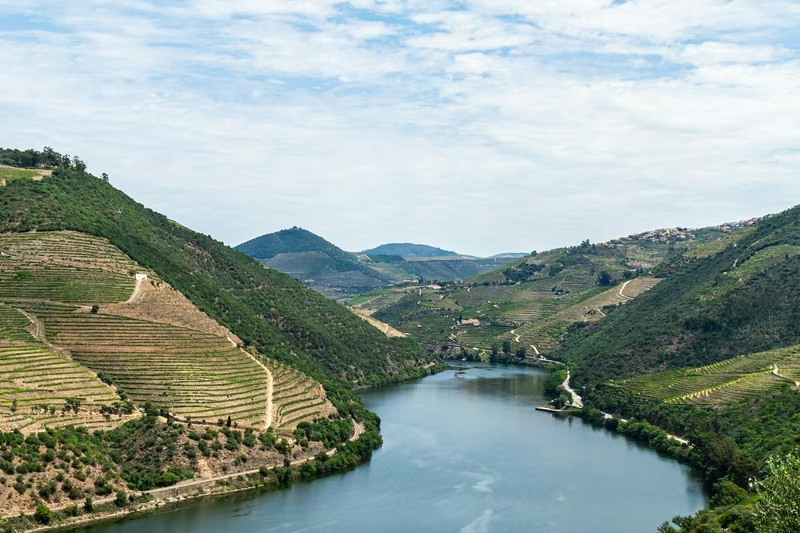
Douro's Valleys & Vineyards
Eight days on Portugal's river of wine, from the riverside lodges of Porto to the Spanish border and the golden university city of Salamanca.
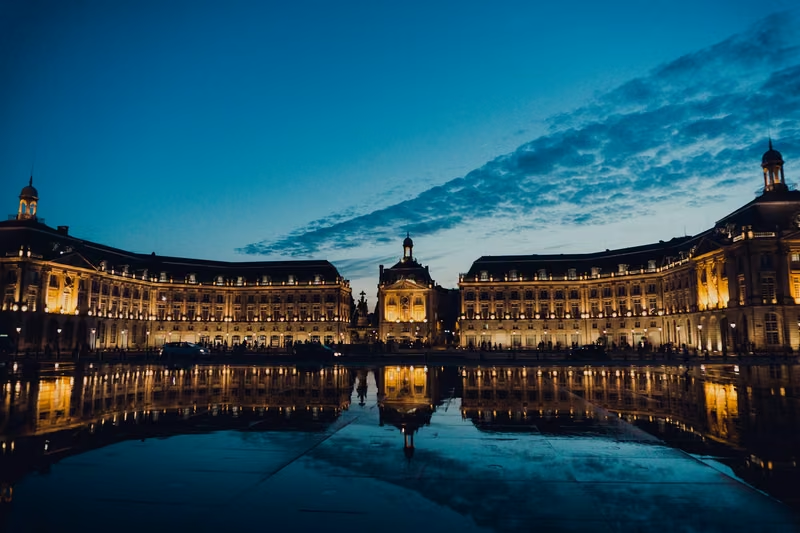
Châteaux, Rivers & Wine
A week on the rivers of Bordeaux, sailing round trip from the city to the vineyards of Saint-Émilion, the Médoc and Sauternes.
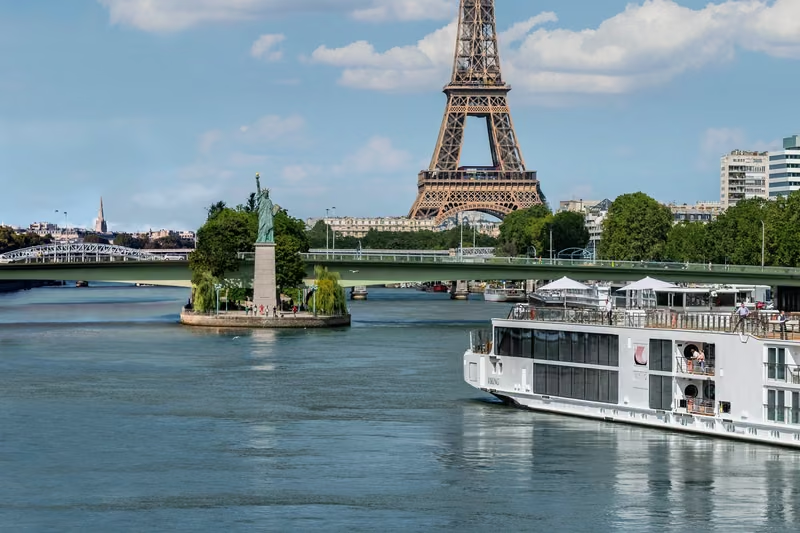
France's Finest
Fifteen days, two rivers and the best of France, from Paris and the Normandy beaches to the vineyards of the Rhône and the Roman towns of Provence.