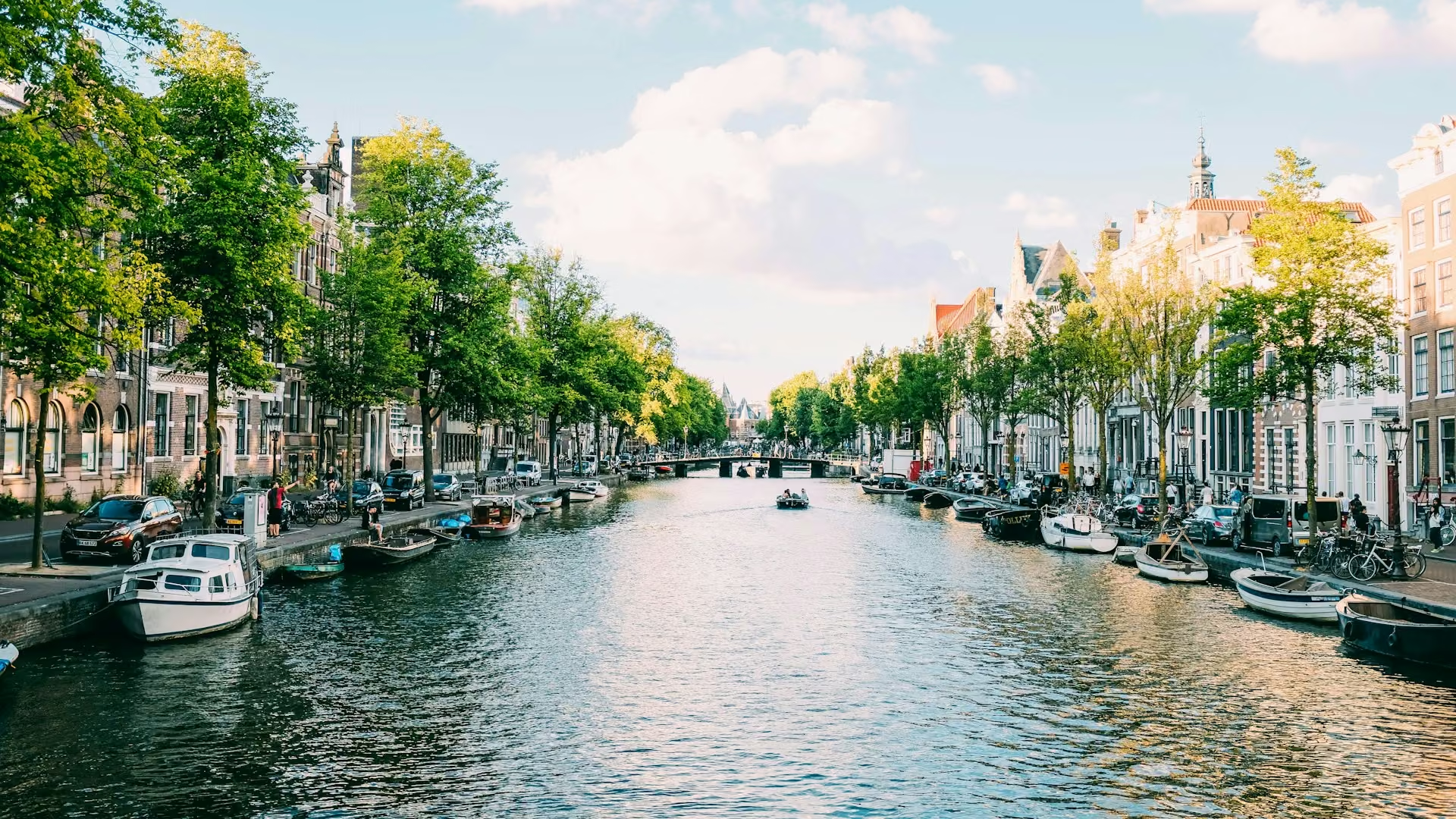
In the Netherlands and Belgium, water is everywhere, and the ships follow it through a landscape the Dutch have shaped by hand for centuries. A cruise here is short on hills and long on charm, with a new town or city almost every day.
Cruising Holland and Belgium
The waterways of the Netherlands and Belgium are not a single river but a network of rivers, canals, lakes and estuaries. Much of it is formed by the great delta where the Rhine, the Maas (Meuse) and the Scheldt reach the North Sea. River cruises use this network to link Amsterdam, Rotterdam and Antwerp with smaller historic towns, sailing across the IJsselmeer, along broad delta rivers and through the islands of Zeeland. It is a flat, open landscape of wide skies, polders and dikes, with church towers and windmills on the horizon.
The Dutch have been holding back the sea for a thousand years, and much of the country lies below sea level. A cruise here tells that story as you go, from the windmills of Kinderdijk, built around 1740 to drain the polders and now a UNESCO World Heritage Site, to the Delta Works, the huge storm barriers built after the North Sea flood of 1953. Few places show so clearly how people have lived with water, and learned to control it.
Spring is the classic time to cruise the Low Countries, when the bulb fields burst into colour and Keukenhof, the famous flower garden near Lisse, opens its gates. But these waterways are rewarding at any time of the season, and summer and autumn sailings are often quieter and better value. The Dutch Golden Age towns of Hoorn, Enkhuizen and Middelburg are full of merchants' houses and harbours, while Antwerp, Ghent and Bruges in Belgium have some of the finest medieval and Flemish art in Europe.
Cruises on the Dutch and Belgian waterways usually last around eight to ten days and often begin and end in Amsterdam. Distances are short and the ground is almost entirely flat, which makes this one of the easiest regions for walking and cycling. It suits first-time river cruisers, garden lovers and anyone with an interest in art and maritime history. Below you will find a short history, highlights, food and drink, timing and the ports most cruises visit, followed by the cruises we currently offer.
River facts
| Length | A network of rivers, canals, lakes and estuaries rather than a single river |
|---|---|
| Source | The delta of the Rhine, the Maas (Meuse) and the Scheldt |
| Flows into | The North Sea |
| Countries | The Netherlands and Belgium |
| Cruising season | March to October, with tulip cruises from late March to early May |
| Typical cruise | 8 to 10 days, often round trip from Amsterdam |
A short history of the Low Countries waterways
In the Middle Ages, the cities of Flanders grew rich on the cloth trade. Bruges was one of the great trading cities of northern Europe, and Ghent was among the largest cities north of the Alps. When Bruges's access to the sea silted up, Antwerp took over, and by the 16th century it was one of the busiest ports in Europe. Painters such as Jan van Eyck, whose Ghent Altarpiece was completed in 1432, and later Peter Paul Rubens in Antwerp, made the region a centre of European art.
In the 17th century the young Dutch Republic enjoyed its Golden Age. The Dutch East India Company, founded in 1602, sent ships across the world from ports such as Amsterdam, Hoorn, Enkhuizen and Middelburg. Amsterdam's ring of canals was dug at this time, and it is now a UNESCO World Heritage Site. Rembrandt and Vermeer painted in this era, and the craze for tulip bulbs reached such heights in the 1630s that single bulbs changed hands for extraordinary sums.
The battle with the sea has shaped the country ever since. The Afsluitdijk, completed in 1932, closed off the Zuiderzee and turned it into the freshwater IJsselmeer. After the disastrous North Sea flood of 1953, the Delta Works were built to protect the south-west of the country, a project only completed in 1997. The Second World War also left its mark, from the bombing of Rotterdam in May 1940 to the battles around Arnhem and Nijmegen in September 1944.
Highlights along the waterways
Kinderdijk is the image most people have of Holland, with 19 windmills lined up along the waterways of a polder. Built around 1740 to pump water off the land, they are a UNESCO World Heritage Site, and some are still lived in by millers. In spring, Keukenhof's gardens are a riot of tulips, hyacinths and daffodils, and the bulb fields around Lisse are striped with colour.
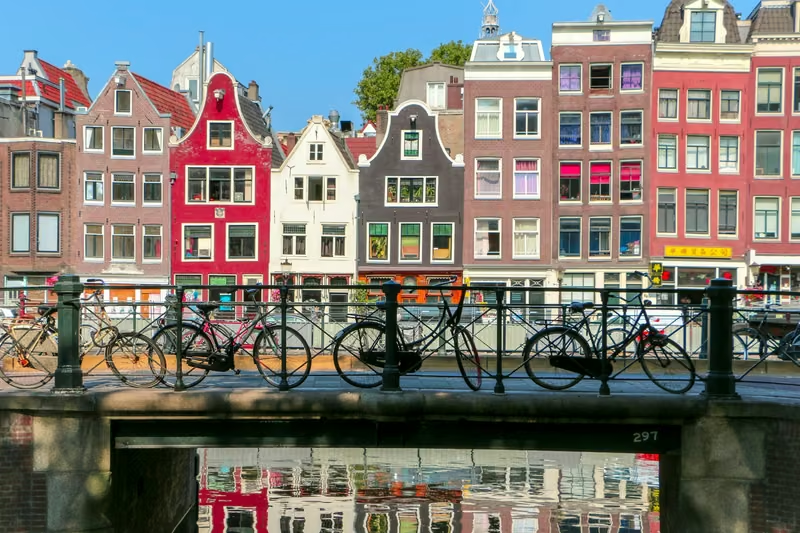
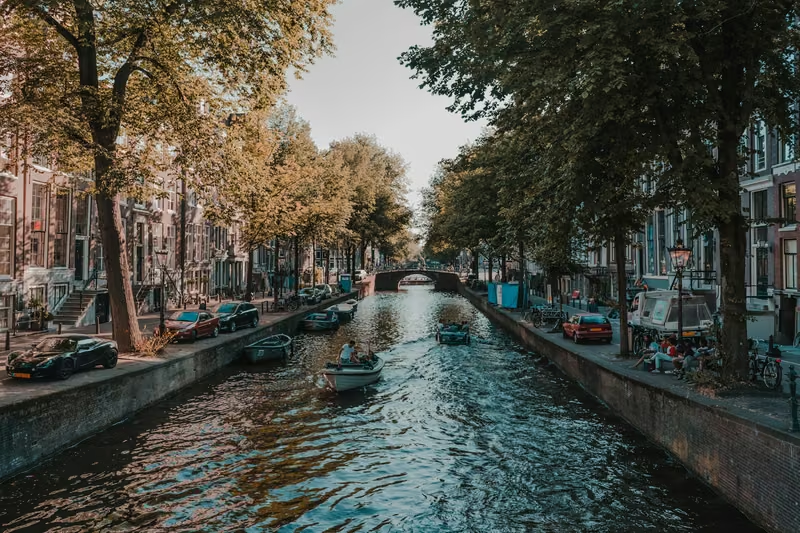
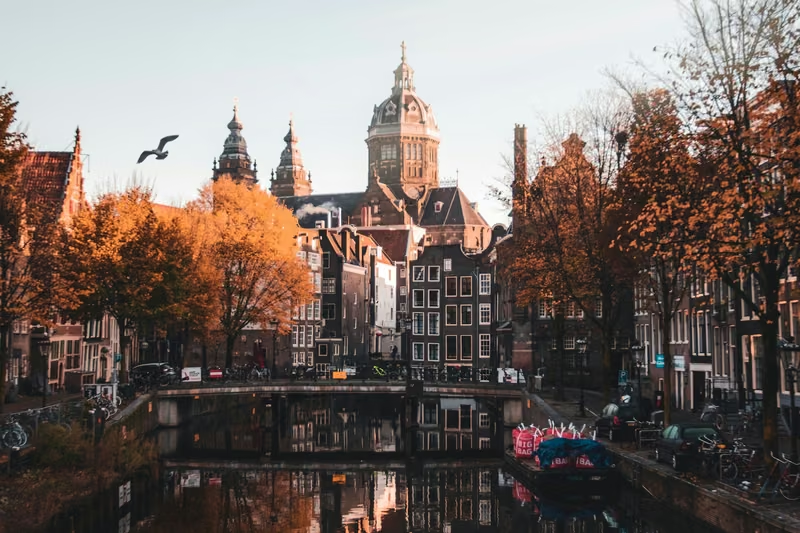
Amsterdam deserves time at the start or end of a cruise, with its canals, gabled houses and great museums, including the Rijksmuseum, the Van Gogh Museum and the Anne Frank House. Rotterdam is a contrast, a bold modern city rebuilt after 1940, with striking architecture such as the Cube Houses and the Markthal. The small harbour towns of Hoorn and Enkhuizen recall the Golden Age, when their ships sailed for the East Indies.
In Belgium, Antwerp has a magnificent cathedral with altarpieces by Rubens, as well as the Rubens House and a famous diamond quarter. Ghent has the Ghent Altarpiece and a skyline of medieval towers, and Bruges, often visited from a nearby port, has a UNESCO-listed centre of canals, bridges and medieval squares. In Zeeland, Middelburg and the little harbour of Veere are full of maritime history.
Ports and places to know
Amsterdam, The Netherlands
Most Dutch and Belgian waterway cruises begin and end in Amsterdam, whose 17th-century canal ring is a UNESCO World Heritage Site. The Rijksmuseum, the Van Gogh Museum and the Anne Frank House are all within easy reach.
Hoorn and Enkhuizen, The Netherlands
These two old harbour towns on the IJsselmeer were important ports of the Dutch East India Company. Hoorn gave its name to Cape Horn, and Enkhuizen is home to the Zuiderzee Museum.
Kinderdijk, The Netherlands
Kinderdijk's 19 windmills, built around 1740 to drain the polder, are a UNESCO World Heritage Site. A walk along the waterways is one of the highlights of any cruise in the Netherlands.
Rotterdam, The Netherlands
Rotterdam was largely destroyed in May 1940 and rebuilt as a bold, modern city. It is known for adventurous architecture, including the Cube Houses and the Markthal, and for one of the largest ports in the world.
Dordrecht, The Netherlands
Dordrecht is often described as the oldest city in Holland, with a lovely old harbour and merchants' houses. Its great Gothic church, the Grote Kerk, has a tower with fine views over the rivers.
Middelburg and Veere, The Netherlands
Middelburg, the capital of Zeeland, was a major trading town in the Golden Age, with a grand abbey and town hall. Nearby Veere is a small, picturesque harbour town with a long maritime history.
Antwerp, Belgium
Antwerp is a lively port city with a magnificent cathedral containing altarpieces by Rubens. Visitors can also see the Rubens House and the famous diamond quarter, and enjoy excellent Belgian beer and chocolate.
Ghent and Bruges, Belgium
Ghent has a dramatic skyline of medieval towers and the Ghent Altarpiece by the van Eyck brothers. Bruges, with its canals and medieval squares, is a UNESCO World Heritage Site and is usually reached by coach.
Maastricht, The Netherlands
Maastricht, in the far south of the Netherlands, is one of the country's oldest cities, with a lively Vrijthof square and Roman origins. The Maastricht Treaty, which created the European Union, was signed here in 1992.
Food and drink
Dutch food is simple and satisfying. Raw herring, eaten with chopped onion, is a national favourite, especially when the new season's catch arrives in early summer. Cheese is everywhere, from young and creamy Gouda to aged, crumbly varieties, and Edam and Alkmaar have their own cheese traditions. Snacks include bitterballen, small crunchy meatballs, poffertjes, tiny fluffy pancakes, and stroopwafels, thin waffles filled with syrup. Indonesian rijsttafel, a feast of many small dishes, reflects the Netherlands' colonial past.
Belgium is famous for its beer, and Belgian beer culture is recognised by UNESCO as part of the world's intangible heritage. There are hundreds of styles, from Trappist ales brewed in monasteries to fruity kriek. Belgian chocolate, waffles and frites served with mayonnaise are everywhere, and mussels are a classic meal, often cooked in white wine or beer. Zeeland, in the south-west of the Netherlands, is known for its mussels and oysters, and the Dutch spirit jenever is worth trying.
When to go
The tulip season, roughly from late March to early May, is by far the most popular time to cruise the Dutch and Belgian waterways. Keukenhof is usually open from about mid-March to mid-May, and the bulb fields are at their peak in mid to late April, depending on the weather. These sailings book up quickly, so it is wise to plan well ahead.
Summer is a lovely time too, with long days, outdoor cafés and pleasant temperatures for walking and cycling. Autumn is quieter and good value, though the weather becomes more changeable, and some lines also offer Christmas market cruises in December. Whatever the season, a light waterproof jacket is a good idea, as showers can blow in quickly from the North Sea.
Holland and Belgium river cruises we offer
These are the cruises currently on our site that sail this river. We are adding more cruise lines, and each will appear here under its own heading.
Viking River Cruises
About Viking| Cruise | Length | From pp |
|---|---|---|
| Rhine Getaway | 8 days | £1,695 |
| Holland & Belgium | 10 days | £2,995 |
| Tulips & Windmills | 10 days | £2,595 |
Lead-in fares per person, checked in October 2026.
Rhine Getaway
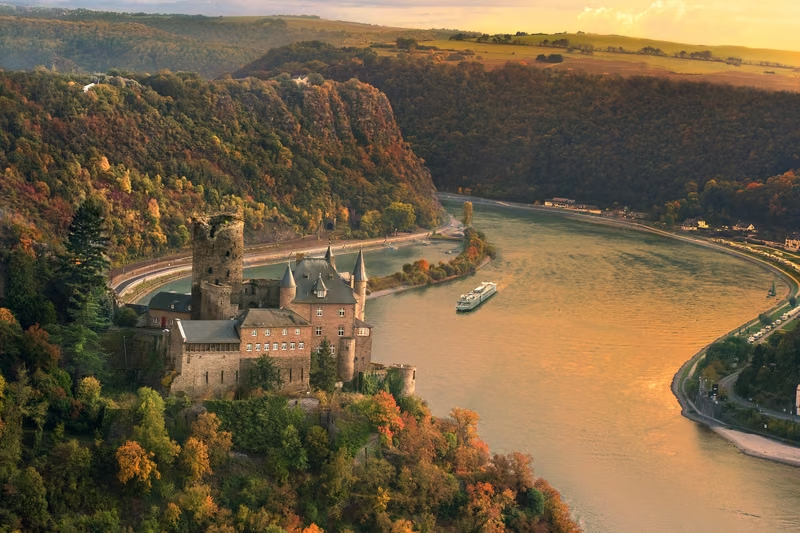
Eight days down the Rhine from the Swiss border to the canals of Amsterdam, with Alsace, the castle country of the Middle Rhine and Cologne along the way.
Holland & Belgium
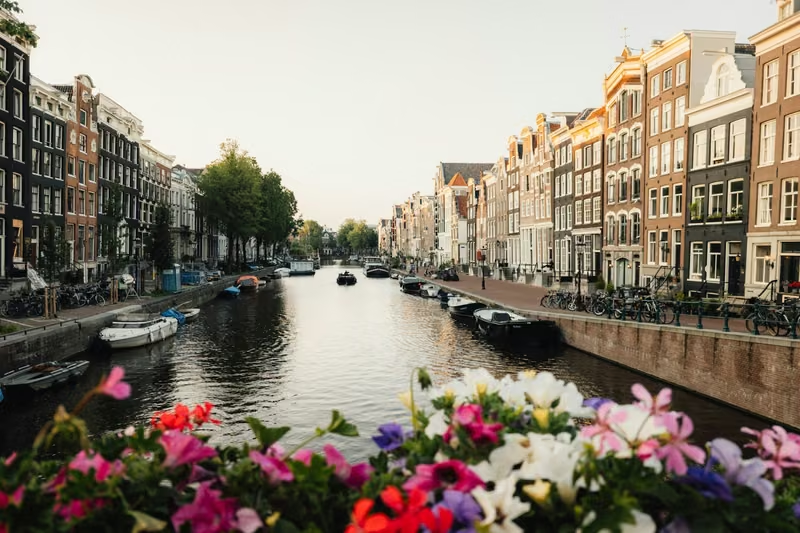
Ten days on the canals and rivers of the Low Countries, from Amsterdam's gabled waterfronts to the chocolate shops and diamond streets of Antwerp.
Tulips & Windmills
A spring round trip from Amsterdam through the Dutch waterways and into Belgium, timed for the tulips, the windmills and the long light evenings.
Holland and Belgium river cruises: questions answered
The tulip season usually runs from late March to early May, with the bulb fields often at their best in mid to late April. Keukenhof is typically open from about mid-March to mid-May. The exact timing depends on the weather, so cruises in mid-April are usually the safest bet. These sailings are very popular, so it is best to book early.
Most cruises on the Dutch and Belgian waterways last around eight to ten days, often as a round trip from Amsterdam or between Amsterdam and Antwerp. They typically visit a mix of large cities, such as Rotterdam and Antwerp, and smaller historic towns. Some Rhine cruises also include stops in the Netherlands, such as Kinderdijk.
Many spring cruises in the Netherlands include or offer a visit to Keukenhof, the famous flower garden near Lisse. It is usually open from mid-March to mid-May and displays millions of spring bulbs. If Keukenhof is a priority, tell us and we will check which itineraries include it on your preferred dates.
The Netherlands and Belgium are among the flattest places in Europe, which makes walking easier than in many other regions. Some old towns have cobbled streets, and a few sights involve steps, such as church towers. Ships usually moor close to town centres. Let us know about any mobility needs and we can help you choose the right cruise.
Kinderdijk is a village near Rotterdam with 19 windmills built around 1740 to drain water from the surrounding polder. It is a UNESCO World Heritage Site and one of the most famous sights in the Netherlands. Many river cruises call here, giving you time to walk along the waterways and see inside a working windmill.
Antwerp is the most common stop, with its magnificent cathedral, Rubens House and lively centre. Many cruises also visit Ghent, with its medieval towers and the famous Ghent Altarpiece, and Bruges, usually reached by coach. Some itineraries call at other towns along the Scheldt and the Belgian canals.
In the Netherlands, try raw herring, Gouda cheese, bitterballen, poffertjes and stroopwafels, and perhaps an Indonesian rijsttafel. In Belgium, beer is a must, from Trappist ales to fruit beers, along with chocolate, waffles, frites with mayonnaise and a pot of mussels. Zeeland is also known for its excellent mussels and oysters.