The Danube between Budapest and Bavaria is the river of waltzes and coffee houses, monasteries and wine terraces. This gentle week follows it upstream through three countries, giving you time to enjoy the great cities rather than rush through them.
The route
Budapest · Danube Bend · Vienna · Krems · Wachau Valley · Passau · Regensburg
About the Romantic Danube cruise
The Romantic Danube begins in Budapest, a city of grand bridges and thermal baths, and sails upstream through the Danube Bend, where the river swings south between wooded hills. Ahead lies Vienna, and with two days there you have time for palaces, museums and at least one long afternoon in a coffee house. The programme here celebrates the city's musical heritage with a concert featuring works by Mozart and Strauss, a fitting way to spend an evening in the city that made both of them famous.
Beyond Vienna the river enters the Wachau, a UNESCO-listed valley of vineyards and apricot orchards. From Krems you visit Göttweig Abbey, one of Austria's great Benedictine monasteries, and the programme gives you a chance to make dumplings with the valley's famous apricots. The cruise also includes a visit to historic Salzburg, the birthplace of Mozart, before you continue into Bavaria for baroque Passau and finally Regensburg, a medieval city whose old town has been a UNESCO World Heritage Site since 2006.
Your ship is a Viking Longship carrying 190 guests, with a river view from every stateroom. One guided shore excursion is included in every port, as are all meals on board, beer, wine and soft drinks with lunch and dinner, Wi-Fi, port taxes and onboard gratuities. Return flights from London and selected UK regional airports are included, and transfers come with Viking's flights. Fares start from £1,795 per person. We checked prices in October 2026, and they vary with departure date and stateroom.
For more on the river itself, see our The Danube river cruise guide.
Cruise highlights
Budapest's two banks
Explore hilltop Buda and its Castle District, then cross the Chain Bridge to the grand avenues and cafés of Pest.
The Danube Bend
A scenic sailing where the river curves between wooded hills, passing small towns on the way out of Hungary.
Two days in Vienna
Time for the Habsburg palaces, the museums and the coffee houses, plus a concert of music by Mozart and Strauss.
Göttweig Abbey
A hilltop Benedictine monastery with a grand imperial staircase, painted ceilings, a fine library and a baroque church.
Wachau wine country
Sail past terraced vineyards, apricot orchards and the castle ruins of Dürnstein in this UNESCO-listed valley.
Medieval Regensburg
Finish in one of Germany's best-preserved medieval cities, with its Gothic cathedral and 12th-century Stone Bridge.
Watch the Romantic Danube cruise
Video: Romantic Danube (Viking Cruises)
Day by day itinerary
Arrive in Budapest
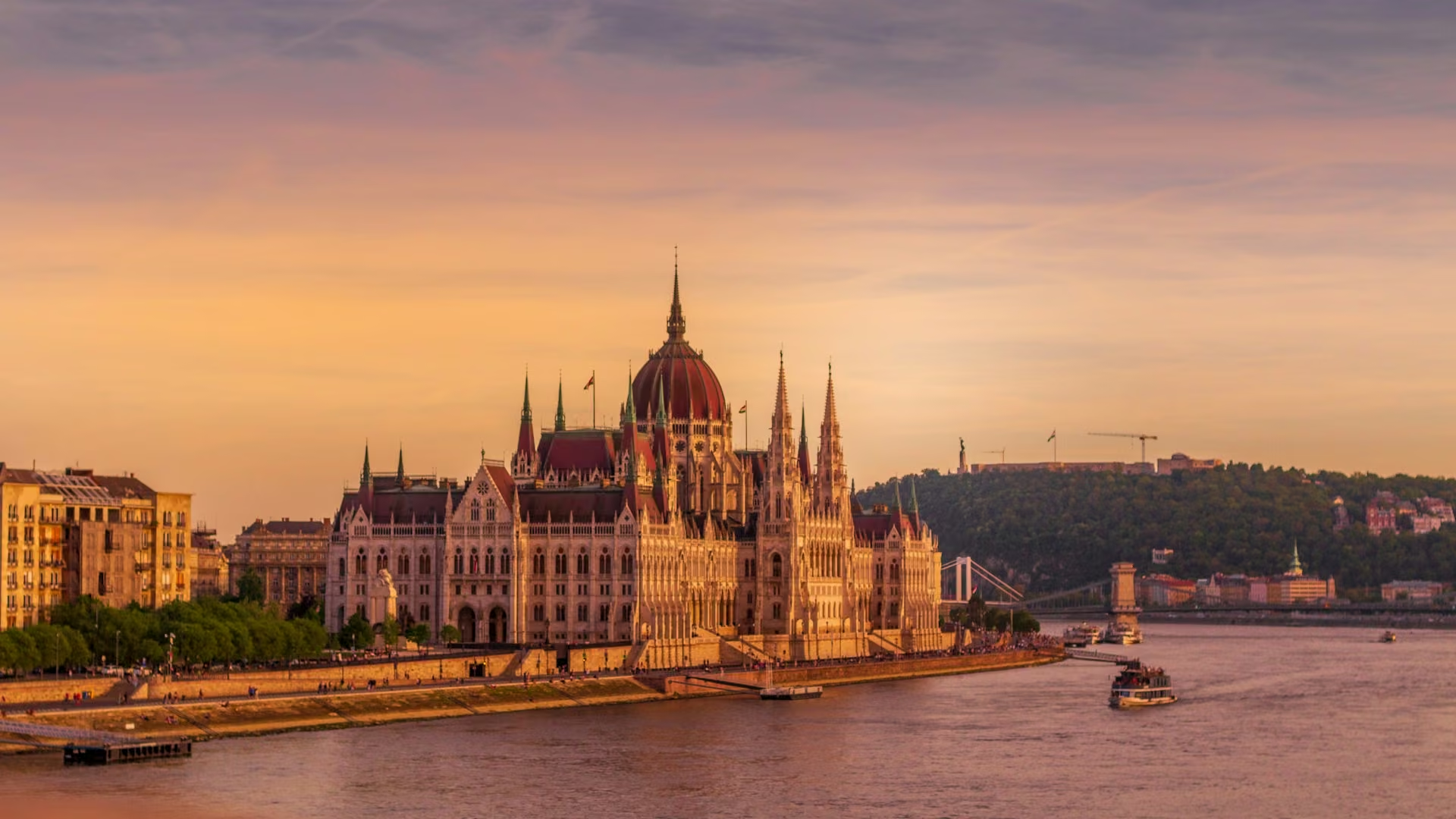
Your cruise begins in Budapest, where the Danube divides the city into two distinct halves. On the west bank, hilly Buda is crowned by the Castle District, with its former royal palace, the colourful tiled roof of Matthias Church and the turrets of the Fisherman's Bastion. On the flat east bank, Pest is the busy, modern side of town, laid out with broad 19th-century avenues and dominated on the riverfront by the huge neo-Gothic Parliament. Buda, Pest and Óbuda were only united as one city in 1873. After you settle in, try to be on deck after dark, when the riverside is floodlit.
Chain Bridge and the Danube Bend
Spend the morning in Budapest, perhaps crossing the Chain Bridge on foot. Opened in 1849, it was the first permanent bridge between Buda and Pest, designed by the English engineer William Tierney Clark and built under Adam Clark, a Scot. You could visit a museum, or follow local habit and soak in one of the city's thermal baths, fed by natural hot springs. Later the ship casts off and sails north through the Danube Bend, where the river swings around a range of wooded hills. It is a lovely stretch to watch from the sun deck, with small towns and churches along the banks.
Imperial Vienna
Vienna was the seat of the Habsburgs for more than six centuries, and its architecture still speaks of that power. Look for the Gothic spire and patterned tiled roof of St Stephen's Cathedral, the vast Hofburg palace and the grand public buildings on the Ringstrasse, the boulevard built on the line of the old city walls. Music runs through the city's history. Mozart, Haydn, Beethoven and Schubert all worked here, and the Strauss family turned the waltz into Vienna's signature sound. Today you explore the city and learn about that classical heritage, which comes alive in the concert of Mozart and Strauss that features during your stay.
Vienna at your own pace
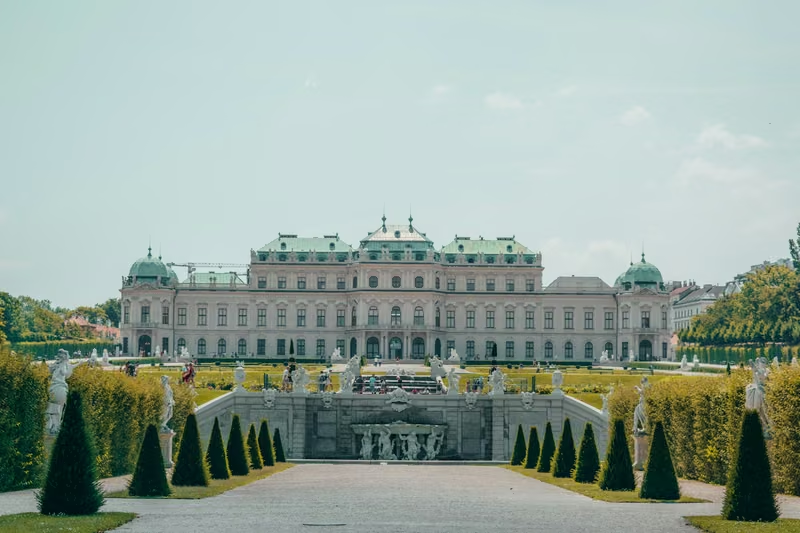
A second day in Vienna lets you choose your own favourites. Art lovers can head for the Kunsthistorisches Museum, with its remarkable collection of paintings by Bruegel, or the Belvedere, where Klimt's The Kiss hangs. Schönbrunn, the Habsburgs' summer palace, is easily reached and its gardens are free to walk. Or you may simply want to sit in a traditional coffee house, where waiters in black jackets bring coffee on a silver tray with a glass of water. Pair it with Viennese pastry, perhaps a slice of chocolate Sachertorte, first created in the city in 1832, or a warm apple strudel.
Göttweig Abbey and the Wachau
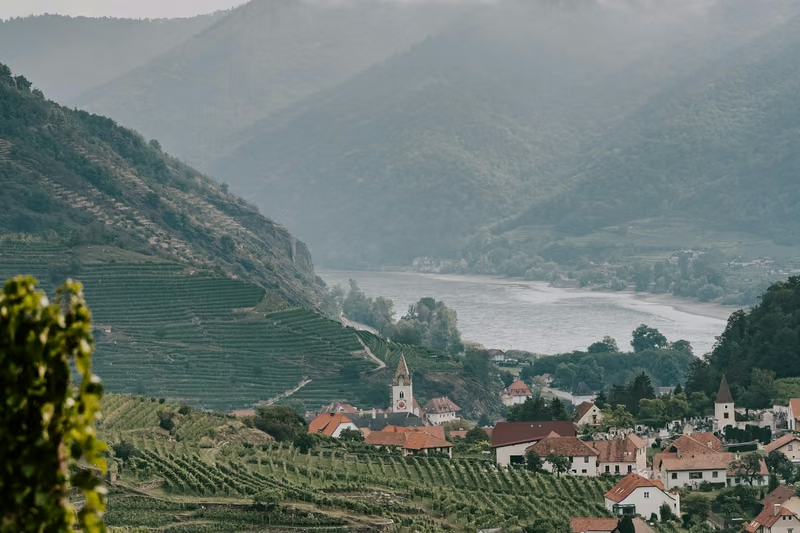
From Krems, an old wine town at the eastern end of the Wachau, you visit Göttweig Abbey, which looks down on the valley from its hilltop. Founded in 1083, it was rebuilt in baroque style after a fire in 1718. Highlights include the imperial staircase, with a ceiling fresco by Paul Troger showing Emperor Charles VI as the sun god Apollo, the library and the church. Then the ship sails through the Wachau itself, a UNESCO-listed valley of terraced vineyards and orchards. You pass Dürnstein, where Richard the Lionheart was held prisoner in 1192 and 1193, its blue and white church tower easy to spot.
Baroque Passau
You arrive in Bavaria at Passau, where three rivers meet: the Danube, the green Inn flowing in from the Alps and the dark little Ilz. After a fire destroyed much of the town in 1662, Italian architects rebuilt it, giving the old town its southern feel, with pastel patrician houses, arcades and small squares. The centrepiece is St Stephen's Cathedral, a dazzling baroque church of white stucco and frescoes that houses one of the largest church organs in the world. High above the confluence stands the Veste Oberhaus, a fortress built by the prince-bishops, with fine views back over the rooftops and rivers.
Medieval Regensburg
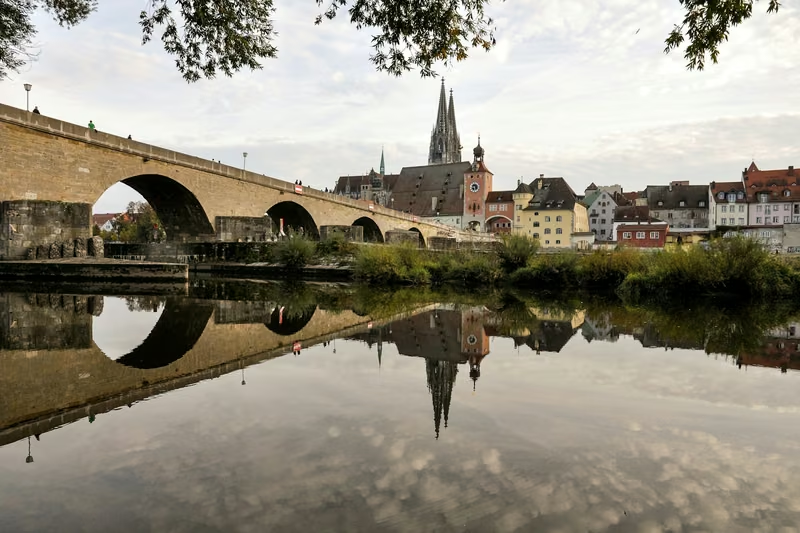
Regensburg escaped serious damage in the Second World War, and walking its lanes gives you a real sense of a medieval German city. It started as a Roman fortress in 179 AD, grew rich on trade along the Danube and, from 1663 to 1806, hosted the Perpetual Imperial Diet of the Holy Roman Empire. Your tour takes in the Gothic cathedral of St Peter, the tall towers built by merchant families to show off their wealth and the Stone Bridge, completed in the 12th century. Beside it, the Historic Sausage Kitchen has served grilled sausages with sauerkraut and sweet mustard for centuries.
Farewell in Regensburg
Your cruise ends in Regensburg. Say goodbye to the crew and your fellow guests, and if you have booked Viking's flights, a transfer will take you to the airport for your journey home to the UK. If you have time before you leave, or have added an extension, a final walk through the old town is a pleasure. The astronomer Johannes Kepler died in Regensburg in 1630, and the house where he stayed is now a small museum. Outside the city, Walhalla, a Greek-style temple to famous Germans built by King Ludwig I, stands above the Danube.
Itineraries and shore excursions are set by Viking and can change, and may vary by departure.
The places you will visit
Budapest, a city of two halves
Budapest only became one city in 1873, when hilly Buda and ancient Óbuda on the west bank were united with flat, fast-growing Pest on the east. The years that followed were a golden age. As joint capital of the Austro-Hungarian Empire, the city gained its grand boulevards, the first underground railway in continental Europe and a Parliament building, completed in 1904, that remains one of the largest in the world. The riverbanks, the Castle District and Andrássy Avenue are now listed together by UNESCO.
The Chain Bridge, opened in 1849, is the city's best-loved landmark. Count István Széchenyi championed it after being unable to cross the river for days to reach his father's funeral, and the square at its Buda end is named after its Scottish engineer, Adam Clark. Budapest's other great tradition is bathing. The city stands on a network of hot springs, and its baths range from those built under Ottoman rule in the 16th century, with their domed pools, to the grand Széchenyi and Gellért baths of the early 20th century.
Göttweig, Melk and the Wachau
The Wachau runs for roughly 36 kilometres between Krems and Melk, and in 2000 UNESCO listed it as a cultural landscape. It is easy to see why. Monasteries, castles and small towns line the river, and the hillsides have been terraced for vines since the Middle Ages. Its wines are mostly dry whites, especially Grüner Veltliner and Riesling, and the valley is equally famous for its apricots, which blossom in spring and appear in summer as jam, brandy and the much-loved apricot dumplings you get the chance to make on this cruise.
Göttweig Abbey watches over the eastern end of the valley from its hill above Krems. It was founded in 1083 by Altmann, Bishop of Passau, and became Benedictine a few years later. After a fire in 1718, Abbot Gottfried Bessel asked Johann Lucas von Hildebrandt, one of the leading architects of the Austrian baroque, to rebuild it. His plan was never fully completed, but the imperial staircase is a triumph, crowned in 1739 by Paul Troger's ceiling fresco of Emperor Charles VI portrayed as Apollo. The monks still live and pray here.
Regensburg, the medieval city that survived
Regensburg has a long history. The Romans founded a legionary fortress here, Castra Regina, in 179 AD, and parts of its gate still stand. In the Middle Ages the city was among the richest in Germany, trading along the Danube as far as Venice and the East. Its merchant families built tall tower houses in the Italian style, and a good number still rise above the rooftops today. The Stone Bridge, completed in the 12th century, was a marvel of its age and for centuries the only crossing of the Danube in the city.
Because Regensburg was largely spared bombing in the Second World War, its medieval core has survived remarkably intact, and in 2006 the old town and the neighbouring district of Stadtamhof were listed by UNESCO. From 1663 to 1806 the city hosted the Perpetual Imperial Diet, the assembly of the Holy Roman Empire. The Gothic cathedral of St Peter is home to the Regensburger Domspatzen, one of the oldest boys' choirs in the world. For a simple local lunch, the Historic Sausage Kitchen by the bridge is hard to beat.
What is included
Viking prices its river cruises to include most of what you need, so there are few extras to budget for once you are on board.
Return flights
Return flights from London and selected regional airports, with ground transfers included when you fly with Viking.
A shore excursion in every port
One included shore excursion in each port of call, usually a guided walking or coach tour, with optional extras to buy.
All meals on board
Breakfast, lunch and dinner every day you are on board, including al fresco dining on the Aquavit Terrace.
Drinks with lunch and dinner
Beer, wine and soft drinks served with lunch and dinner, plus specialty coffee, tea and bottled water at any hour.
Free Wi-Fi
Wi-Fi is included on board at no extra charge, though speeds can vary as the ship moves along the river.
Port taxes and fees
Port taxes and fees are built into the fare, so there are no extra charges waiting at the end.
Onboard gratuities
Gratuities for the crew on board are included in the fare.
Enrichment and performances
Talks on the history and culture of your route, plus local performers who bring the destinations to life on board.
Your stateroom, the ship and its facilities are covered on our Viking Longships page.
Fares
| Cruise | Duration | From, per person |
|---|---|---|
| Romantic Danube, Budapest to Regensburg | 8 days | £1,795 |
Lead-in fare per person, checked in October 2026. Viking's fares change with the date, direction of sailing and stateroom grade, so please email us for live prices and availability on the departure you have in mind.
Interested in the Romantic Danube? Email us your preferred month and we will send dates and prices.
Email an enquiry- Best time to go: April to October. Spring brings apricot blossom to the Wachau, summer is warm and busy, and autumn is harvest time in the vineyards.
- Budapest is a rewarding place to arrive early. A night or two before the cruise gives you time for a thermal bath and an evening walk along the river.
- The pace is relaxed, with two full days in Vienna and a scenic sailing on the Danube Bend and through the Wachau to break up the city stops.
- This itinerary suits lovers of music, architecture and good food, and it makes a gentle first river cruise.
- Fares start from £1,795 per person, checked in October 2026. Prices change with departure date and stateroom grade.
Romantic Danube: your questions answered
The price includes return flights from London and selected UK regional airports, a river view stateroom, all meals on board, beer, wine and soft drinks with lunch and dinner, specialty coffee, tea and bottled water around the clock, Wi-Fi, port taxes, onboard gratuities and a guided shore excursion in every port. Transfers are included with Viking's flights.
You sail on one of Viking's Longships, built specifically for Europe's rivers. Each carries 190 guests, and all staterooms have a river view. The particular ship depends on your departure date, which we can confirm when you get in touch.
Both start in Budapest and visit Vienna, Göttweig Abbey and Passau. The Romantic Danube gives you two full days in Vienna, includes a scenic sailing through the Danube Bend and ends in medieval Regensburg. The Danube Waltz has one day in Vienna but adds Bratislava and Linz, and finishes in Passau.
Spring and autumn are many people's favourite seasons. April brings apricot blossom to the Wachau, while September and October offer the grape harvest and mellow weather. July and August are the warmest months and the busiest in the cities. River levels can occasionally affect sailing plans, and the crew keep guests informed if changes are needed.
Most guided tours explore old towns on foot, so expect some cobbled streets, steps and gentle slopes, particularly in Passau and Budapest's Castle District. You can always set your own pace or stay on board, and the scenic sailing days need no walking at all. If you have mobility concerns, ask us before booking.
Yes. Return flights from London and selected regional airports across the UK are part of the fare. Availability varies by date, so tell us which airport suits you and we will check. Booking Viking's flights also means your transfers between the airport and the ship are included.
Viking offers pre and post-cruise extensions for this itinerary, and many guests like to add time in Budapest before they sail. The options vary by season, so get in touch and we will let you know what is available for your chosen departure.
You might also like
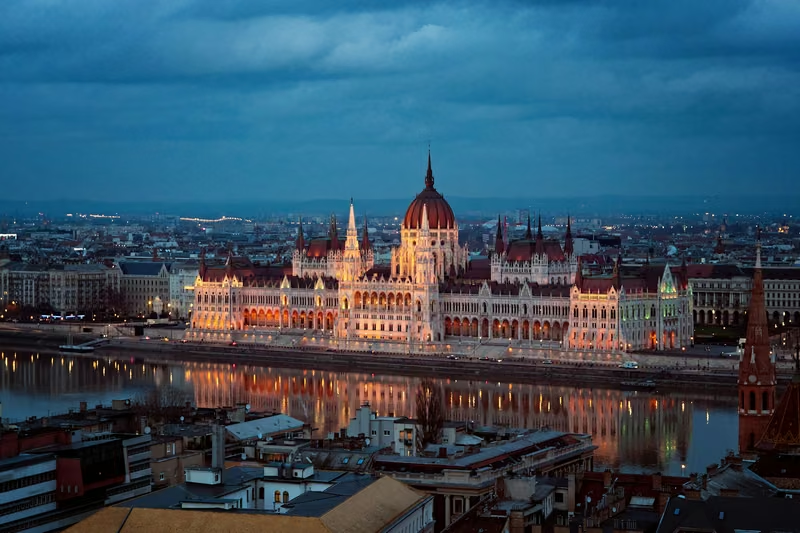
Danube Waltz
A week on the Danube from Budapest to Passau, taking in four countries, two capitals that rarely get the attention they deserve and the vineyards of the Wachau.
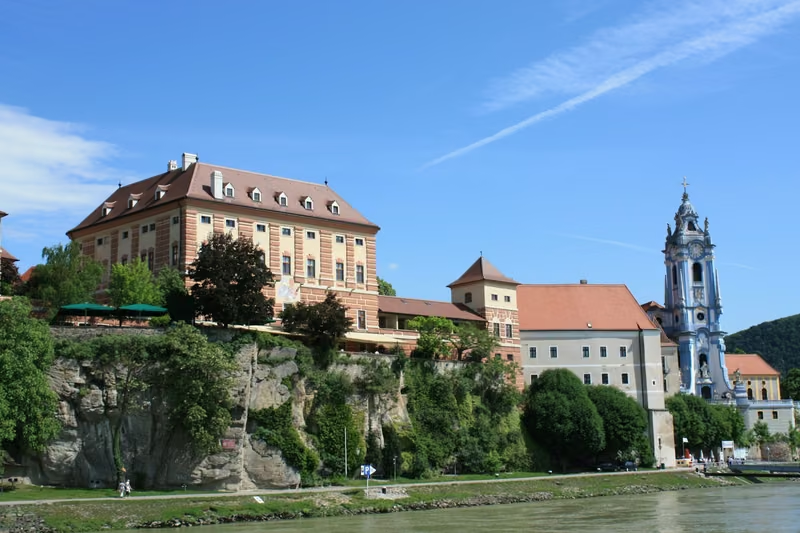
Grand European Tour
Fifteen days across the continent by water, from the bridges of Budapest to the canals of Amsterdam, linking the Danube, the Main and the Rhine.
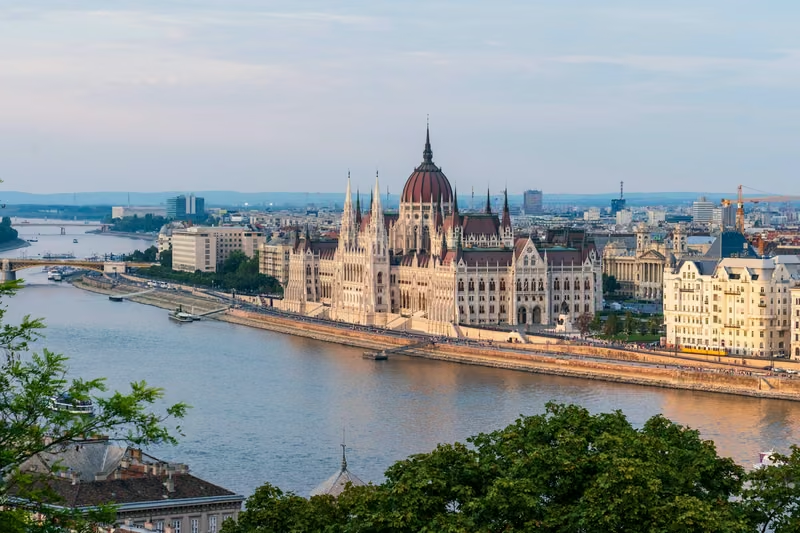
Passage to Eastern Europe
Eleven days on the lower Danube, from Bucharest to Budapest, through the gorges of the Iron Gate and across five countries, several of which most river cruisers never reach.