This is one of the longer journeys in Viking's European programme, and it earns the extra days. You start among the olive groves and Roman stones of Provence, eat your way through Lyon, then swap the Rhône for the Rhine and follow it all the way to the North Sea.
The route
Avignon · Arles · Avignon · Viviers · Tournon · Vienne · Lyon · Burgundy · Basel · Breisach · Strasbourg · Speyer · Rüdesheim · Koblenz · Cologne · Kinderdijk · Amsterdam
About the Lyon, Provence & the Rhineland cruise
The first half of the cruise belongs to the Rhône. Avignon is your base for the opening days, with a visit to Arles in between, so you settle in without packing and unpacking. From there the ship heads north past Viviers, Tournon and Vienne, through a valley where the Romans planted vines and where names such as Hermitage and Côte-Rôtie still turn up on serious wine lists. Lyon gets two full days, which is about right for a city that takes its food more seriously than almost anywhere in France.
On day 8 you leave the Rhône behind, tasting your way through Burgundy before reaching Basel, where the Rhine section begins. The character of the trip changes here. Swiss tidiness gives way to the Black Forest hills around Breisach, then to Strasbourg, where French and German culture have been swapping places for centuries. Speyer's great Romanesque cathedral and the wine bars of Rüdesheim follow on the same day, one sober and imperial, the other cheerful and decidedly fond of a glass of Riesling.
The Middle Rhine is the scenic highlight of the northern stretch, a gorge of steep vineyards and castles with the Lorelei rock at its narrowest bend. Find a seat on the sun deck for this part, because there is something new to look at around every bend. After Koblenz, where the Moselle joins, and Cologne with its twin-spired cathedral, the land flattens out. The river splits into the Waal and Merwede, and the windmills of Kinderdijk mark your arrival in Holland before the journey ends in Amsterdam.
It suits travellers who enjoy wine, Roman history and good food, and who would rather see two contrasting regions properly than rush either. Fifteen days sounds like a lot, but the pace is comfortable, with several two-night stays and quieter sailing days to break things up. Vincent van Gogh links the two ends of the trip, having painted the Dutch countryside in his early years and the light of Arles at the height of his powers, so a visit to the Van Gogh Museum in Amsterdam rounds things off nicely.
For more on the river itself, see our The Rhône and Saône river cruise guide, The Rhine river cruise guide.
Cruise highlights
Avignon and the Palace of the Popes
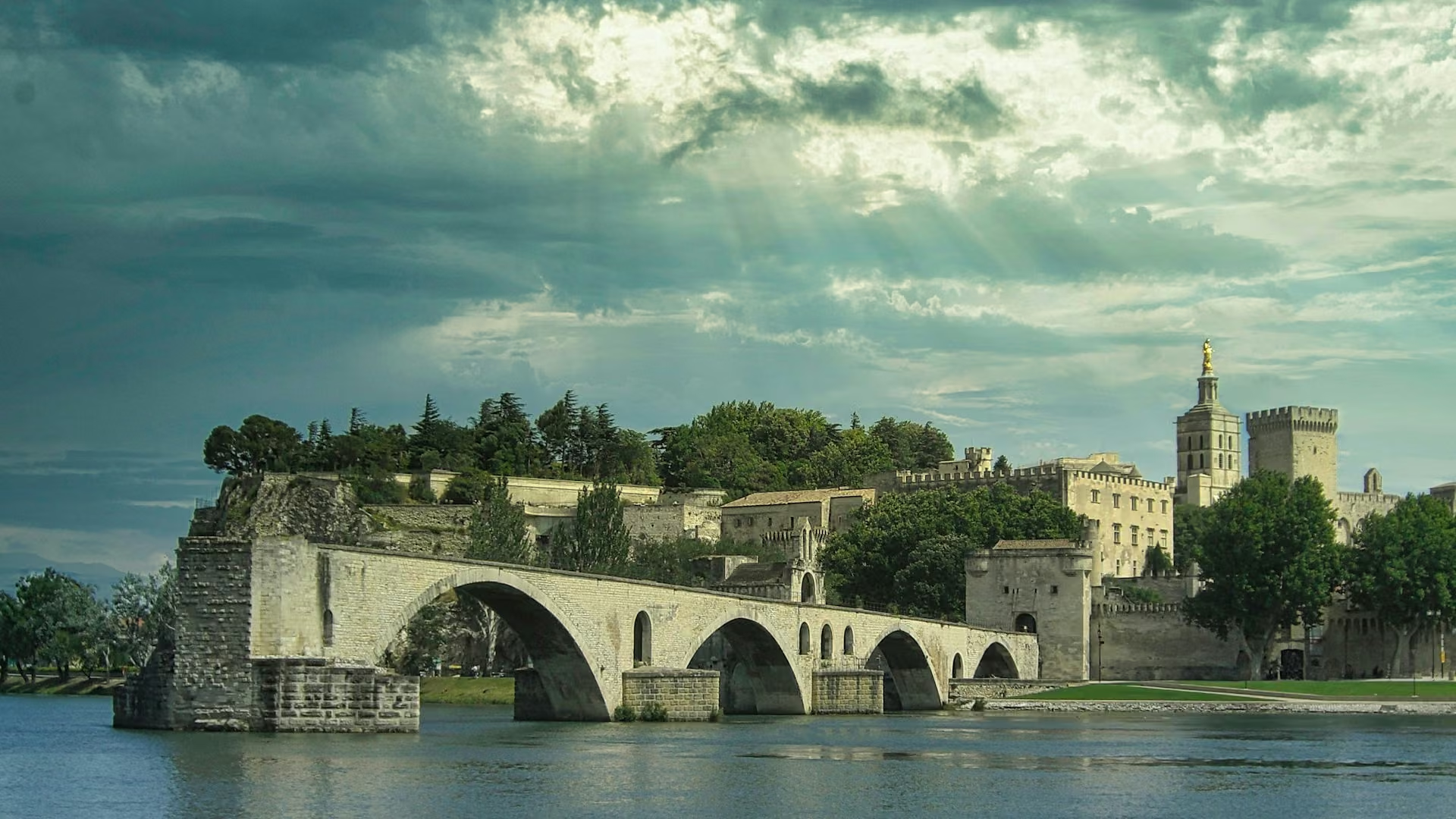
See the vast Gothic palace that housed the papacy in the 14th century, and the broken bridge made famous by a children's song.
Van Gogh's Arles
Walk among the Roman arena and Romanesque churches of the town where Van Gogh produced some of his best known paintings.
The Train de l'Ardèche
Ride a heritage railway through the wooded Doux Valley from Tournon, a lovely change of pace from the river.
Two days in Lyon
Explore the old quarter below Fourvière hill, then head out into the golden-stone villages and vineyards of Beaujolais.
Strasbourg and Alsace
Admire the rose-coloured cathedral and the half-timbered lanes of Petite France, then try Alsatian cooking.
The Middle Rhine and Kinderdijk
Sail the castle-lined Rhine Gorge past the Lorelei, then see the 18th-century windmills of Kinderdijk before reaching Amsterdam.
Day by day itinerary
Arrive in Avignon
Your cruise begins in Avignon, a walled city on the Rhône that was home to the popes for much of the 14th century. A walk through the medieval centre takes in the Place de l'Horloge, the main square lined with cafés and the town hall, and the Pont d'Avignon, the old bridge that now stops halfway across the river. Above it all rises the Palace of the Popes, one of the largest Gothic palaces in Europe and part of a UNESCO-listed historic centre. It is a fine introduction to Provence and an easy first day while you settle into your stateroom.
Roman and Romanesque Arles
Today you visit Arles, a town that has been important since Roman times and still has the monuments to prove it. The arena, built at the end of the 1st century, is in remarkably good shape and is still used for events. Nearby are the remains of the Roman theatre, and the Church of Saint-Trophime, whose carved portal is one of the finest pieces of Romanesque sculpture in Provence. Arles is also where Vincent van Gogh lived in 1888 and 1889, and fans will recognise scenes from his paintings around the town. The Roman and Romanesque monuments are UNESCO-listed.
A taste of Provence
Back in Avignon, the day is given over to the flavours of Provence. Expect a tasting of local wines alongside French specialities, a good way to understand why this corner of France has such a reputation at the table. The southern Rhône is known for generous, sun-warmed reds, with Châteauneuf-du-Pape, named after the popes' summer castle, just a short distance north of the city. You will also have free time to wander back to the squares and lanes you saw on day one, perhaps stopping for a pastis or browsing the covered market at Les Halles.
Quiet Viviers
Viviers makes a peaceful contrast after the bustle of Avignon. This small riverside town sits beneath limestone hills and has been the seat of a bishop since the late 5th century, which explains its grand old houses and the Cathedral of Saint Vincent at the top of the town. Its name comes from the Latin word for the fishponds the Romans kept on the Rhône. Narrow streets climb between stone façades, and the views from the cathedral terrace over the river and the surrounding countryside are lovely. It is a place to slow down, look around and enjoy the calm.
Heritage railway, scenic sailing and Roman Vienne
A busy and varied day. From Tournon you board the Train de l'Ardèche, a vintage railway that winds up the green Doux Valley and through its wooded gorges. Later the ship sails north along the Rhône, past terraced vineyards that cling to the steep granite slopes of the northern Rhône wine region. In the afternoon you reach Vienne, a major town of Roman Gaul. Its Temple of Augustus and Livia, dating from the 1st century, survives almost intact, and the large Roman theatre set into the hillside is still used for performances, including the town's well known summer jazz festival.
Discover Lyon
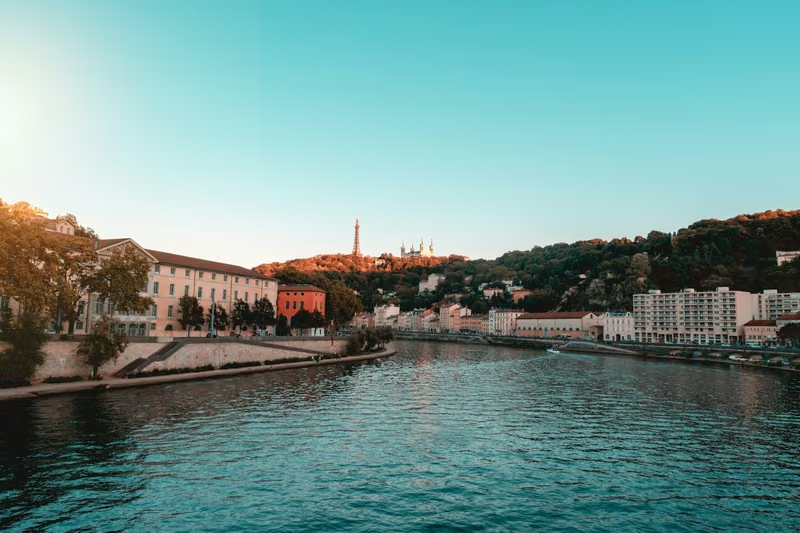
Lyon sits where the Rhône and the Saône meet, and it was the capital of Roman Gaul long before it became France's culinary capital. A walking tour takes you through the Renaissance lanes of Vieux Lyon to St Jean Cathedral, a Gothic building with a famous astronomical clock inside. High above on Fourvière hill stands the Basilica of Notre-Dame, a late 19th-century church covered inside with gold and mosaics. The historic centre is UNESCO-listed. Look out for the traboules, hidden passageways that cut through the old buildings, and save room for dinner in a traditional bouchon.
The villages of Beaujolais
Today you head north of the city into Beaujolais, a medieval province of rolling vineyards and small villages. In the southern part, known as the Pierres Dorées, the houses and churches are built from a honey-coloured limestone that glows in the late afternoon. This is the home of the Gamay grape, which makes light, fruity reds and the famous Beaujolais Nouveau released each November. The countryside is gentle and very pretty, and the pace is unhurried. Back in Lyon, you may want a final evening exploring the city's restaurants and markets.
Burgundy wines and on to Basel
Today you leave the Rhône and travel through Burgundy, one of the most respected wine regions in the world. Here you learn about its winemaking traditions and taste some of the wines, made mostly from Pinot Noir and Chardonnay on vineyard plots that have been mapped and named for centuries. Your journey then continues to Basel, where the Rhine section of the cruise begins. Basel sits on a bend of the Rhine at the point where France, Germany and Switzerland meet, and it is a cultured city with a fine medieval cathedral and some of Switzerland's best art museums.
Gateway to the Black Forest
Breisach is a small town on the German bank of the Rhine, crowned by its hilltop Minster of St Stephan. It is also the gateway to the Black Forest, a region of dark conifer woods, rolling hills and farmhouses with deep sloping roofs. The scenery here is lovely in any season. This is the home of the cuckoo clock and of Black Forest gateau, the chocolate and cherry cake that is rather better here than in most British restaurants. Expect a day of green landscapes and fresh air, a pleasant change after the cities of the first week.
Strasbourg and the flavours of Alsace
Strasbourg has changed hands between France and Germany several times, and the mix of the two cultures is part of its appeal. The cathedral, built from pink sandstone, was the tallest building in the world for more than two centuries, and its astronomical clock draws crowds every day. The old centre on the Grande Île is UNESCO-listed, with the half-timbered houses and canals of Petite France as its prettiest corner. Alsatian food is hearty and delicious, so try tarte flambée, choucroute or a glass of local Riesling. The city is also a seat of the European Parliament.
Imperial Speyer and wine-loving Rüdesheim
In the morning you visit Speyer and its Romanesque cathedral, consecrated in 1061 and one of the largest surviving churches of its kind. It was the burial place of German emperors and kings, and it is UNESCO-listed. Later the ship reaches Rüdesheim, a wine town at the start of the Rhine Gorge. Its narrow Drosselgasse is lined with wine taverns, and you will have the chance to taste local wines in one of them. The Rheingau region around Rüdesheim is known above all for Riesling. Try a Rüdesheimer coffee, made with local brandy and topped with cream.
Sailing the Rhine Gorge
This morning is for the deck. The ship sails through the Middle Rhine, a UNESCO-listed stretch where the river cuts a deep valley through the hills and almost every bend reveals another castle or vine-covered slope. Look out for the Lorelei, a tall slate rock where legend says a siren lured boatmen to their deaths. Later you arrive in Koblenz, a city founded by the Romans where the Moselle joins the Rhine. The point where the rivers meet, the German Corner, is marked by a huge equestrian statue of Kaiser Wilhelm I. Explore the Old Town's squares and churches.
Cologne and its cathedral
Cologne was founded by the Romans and became one of the great cities of medieval Germany. Its Gothic cathedral is the obvious highlight. Building began in 1248 and was not finished until 1880, and the result dominates the skyline with its twin spires. Inside is the golden shrine said to hold the relics of the Three Kings. The cathedral is UNESCO-listed. Walk through the Old Town to the riverside, and stop in a traditional brewery tavern for a glass of Kölsch, the local beer served in small glasses that keep coming until you cover the top with a beer mat.
Dutch waterways and the windmills of Kinderdijk
Today you cross into the Netherlands and sail along the Waal and Merwede, branches of the Rhine as it spreads out towards the sea. The landscape is flat and green, with dykes, farms and wide skies. In the afternoon you reach Kinderdijk, where 19 windmills built around 1740 stand along the polder canals. They were part of a system for draining the low-lying land, and some are still lived in by millers today. The site is UNESCO-listed and shows how the Dutch have managed water for centuries. It is particularly photogenic in the late afternoon light.
Farewell in Amsterdam
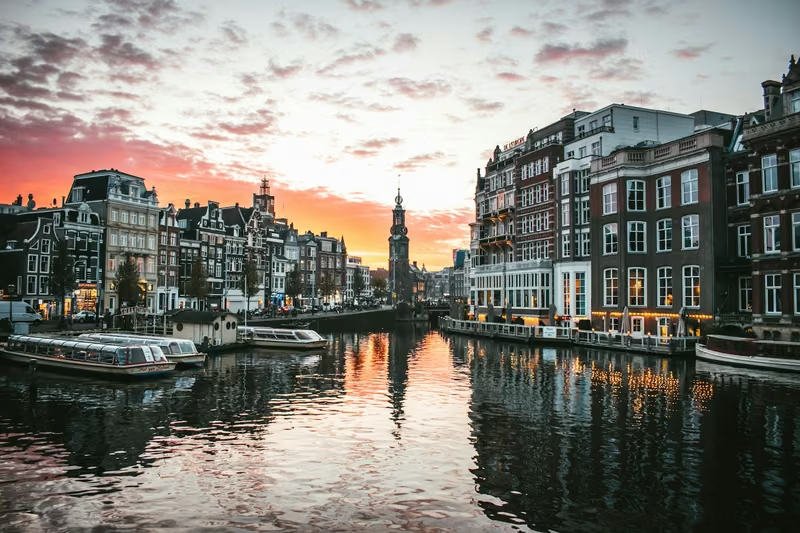
Your cruise ends in Amsterdam, where you say goodbye to your fellow guests and either fly home or stay on to see more of the city. If you have time, Amsterdam is easy to explore on foot or by canal boat. Its ring of 17th-century canals, lined with tall merchant houses, is UNESCO-listed, and the city has superb museums, including the Rijksmuseum and the Van Gogh Museum, a fitting end to a journey that began near Arles. Viking offers optional post-cruise extensions in Amsterdam, and a fully guided Best of Belgium extension if you would like to continue travelling.
Itineraries and shore excursions are set by Viking and can change, and may vary by departure.
The places you will visit
Avignon, Arles and the Provence of the popes and painters
In 1309 Pope Clement V, a Frenchman, settled in Avignon rather than face the political turmoil of Rome, and for most of the 14th century the city was the centre of the Catholic world. The popes built the Palace of the Popes as both residence and fortress, and its massive walls still dominate the old town. Even after the papacy returned to Rome, rival popes continued to sit here for a time during the Great Schism. Avignon kept its papal connection for centuries, remaining papal territory until the French Revolution, and that long history explains the city's grand churches and palaces.
Arles has an even older story. It was a favoured city of Julius Caesar, and the Romans left behind an arena, a theatre and baths that still define the town centre. In 1888 Vincent van Gogh moved here from Paris in search of southern light. In little more than a year he painted many of his most famous works, including sunflowers, starry skies over the Rhône and the Yellow House where he lived. It was also here that his friendship with Paul Gauguin broke down. Walking through Arles today, it is easy to see what drew him.
Lyon, the capital of French food
Lyon was founded by the Romans in 43 BC as Lugdunum and became the capital of the Three Gauls. You can still see the remains of the Roman theatre on Fourvière hill. In the Renaissance the city grew rich on silk weaving and banking, and the merchants' houses of Vieux Lyon date from that time. The traboules, covered passages running between streets, were used by silk workers to move their fabric without exposure to the weather, and they later served the Resistance during the Second World War. The Lumière brothers also developed their cinematograph here in the 1890s.
The city's food reputation rests on two traditions. One is the bouchon, a small, informal restaurant serving hearty dishes such as sausages, quenelles and offal, with a jug of local wine. The other is the line of great chefs, most famously Paul Bocuse, who made Lyon a byword for French gastronomy. The covered market named after Bocuse is the best place to see the produce. Lyon is also perfectly placed between two wine regions, with Beaujolais to the north and the northern Rhône to the south.
The Rhine from Basel to the sea
Basel is where most Rhine river cruises begin or end, and from here the river flows north, forming the border between France and Germany along the length of Alsace. Strasbourg, the main city of Alsace, was the place where Johannes Gutenberg worked on his early experiments with printing, and where the French national anthem, La Marseillaise, was first sung in 1792. Speyer's cathedral, meanwhile, reflects the power of the Salian emperors who built it as a statement of imperial authority. The cities along this stretch tell the story of a frontier that has shifted many times.
The Middle Rhine between Rüdesheim and Koblenz is a landscape of castles and vineyards that inspired generations of Romantic poets and painters, including J. M. W. Turner. Heinrich Heine's poem about the Lorelei made the rock famous throughout Germany. Further north, Cologne grew wealthy as a trading city and pilgrimage centre, thanks largely to the relics of the Three Kings. Finally, in the Netherlands, the river divides into a web of channels, and the landscape around Kinderdijk shows the centuries of work the Dutch have put into keeping the water at bay.
What is included
Viking prices its river cruises to include most of what you need, so there are few extras to budget for once you are on board.
Return flights
Return flights from London and selected regional airports, with ground transfers included when you fly with Viking.
A shore excursion in every port
One included shore excursion in each port of call, usually a guided walking or coach tour, with optional extras to buy.
All meals on board
Breakfast, lunch and dinner every day you are on board, including al fresco dining on the Aquavit Terrace.
Drinks with lunch and dinner
Beer, wine and soft drinks served with lunch and dinner, plus specialty coffee, tea and bottled water at any hour.
Free Wi-Fi
Wi-Fi is included on board at no extra charge, though speeds can vary as the ship moves along the river.
Port taxes and fees
Port taxes and fees are built into the fare, so there are no extra charges waiting at the end.
Onboard gratuities
Gratuities for the crew on board are included in the fare.
Enrichment and performances
Talks on the history and culture of your route, plus local performers who bring the destinations to life on board.
Your stateroom, the ship and its facilities are covered on our Viking Longships page.
Fares
| Cruise | Duration | From, per person |
|---|---|---|
| Lyon, Provence & the Rhineland, Avignon to Amsterdam | 15 days | £4,190 |
Lead-in fare per person, checked in October 2026. Viking's fares change with the date, direction of sailing and stateroom grade, so please email us for live prices and availability on the departure you have in mind.
Interested in the Lyon, Provence & the Rhineland? Email us your preferred month and we will send dates and prices.
Email an enquiry- Spring and early autumn are lovely in both Provence and the Rhineland, while late September and October bring the grape harvest along much of the route.
- The first three days are based around Avignon, so it is worth arriving with energy to explore the city before and after the included tour.
- The cruise uses two sections, the Rhône and the Rhine, with the switch on day 8, so pack sensibly for the move.
- Pre-cruise extensions are offered in Aix-en-Provence and on the French Riviera, with post-cruise options in Amsterdam and Belgium.
- Most included tours involve walking on cobbled streets and some hills, especially in Viviers, Lyon and Avignon.
Lyon, Provence & the Rhineland: your questions answered
Viking's fare includes return flights from London and selected regional airports, one included shore excursion in every port of call, all onboard meals, beer, wine and soft drinks with lunch and dinner, 24-hour specialty coffee, tea and bottled water, free Wi-Fi, port taxes and fees, enrichment lectures and onboard gratuities. Ground transfers are included when you buy flights through Viking. Prices start from £4,190 per person, checked in October 2026, and vary with date and stateroom.
The cruise is operated by Viking Longships, the modern river ships used across Viking's European rivers. Every stateroom has a river view, a Viking Explorer bed and a heated bathroom floor. Because the Rhône and the Rhine are separate rivers, the first part of the journey is on the Rhône and the second on the Rhine, with the change made on day 8.
Late spring and early autumn are ideal, with warm days in Provence and comfortable sightseeing weather further north. Midsummer can be very hot in Avignon and Arles. If wine is your main interest, a September or October departure lets you see the harvest under way in Beaujolais, Burgundy and along the Rhine.
You should be comfortable walking for an hour or two at a time, often on cobbled or uneven streets. Avignon, Viviers and Lyon all have slopes, and some sites involve steps. The ship itself is easy to get around, with a lift between the main passenger decks. If you have mobility concerns, speak to us before booking and we will check the details for you.
Viking includes return flights from London and selected regional airports. You fly out to join the ship in Avignon, in the south of France, and home from Amsterdam at the end of the cruise. We can advise you on which regional airports are available for your chosen departure date.
Yes. Before the cruise you can choose two nights in Aix-en-Provence or three nights on the French Riviera. Afterwards there are two-night Amsterdam extensions, including a premium version, and a three-night fully guided Best of Belgium tour. Extensions vary by itinerary and are subject to change, so ask us for current prices.
The route takes in Avignon, Arles, Viviers, Tournon, Vienne and Lyon on the Rhône, then Burgundy, Basel, Breisach, Strasbourg, Speyer, Rüdesheim, Koblenz, Cologne and Kinderdijk before ending in Amsterdam. That covers France, Switzerland, Germany and the Netherlands, with several UNESCO-listed sites along the way.
You might also like
Lyon & Provence
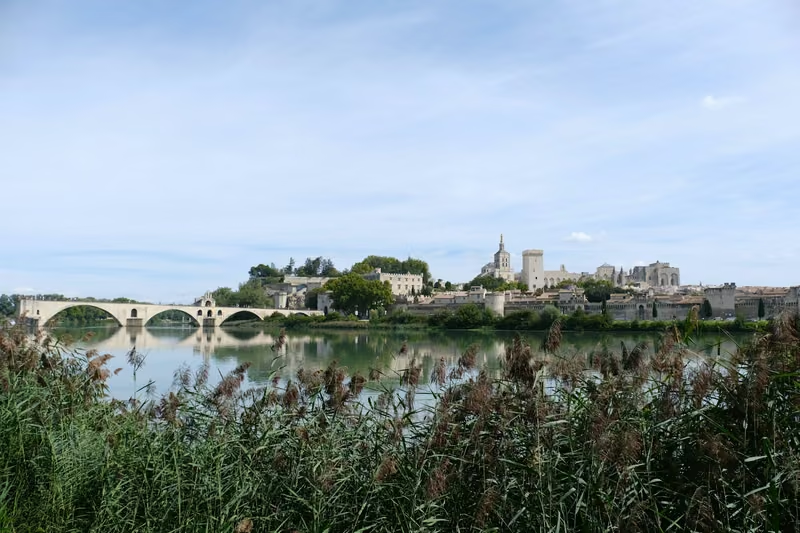
Eight days on the Rhône from the papal city of Avignon to Lyon, the capital of French gastronomy, through Roman Provence and terraced wine country.
Rhine Getaway
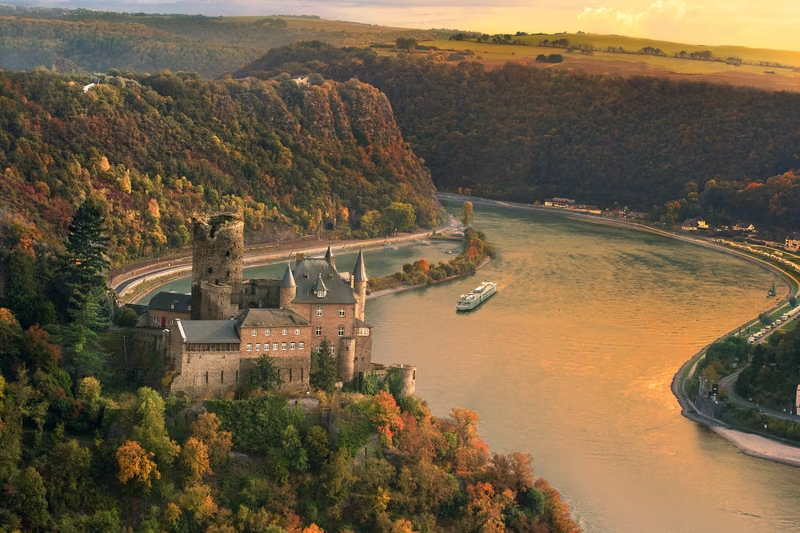
Eight days down the Rhine from the Swiss border to the canals of Amsterdam, with Alsace, the castle country of the Middle Rhine and Cologne along the way.
France's Finest
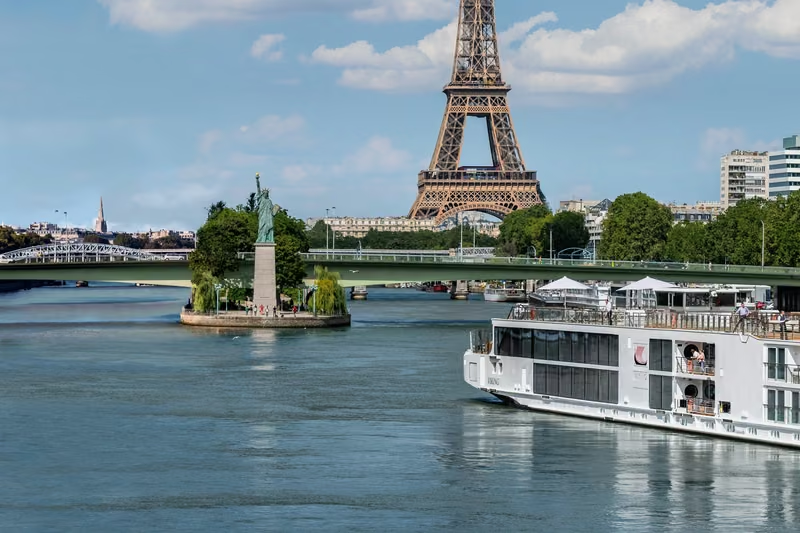
Fifteen days, two rivers and the best of France, from Paris and the Normandy beaches to the vineyards of the Rhône and the Roman towns of Provence.