Most people's picture of the Danube stops at Vienna and Budapest. This voyage shows you the other half of the river, through Romania, Bulgaria, Serbia and Croatia, where Roman, Ottoman and Habsburg history sits side by side and the welcome is warm.
The route
Bucharest · Ruse · Vidin · The Iron Gate · Golubac · Belgrade · Osijek · Kalocsa · Budapest
About the Passage to Eastern Europe cruise
Passage to Eastern Europe is an 11-day Viking river cruise from Bucharest to Budapest, travelling upstream along the lower and middle Danube. You begin with two days in Romania's capital, then follow the river where it forms the border between Romania and Bulgaria. Along the way you see the Bulgarian towns of Ruse and Vidin, the gorges of the Iron Gate, the Serbian capital Belgrade and eastern Croatia, before crossing the Great Hungarian Plain and finishing with three days in Budapest.
This is a cruise for travellers who like their history layered. The Romans guarded this stretch of the Danube as a frontier, the Ottomans held much of it for centuries, and the Habsburgs pushed them back. Fortresses such as Golubac, Kalemegdan and Baba Vida mark that long contest. The 20th century left its marks too, from Ceaușescu's vast palace in Bucharest to the scars of the 1990s in Vukovar. Alongside all this you get folk traditions, paprika-rich cooking, fine local wines and the Puszta horsemen of Hungary.
You sail on a Viking Longship, with river-view staterooms throughout. The fare includes return flights from London and selected regional airports, one shore excursion in every port of call, all meals on board, beer, wine and soft drinks with lunch and dinner, round-the-clock specialty coffee, tea and bottled water, free Wi-Fi, port taxes and onboard gratuities. Enrichment talks and local performances on board help bring each country into focus, which is especially useful on a route where the history can be complex and the names unfamiliar.
Prices start from £3,295 per person. We checked this in October 2026, and fares change with the departure date and stateroom. Passage to Eastern Europe makes a natural second Danube cruise for anyone who has already sailed between Passau and Budapest, and it pairs well with Viking's extensions to Istanbul, Transylvania, Prague or Vienna. It also suits anyone who enjoys meeting local people, trying regional food and wine, and seeing a part of Europe that has changed enormously over the past few decades. If you have questions about any part of the route, just email us.
For more on the river itself, see our The Danube river cruise guide.
Cruise highlights
Bucharest's grand contrasts
The enormous Palace of Parliament and the open-air Village Museum, with its wooden houses and churches gathered from across Romania.
The Iron Gate
A scenic sailing through the deep gorges where the Danube squeezes between the Carpathian and Balkan mountains.
Two medieval fortresses
Baba Vida in Vidin, Bulgaria's best preserved medieval castle, and the 14th-century Golubac Fortress at the mouth of the gorge.
Belgrade
Kalemegdan Fortress above the meeting of the Sava and Danube, the Church of St Sava and the Square of the Republic.
Croatian hospitality
Osijek's baroque fortress quarter, a visit to a local family and the palace and townscape of Vukovar.
Paprika and Budapest
Kalocsa's paprika and a Puszta horsemanship show, then two full days in the twin cities of Buda and Pest.
Watch the Passage to Eastern Europe cruise
Video: Passage to Eastern Europe (Viking Cruises)
Day by day itinerary
Arrive in Bucharest
Romania's capital is a city of striking contrasts, and today gives you a first look. The Palace of Parliament, begun in 1984 under Nicolae Ceaușescu, is one of the largest administrative buildings in the world, and its sheer scale says a great deal about the regime that built it. Its construction swept away a large part of the old city. By way of contrast, the Village Museum in Herăstrău Park gathers traditional farmhouses, windmills and wooden churches from all over the country. It was founded in 1936 by the sociologist Dimitrie Gusti and is one of the oldest open-air museums in Europe. Between the two you begin to see how many layers Romania has.
Belle époque Bucharest
Between the wars Bucharest was known as Little Paris, and you can still see why. Broad boulevards, a triumphal arch and elegant villas reflect the French influence of the late 19th and early 20th centuries. The Romanian Athenaeum, a domed concert hall opened in 1888, is home to the George Enescu Philharmonic, named after Romania's greatest composer. The city has a strong museum scene too, including the National Museum of Art in the former royal palace and the Museum of the Romanian Peasant. Revolution Square, where the events of December 1989 brought Ceaușescu's rule to an end, is a sobering reminder of how recent this history is.
Bulgaria's Little Vienna
Across the river from the Romanian town of Giurgiu, Ruse looked firmly west after Bulgaria broke free of Ottoman rule in 1878. Its centre is full of neo-baroque and neo-rococo buildings designed by European architects, which is why locals call it Little Vienna. The Nobel Prize winning writer Elias Canetti was born here in 1905. Today you admire the architecture and get a taste of Bulgarian cooking, which might include shopska salad with tomatoes, cucumbers and white cheese, banitsa pastry and the country's famous yoghurt. The nearby Friendship Bridge, opened in 1954, was for many years the only bridge linking Bulgaria and Romania.
Baba Vida and Vidin
Vidin sits on a broad bend of the Danube in Bulgaria's northwest corner, and its great landmark is the fortress of Baba Vida. Built on the foundations of the Roman settlement of Bononia, it grew between the 10th and 14th centuries and is often described as the only fully preserved medieval castle in Bulgaria. Its towers and walls look out over the river, and the Ottomans later used it as an arsenal and prison. The town also has a mix of mosques, synagogue ruins and Orthodox churches that tell the story of the many communities that lived here. It is a calm, unhurried place, quite different from the capitals either side of it.
Through the Iron Gate
This is the day many guests remember most. The Danube forces its way through the Carpathian and Balkan mountains in a series of gorges known together as the Iron Gate, which form the border between Serbia and Romania. Cliffs rise steeply from the water, and at the narrowest points the river is far narrower than you might expect after the wide plains downstream. Look out for the carved face of the Dacian king Decebalus on the Romanian bank and the Roman plaque known as Tabula Traiana on the Serbian side. At the upstream end, you stop at Golubac, where a 14th-century fortress of towers climbs the rocks above the river. It was restored and reopened to visitors in 2019.
Serbia's capital
Belgrade stands where the Sava flows into the Danube, a position that has made it fought over for two thousand years. The Kalemegdan Fortress, on the bluff above the confluence, has been Celtic, Roman, Byzantine, Serbian, Ottoman and Austrian, and today it is a large public park with wonderful river views. Across the city, the Church of St Sava is one of the largest Orthodox churches in the world, built on the plateau where tradition says the Ottomans burned the saint's relics in the late 16th century. The Square of the Republic is the city's main meeting point, with the National Museum and the statue of Prince Mihailo. In the evening, the old bohemian street of Skadarlija is famous for its taverns.
Eastern Croatia
Today you visit Slavonia, the fertile eastern region of Croatia. Osijek lies on the Drava, a short way from its meeting with the Danube, and its Tvrđa quarter is an 18th-century Habsburg fortress town of baroque streets and squares, built after the Ottomans were driven out. You meet a local family for a glimpse of everyday life here, which is often a highlight for guests. In Vukovar you see the baroque Eltz Palace, now the town museum, and other fine buildings. Vukovar suffered a long siege in 1991 during the war that followed the break-up of Yugoslavia, and its shell-damaged water tower has been kept as a memorial.
Paprika and Puszta horsemen
Kalocsa, on the Great Hungarian Plain, is one of the two great paprika growing centres of Hungary, along with Szeged. In late summer the fields are red with peppers, and the town has a museum devoted to this most Hungarian of spices. You get to taste dishes that make good use of it. Kalocsa is also known for its colourful folk embroidery and painted interiors, and it has been the seat of an archbishop since the time of King Stephen, around the year 1000. The day ends out on the puszta with a horsemanship show, where riders known as csikós perform remarkable feats on horseback.
Buda and Pest
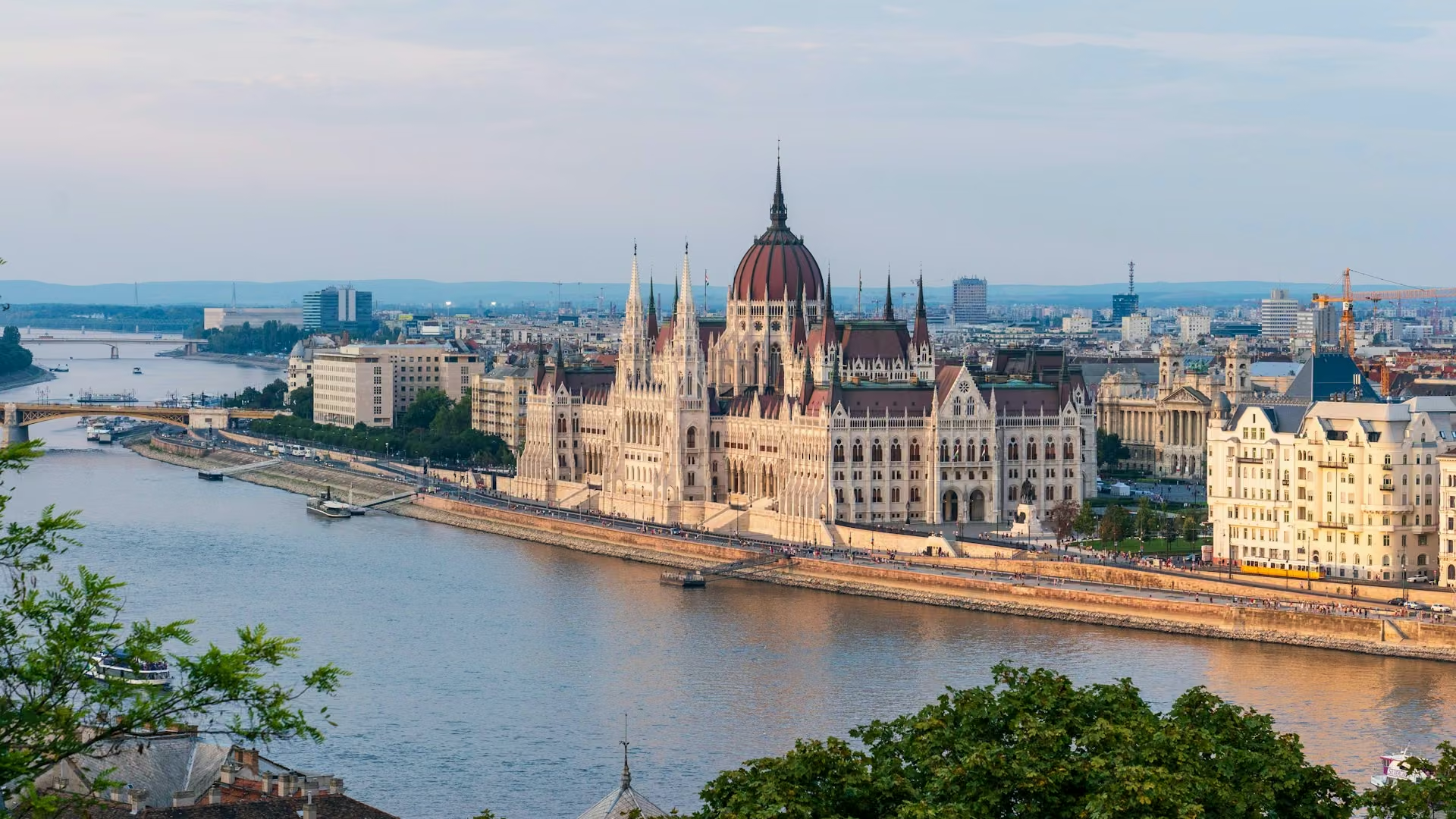
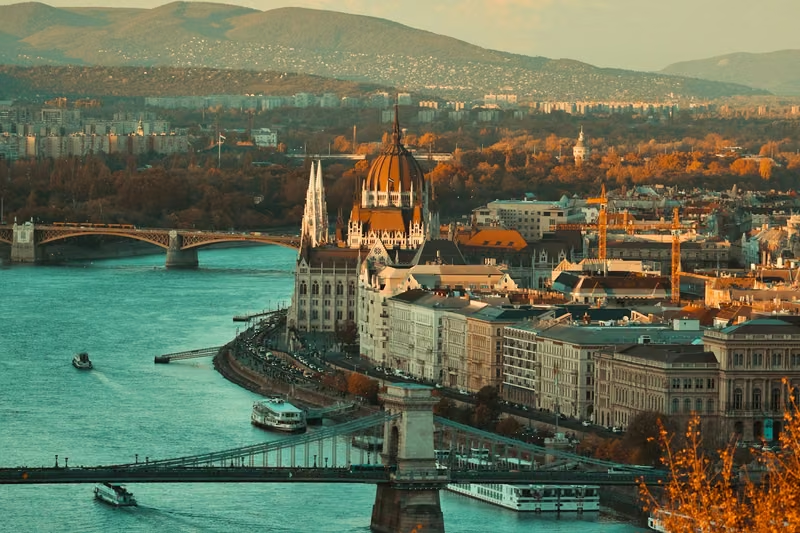
Budapest was formed in 1873 when the towns of Buda, Óbuda and Pest were joined, and the two halves still feel quite different. On the Buda side, the Castle District sits high on its hill with the Royal Palace, the Matthias Church and the white towers of the Fishermen's Bastion. Across the river, Pest is flatter and livelier, the home of the Parliament building, completed in 1904, and broad avenues lined with cafés and shops. The views of the riverbanks, which are a UNESCO World Heritage Site, are at their best after dark when the bridges and Parliament are lit up.
Bridges, museums and baths
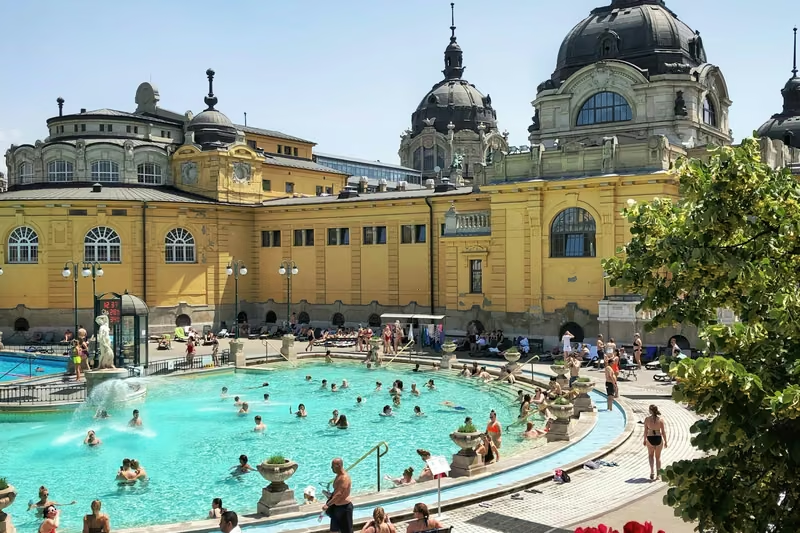
A second day in Budapest leaves time to explore the way you like. The Chain Bridge, opened in 1849, was the first permanent bridge between Buda and Pest, designed by the Englishman William Tierney Clark and built under the Scottish engineer Adam Clark. The city has excellent museums, from the Hungarian National Museum to the House of Terror on Andrássy Avenue. Or you could try one of the thermal baths fed by the natural hot springs beneath the city, such as the grand Széchenyi Baths in City Park. Afterwards, coffee and a slice of Dobos cake in one of Pest's grand cafés seems the right way to end the day.
Farewell to Budapest
Your cruise ends in Budapest, and it is time to say goodbye to your fellow guests and the crew before your flight home. If you would like to see more, Viking offers a post-cruise stay in Budapest, as well as extensions to Prague, a premium Prague stay and a fully guided Vienna and Prague combination. Budapest is easy to enjoy for a few more days. You might stroll across Margaret Island in the middle of the river, visit the Great Market Hall for paprika and salami to take home, or simply sit by the Danube and watch the boats go past.
Itineraries and shore excursions are set by Viking and can change, and may vary by departure.
The places you will visit
The Iron Gate and the Romans on the Danube
For centuries the Iron Gate was one of the most feared stretches of river in Europe, full of rocks, rapids and whirlpools. The Romans were the first to tame it. Under Emperor Trajan they cut a road into the cliffs on the Serbian side so their legions could move along the river, and the Tabula Traiana plaque still records the work. Trajan then built a great bridge downstream and conquered Dacia, the kingdom that covered much of present-day Romania. The Dacian king Decebalus chose death over capture, and he remains a national hero in Romania.
The river you see today is calmer. In 1972 Romania and Yugoslavia completed the Iron Gate I dam and hydroelectric plant, which raised the water level and drowned the worst of the rapids, along with several villages and the island of Ada Kaleh. Important sites were moved to higher ground, among them the prehistoric settlement of Lepenski Vir, with its remarkable carved stone heads. On the Romanian bank, the huge face of Decebalus was carved into the rock between 1994 and 2004. Both banks are now protected as national or nature parks.
Belgrade and the Balkan crossroads
Few capitals have changed hands as often as Belgrade. Its name means white city, and its position at the meeting of two great rivers made it the key to the Balkans for anyone moving between Central Europe and Constantinople. The Ottomans took it in 1521, and for the next three centuries it swung between Ottoman and Habsburg control. Serbia gained full independence in 1878, and Belgrade later became the capital of Yugoslavia. Walking around Kalemegdan, you can trace almost every one of those chapters in its gates, walls and towers.
Modern Belgrade is energetic and sociable, with a strong café culture and a famous nightlife on the floating clubs along the rivers. The Church of St Sava, whose construction ran through much of the 20th century, has a richly decorated mosaic interior completed in recent years. Nikola Tesla, the inventor born to Serbian parents in what is now Croatia, is remembered at a museum that also holds his ashes. Serbian food is generous and meat-heavy, so try ćevapi, grilled minced meat served with flatbread and onions, and a glass of rakija, the local fruit brandy.
Bucharest, Little Paris and the Ceaușescu years
In the late 19th century, newly independent Romania looked to France for inspiration. Its elite spoke French, studied in Paris and hired French-trained architects, and Bucharest filled with mansions, boulevards and public buildings in the Parisian style. The Arcul de Triumf, rebuilt in stone in the 1930s, commemorates Romanian independence and the union of 1918. The Romanian Athenaeum, paid for in part by a public appeal to donate a leu, remains the city's most loved concert hall. It is this period that gave Bucharest its nickname of Little Paris.
After the Second World War, Romania came under communist rule, and from 1965 Nicolae Ceaușescu led the country. In the 1980s he ordered a huge area of historic Bucharest to be cleared for his Civic Centre, crowned by the building now called the Palace of Parliament. Churches were demolished or moved on rollers to hide them behind apartment blocks. The regime collapsed in December 1989, and Ceaușescu was executed. Visiting the palace today is an extraordinary experience, and seeing it alongside the older city helps you understand modern Romania.
What is included
Viking prices its river cruises to include most of what you need, so there are few extras to budget for once you are on board.
Return flights
Return flights from London and selected regional airports, with ground transfers included when you fly with Viking.
A shore excursion in every port
One included shore excursion in each port of call, usually a guided walking or coach tour, with optional extras to buy.
All meals on board
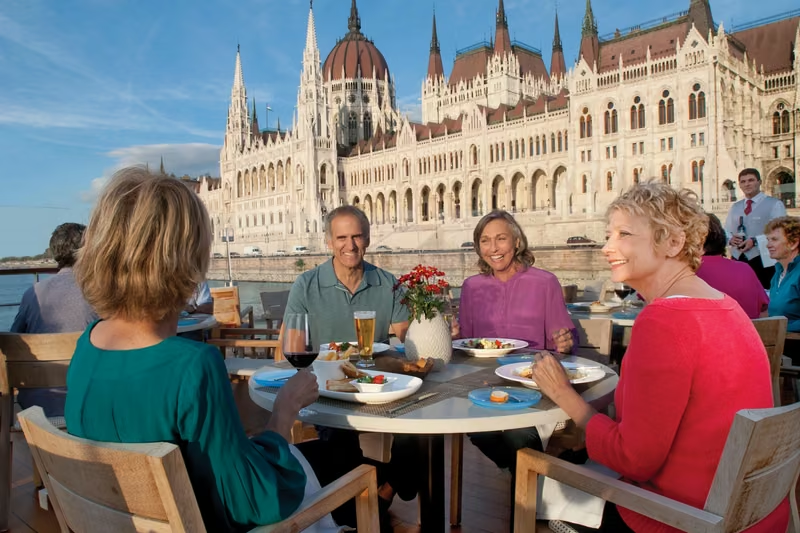
Breakfast, lunch and dinner every day you are on board, including al fresco dining on the Aquavit Terrace.
Drinks with lunch and dinner
Beer, wine and soft drinks served with lunch and dinner, plus specialty coffee, tea and bottled water at any hour.
Free Wi-Fi
Wi-Fi is included on board at no extra charge, though speeds can vary as the ship moves along the river.
Port taxes and fees
Port taxes and fees are built into the fare, so there are no extra charges waiting at the end.
Onboard gratuities
Gratuities for the crew on board are included in the fare.
Enrichment and performances
Talks on the history and culture of your route, plus local performers who bring the destinations to life on board.
Your stateroom, the ship and its facilities are covered on our Viking Longships page.
Fares
| Cruise | Duration | From, per person |
|---|---|---|
| Passage to Eastern Europe, Bucharest to Budapest | 11 days | £3,295 |
Lead-in fare per person, checked in October 2026. Viking's fares change with the date, direction of sailing and stateroom grade, so please email us for live prices and availability on the departure you have in mind.
Interested in the Passage to Eastern Europe? Email us your preferred month and we will send dates and prices.
Email an enquiry- May, June and September are lovely times to go, with warm days and fewer crowds. High summer on the Hungarian Plain and in Bucharest can be very hot.
- Budapest is a good place to extend your stay, and Viking also offers pre-cruise extensions to Istanbul and to Transylvania and Bucharest.
- Some days involve coach travel to sights away from the river, so expect a mix of walking tours and time on the road.
- This cruise suits curious travellers who have already seen the upper Danube and want to explore countries that are less familiar to most British visitors.
- Several different currencies are used along the route, though cards are widely accepted in the cities. Small amounts of local cash are handy for markets and cafés.
Passage to Eastern Europe: your questions answered
Your fare includes return flights from London and selected regional airports, one shore excursion in every port of call, all onboard meals, beer, wine and soft drinks with lunch and dinner, 24-hour specialty coffee, tea and bottled water, free Wi-Fi, port taxes and fees, enrichment lectures and onboard gratuities. Transfers are included when you buy Viking's flights.
You sail on one of Viking's Longships, the line's standard river ship design in Europe. Every stateroom has a river view, and the ships have an open-air Aquavit Terrace at the bow for watching the scenery, which comes into its own on the Iron Gate sailing day.
Prices start from £3,295 per person. We checked this in October 2026, and fares vary with departure date and stateroom category. Email enquiries@rivercruiseworld.co.uk and we will check up-to-date prices and availability for the dates that suit you, along with any offers running at the time.
The season runs from spring to autumn. Late spring and early autumn are especially pleasant, as July and August can be very hot in Romania, Serbia and on the Hungarian Plain. Late summer is when Kalocsa's paprika fields turn red, which is a lovely sight if you are travelling then.
Most days involve walking on uneven or cobbled surfaces, and some fortresses, such as Golubac and Kalemegdan, have slopes and steps. There are also coach journeys to sights away from the river. If walking is a concern, talk to us before you book and we can go through each day with you.
Yes. Before the cruise, Viking offers extensions to Istanbul and a fully guided Transylvania and Bucharest programme. Afterwards, you can stay on in Budapest or continue to Prague, either standard or premium, or join a fully guided Vienna and Prague extension. Extensions vary and can change, so ask us for the latest options.
You visit five countries: Romania, Bulgaria, Serbia, Croatia and Hungary. The cities and towns are Bucharest, Ruse, Vidin, Golubac, Belgrade, Osijek and Vukovar, Kalocsa and Budapest, with a scenic sailing through the Iron Gate gorges along the way. Bucharest and Budapest each get more than one day, so you have time to settle in at both ends.
You might also like
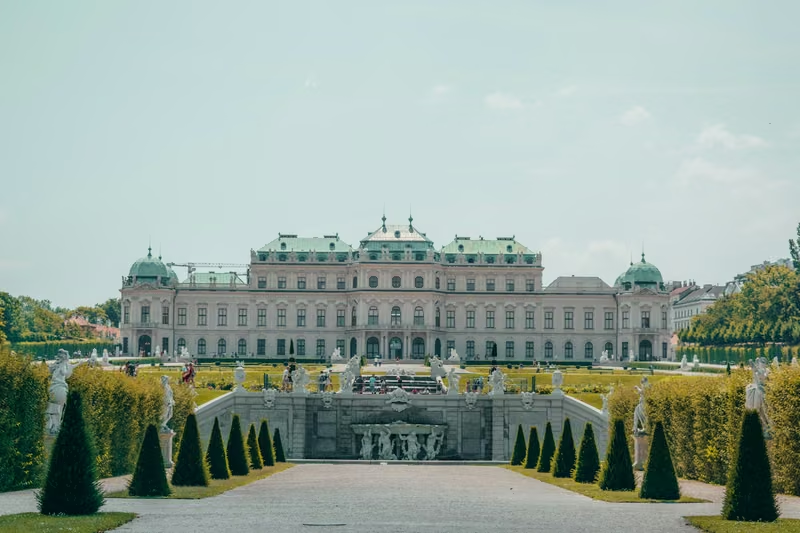
Capitals of Eastern Europe
Seventeen days down the Danube from Vienna to Bucharest, with five capital cities, the Iron Gate gorges and a final run towards the Black Sea.
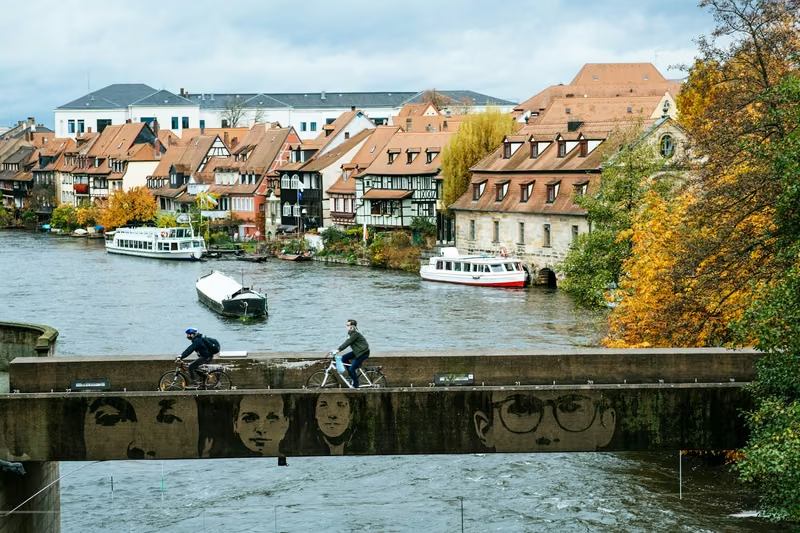
European Sojourn
Twenty-three days and three rivers, from the canals of Amsterdam to the boulevards of Bucharest, crossing eight countries without changing your style of travel.
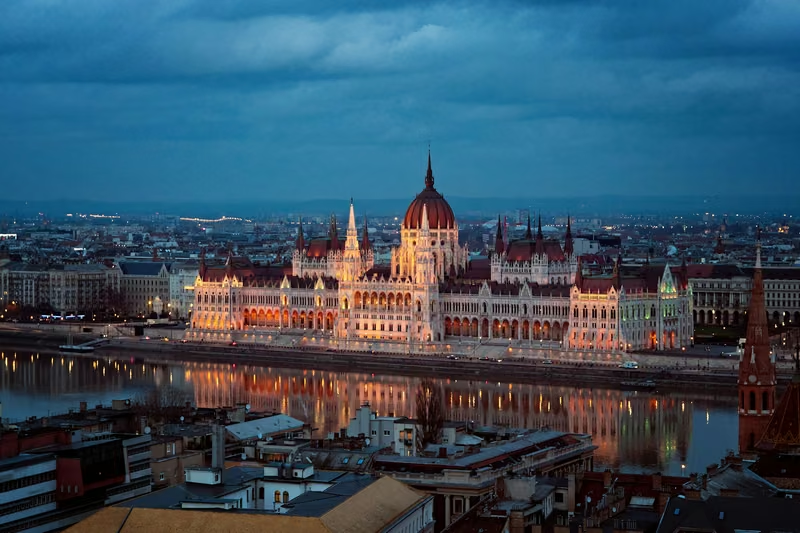
Danube Waltz
A week on the Danube from Budapest to Passau, taking in four countries, two capitals that rarely get the attention they deserve and the vineyards of the Wachau.