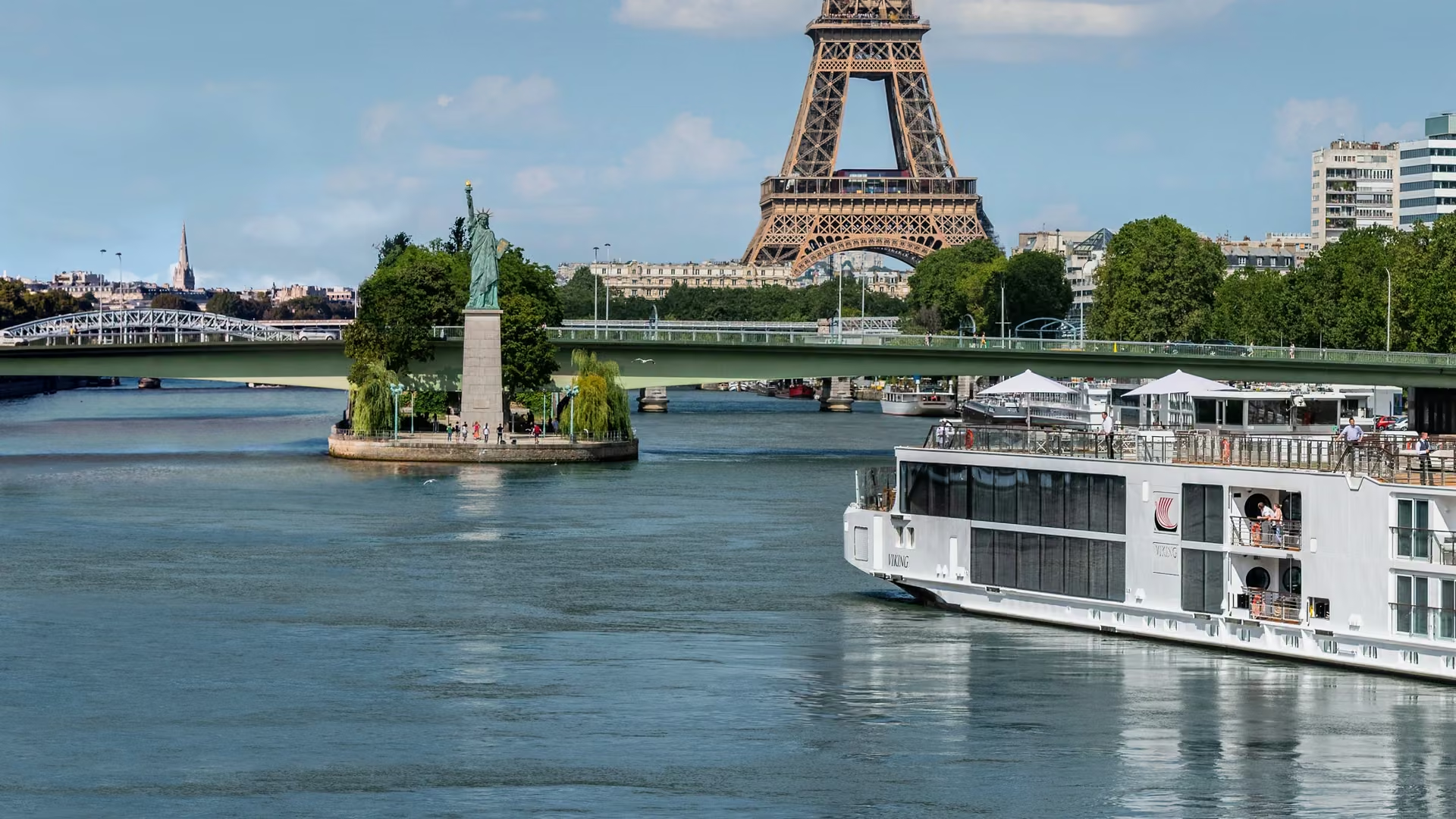
Few rivers pack as much into a short distance as the Seine. In a single week you go from the cafés and galleries of Paris to the apple orchards and half-timbered towns of Normandy, and on to the stretch of coast where the liberation of Western Europe began in 1944.
The route
Paris · La Roche-Guyon · Vernon · Rouen · Normandy Beaches · Les Andelys · Paris (Le Pecq) · Paris
About the Paris & the Heart of Normandy cruise
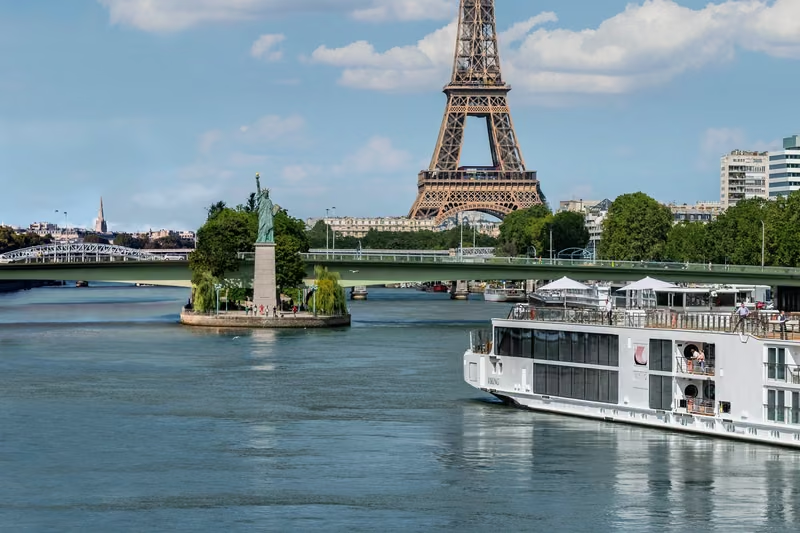
This is a round trip from Paris, so there are no long transfers and no change of hotel. Your Viking Longship moors close to the Eiffel Tower, which means the city is on the doorstep for the first two days and again at the end. Spend the time at the Louvre, along the boulevards, or simply sitting outside a café watching the city go by. The pace is gentle, and Paris rewards those who wander.
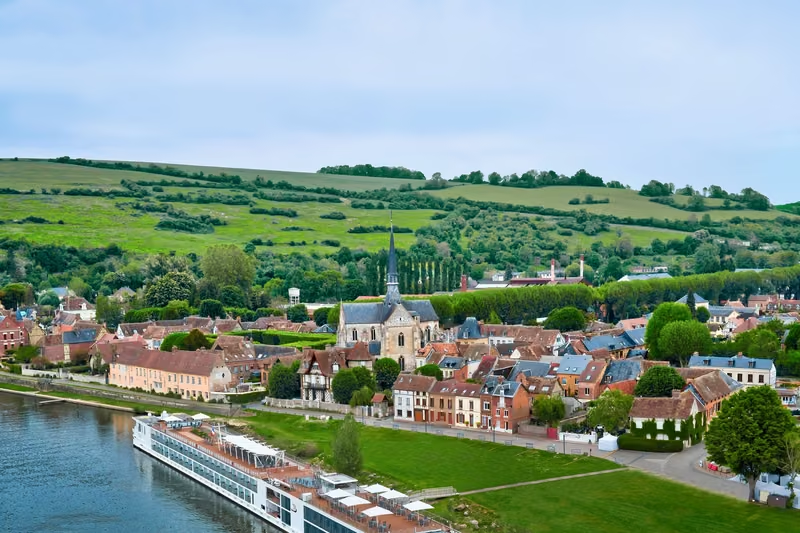
Heading downstream, the river leaves the suburbs behind and winds through chalk cliffs and green meadows. La Roche-Guyon, with its castle cut into the hillside, comes first, followed by Vernon, the nearest stop to Claude Monet's house and gardens at Giverny. It was here that Monet painted his water lilies for the last three decades of his life, and the garden still looks much as he planned it. This stretch of the river is lined with chalk cliffs, wooded islands and small riverside villages, and it is lovely to watch from the sun deck.
Rouen, the historic capital of Normandy, has one of the best preserved medieval centres in France. Its Gothic cathedral, the great Renaissance clock and streets of timber-framed houses make it a highlight for most guests. From here you head to the coast for a day at the D-Day beaches and the American Cemetery above Omaha Beach, a visit that stays with people long after they get home. Normandy is also the home of Camembert, cider and Calvados, so look out for them on the menu.
On the way back upriver you stop at Les Andelys, overlooked by the ruins of Richard the Lionheart's Château Gaillard, then return to Paris for a last look at the Latin Quarter or Montmartre. An evening sail past the lit monuments of the city rounds things off nicely before you fly home on day eight. It is a short cruise, but a full one, and it gives a real sense of how closely Paris and Normandy are linked by their river.
For more on the river itself, see our The Seine river cruise guide.
Cruise highlights
Moored by the Eiffel Tower
Your ship ties up within sight of the Eiffel Tower, so the first and last days in Paris start right at the gangway.
Monet's Giverny
From Vernon it is a short trip to the house and gardens where Monet lived and painted for more than 40 years, including his famous lily pond.
Medieval Rouen
A Gothic cathedral Monet painted over and over again, a gilded Renaissance clock and lanes of crooked half-timbered houses.
The D-Day beaches
A full day on the Normandy coast, including the American Cemetery at Colleville-sur-Mer above Omaha Beach.
Richard the Lionheart's castle
The ruins of Château Gaillard stand high above Les Andelys and give one of the finest views along the whole river.
Paris by night
An evening illumination sail along the Seine lets you see the city's bridges and monuments lit up from the water.
Watch the Paris & the Heart of Normandy cruise
Video: Paris & the Heart of Normandy (Viking Cruises)
Day by day itinerary
Welcome to Paris
Your Seine cruise begins in the French capital, where your Longship is moored within view of the Eiffel Tower. Once you have settled into your stateroom, the afternoon is yours. Many guests take a first walk along the river towards the Champ de Mars, or make for the Arc de Triomphe and the Champs-Élysées. Others head straight for the Louvre, home to the Mona Lisa and thousands of other works. In the evening, meet your fellow travellers and the crew over dinner on board.
A day of Parisian life
A full day to get to know Paris at your own speed. Order a coffee at a pavement café and watch the city wake up, then explore a neighbourhood or two. The Marais, with its old mansions and small boutiques, and the islands of Île de la Cité and Île Saint-Louis are all easy to reach. As the light fades, join the Parisians for an evening drink before returning to the ship. Paris is a city best enjoyed slowly, and today gives you the time to do just that.
Castles and cobbles on the lower Seine
Your first stop downriver is La Roche-Guyon, a pretty village below a medieval keep perched on the chalk cliffs. The château beneath it was carved partly into the rock, and in 1944 it served as Field Marshal Rommel's headquarters. Later the ship reaches Vernon, a riverside town of cobbled streets and old timbered houses, with the remains of a medieval mill straddling the piers of a long-vanished bridge. Vernon is also the gateway to Giverny, where Claude Monet created the gardens that inspired so much of his later work.
Through Normandy to Rouen
Spend the morning on deck as the Seine loops through Normandy, past orchards, grazing cattle and rolling farmland. By the afternoon you arrive in Rouen, the historic capital of Normandy. The great Gothic cathedral, whose west front Monet painted in changing light more than 30 times, dominates the old town. Nearby, the Gros-Horloge, an ornate astronomical clock set in a Renaissance arch, spans one of the main streets. Wander on to the Place du Vieux-Marché, where Joan of Arc was burned at the stake in 1431.
The D-Day coast
Today is set aside for the Normandy coast, where Allied forces came ashore on 6 June 1944. Along these beaches, now quiet stretches of sand and dune, you can still see traces of the fighting that began the liberation of France. The visit includes the Normandy American Cemetery at Colleville-sur-Mer, where white marble crosses and Stars of David stand in neat rows on the bluff above Omaha Beach. It is a moving and thought-provoking day, and many guests find it the most memorable part of the cruise.
Richard the Lionheart's stronghold
Les Andelys sits on a sweeping bend of the Seine beneath tall white cliffs. On the hilltop above town are the ruins of Château Gaillard, built in the 1190s by Richard the Lionheart, who was both King of England and Duke of Normandy, to guard the river route to Rouen. The French king Philip II captured it in 1204 after a long siege. It is a steep walk up, but the view down the river valley is one of the best on the Seine.
Back to the City of Light
The ship returns to the Paris area, mooring first at Le Pecq on the city's western edge. Use the day to see a different side of Paris. The Latin Quarter, around the Sorbonne, is full of bookshops, bistros and student life, while Montmartre, on its hill to the north, keeps the feel of the artists' village it once was. After dark, join an evening illumination sail along the Seine, gliding past Notre-Dame, the Louvre and the glittering Eiffel Tower. It is a fitting end to the week.
Au revoir
After breakfast it is time to say goodbye to the crew and your fellow guests. If you have booked Viking flights, your transfer takes you to the airport for your return flight to the UK. If you would rather not rush home, you can extend your stay in Paris with one of Viking's optional extensions, giving you a few more days to explore the galleries, gardens and neighbourhoods you did not have time for during the cruise. Ask us about the options when you book.
Itineraries and shore excursions are set by Viking and can change, and may vary by departure.
The places you will visit
Monet and the Seine
Claude Monet spent much of his life painting the Seine. He grew up in Le Havre, at the river's mouth, and in 1883 he moved to Giverny, a village near Vernon. He rented a farmhouse with a pink façade and green shutters, bought it a few years later, and spent the rest of his life turning the grounds into two gardens. In front of the house is the Clos Normand, a flower garden laid out in dense, colourful beds. Across the lane is the water garden, with its Japanese bridge, weeping willows and lily pond.
The water garden became Monet's main subject for the last 30 years of his life, and the huge Water Lilies canvases now in the Musée de l'Orangerie in Paris grew out of it. He died at Giverny in 1926 and is buried in the village churchyard. Earlier, in the 1890s, he had worked in Rouen, painting the cathedral's west front at different times of day to capture how the light changed on the stone. Following the river from Paris to Rouen, you pass through much of the scenery he painted.
Rouen, Joan of Arc and the Norman story
Rouen was the capital of the Duchy of Normandy, founded after the Viking leader Rollo was granted land along the lower Seine in 911. It was from Normandy that Duke William set out to conquer England in 1066, and for the next century and a half the dukes of Normandy were also kings of England. That shared history is everywhere in this region, from the castles to the place names, and it explains why Richard the Lionheart was so determined to defend the Seine at Les Andelys.
During the Hundred Years' War Rouen was held by the English, and it was here in 1431 that Joan of Arc was tried and burned at the stake in the Place du Vieux-Marché. A modern church dedicated to her now stands on the square. Rouen's cathedral, with its lace-like Gothic stonework and a cast iron spire that makes it the tallest church in France, was badly damaged in 1944 but has been carefully restored. The old town around it is one of the best places in France to see medieval half-timbered houses.
D-Day and the Normandy beaches
In the early hours of 6 June 1944, Allied forces launched Operation Overlord, the largest seaborne invasion in history. American, British, Canadian and other Allied troops landed on five beaches along the Normandy coast, known by their code names Utah, Omaha, Gold, Juno and Sword. Airborne troops had dropped inland during the night. Omaha Beach saw some of the heaviest losses of the day, as American soldiers came under fire from the bluffs above the sand. The landings were followed by almost three months of hard fighting before Paris was liberated in August 1944.
Today the coast is peaceful, but the landscape still tells the story, with concrete bunkers, the remains of the Mulberry harbour at Arromanches and many small museums. The Normandy American Cemetery at Colleville-sur-Mer stands on the bluff above Omaha Beach and holds more than 9,000 graves, along with a memorial and the Walls of the Missing. The site is looked after by the American Battle Monuments Commission and is kept in immaculate condition. Allow time to walk quietly among the headstones and down to the viewpoint over the beach.
What is included
Viking prices its river cruises to include most of what you need, so there are few extras to budget for once you are on board.
Return flights
Return flights from London and selected regional airports, with ground transfers included when you fly with Viking.
A shore excursion in every port
One included shore excursion in each port of call, usually a guided walking or coach tour, with optional extras to buy.
All meals on board
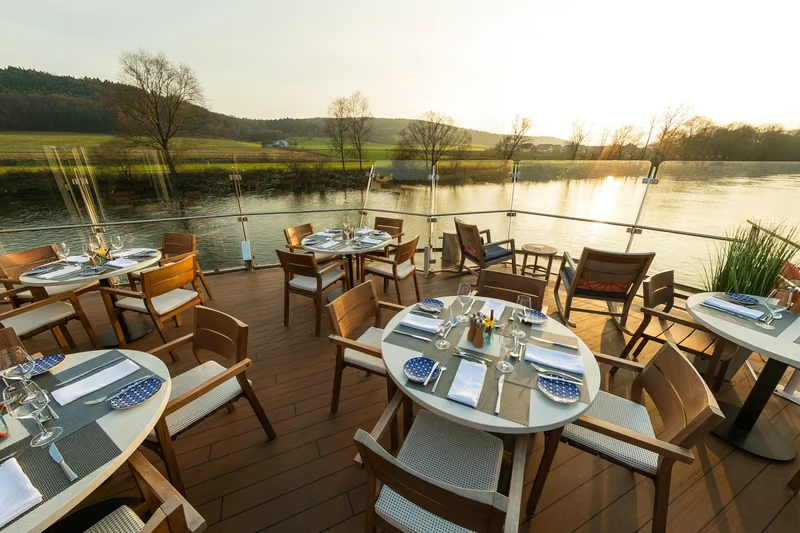
Breakfast, lunch and dinner every day you are on board, including al fresco dining on the Aquavit Terrace.
Drinks with lunch and dinner
Beer, wine and soft drinks served with lunch and dinner, plus specialty coffee, tea and bottled water at any hour.
Free Wi-Fi
Wi-Fi is included on board at no extra charge, though speeds can vary as the ship moves along the river.
Port taxes and fees
Port taxes and fees are built into the fare, so there are no extra charges waiting at the end.
Onboard gratuities
Gratuities for the crew on board are included in the fare.
Enrichment and performances
Talks on the history and culture of your route, plus local performers who bring the destinations to life on board.
Your stateroom, the ship and its facilities are covered on our Viking Longships page.
Fares
| Cruise | Duration | From, per person |
|---|---|---|
| Paris & the Heart of Normandy, Roundtrip Paris | 8 days | £2,295 |
Lead-in fare per person, checked in October 2026. Viking's fares change with the date, direction of sailing and stateroom grade, so please email us for live prices and availability on the departure you have in mind.
Interested in the Paris & the Heart of Normandy? Email us your preferred month and we will send dates and prices.
Email an enquiry- Spring brings blossom in the Normandy orchards and Monet's garden at its most colourful, while late summer and early autumn are usually warm and settled. Giverny is generally open from spring to autumn only.
- The cruise starts and ends in Paris, so it works well if you want to add a few nights in the city before or after, or combine it with Eurostar travel.
- The pace is relaxed, with no early starts every day, but expect cobbled streets in Rouen and Vernon and a steep climb if you walk up to Château Gaillard.
- It suits first-time river cruisers, couples, art lovers and anyone with an interest in the Second World War.
- Normandy weather can change quickly, even in summer, so pack a light waterproof and comfortable shoes for the D-Day beaches.
Paris & the Heart of Normandy: your questions answered
Viking includes return flights from London and selected regional airports, one shore excursion in every port of call, all meals on board, beer, wine and soft drinks with lunch and dinner, specialty coffee, tea and bottled water around the clock, free Wi-Fi, port taxes and fees, onboard gratuities, and enrichment talks and performances. Airport transfers are included when you book Viking flights.
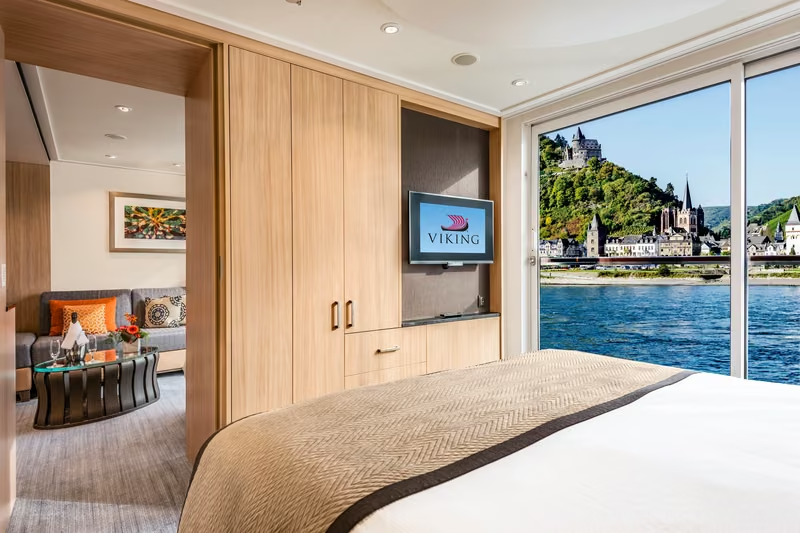
The cruise uses one of Viking's Longships built specifically for the Seine. They follow the same Scandinavian design as the main Longship fleet, with river-view staterooms and a light, airy lounge, but have a hull and engines made for the river. In Paris they moor within walking distance of the Eiffel Tower.
Prices start from £2,295 per person. This was checked in October 2026, and fares change with the departure date and stateroom category you choose. Email us at enquiries@rivercruiseworld.co.uk and we will give you current prices for the dates you are interested in.
Spring and early summer are lovely for Monet's garden and the Normandy countryside, and September is often warm, calm and a little quieter. July and August are the busiest months in Paris. Bear in mind that Giverny generally closes over the winter, so if the garden is important to you, choose a departure between spring and autumn.
Much of the cruise is easy going, and you can always choose how much walking to do. However, the old towns of Rouen and Vernon have cobbled streets, the D-Day beaches involve some walking on uneven ground, and the climb to Château Gaillard is steep. Let us know your needs and we can talk through each day with you.
Return flights from London and selected regional airports are included in the Viking price. Because the cruise begins and ends in Paris, some guests prefer to travel by Eurostar instead. If that appeals, get in touch and we can check the options for your chosen date.
Yes. Viking offers optional extensions so you can spend extra days in Paris after the cruise. It is a good way to see the sights you could not fit into the first two days, such as Versailles or a few of the city's smaller museums. We can add an extension when you book.
You might also like
London, Paris & D-Day
Twelve days of remembrance, from the wartime bunkers of London and the codebreakers of Bletchley Park to the Seine, Rouen and the beaches of Normandy.
France's Finest
Fifteen days, two rivers and the best of France, from Paris and the Normandy beaches to the vineyards of the Rhône and the Roman towns of Provence.
Lyon & Provence
Eight days on the Rhône from the papal city of Avignon to Lyon, the capital of French gastronomy, through Roman Provence and terraced wine country.