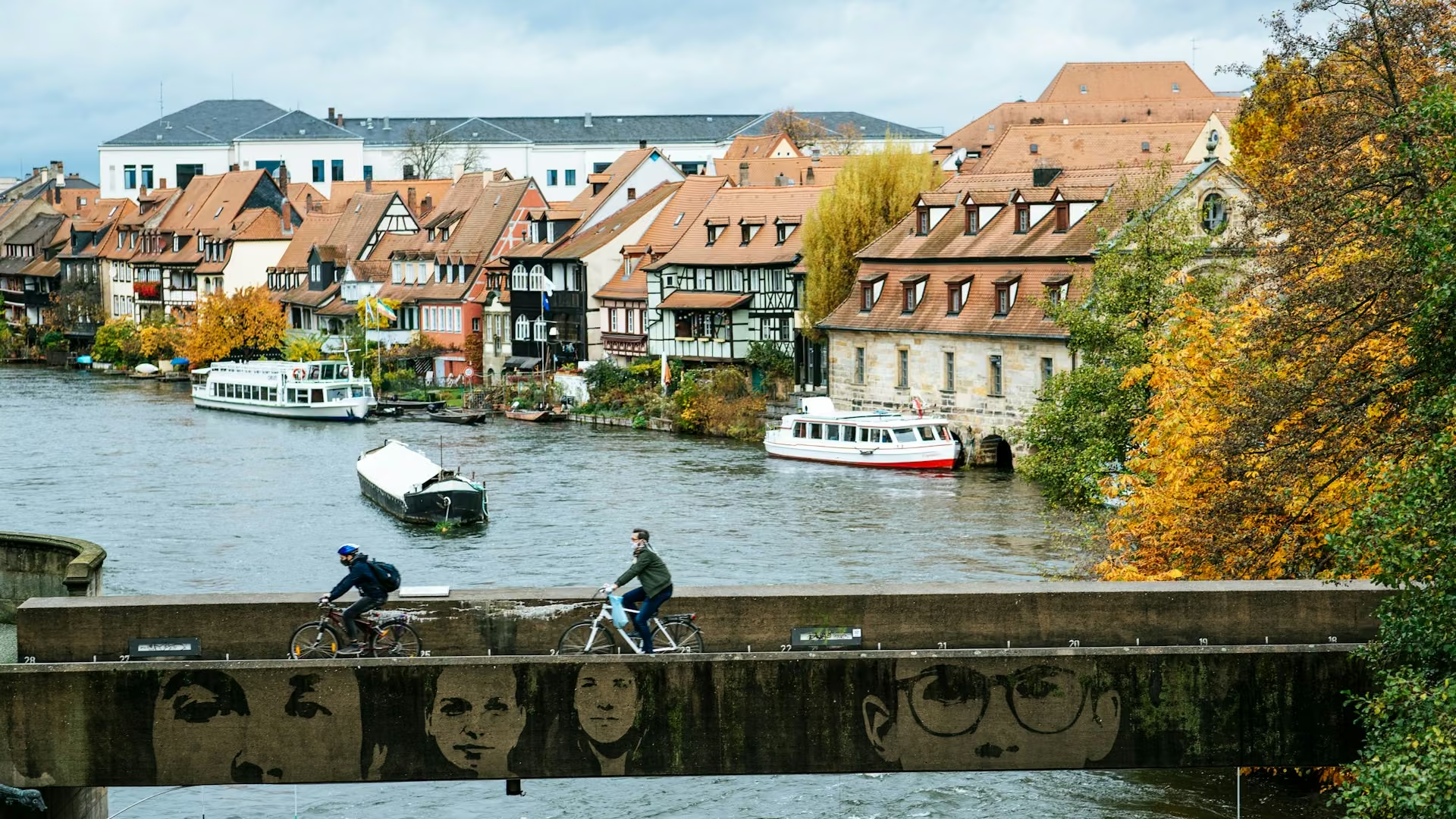
The Main and the Moselle are quieter and more intimate than the Rhine they flow into. Ships glide past vineyards and half-timbered towns, and the pace slows to match, with some of the finest small towns in Germany along the way.
Cruising the Main and Moselle
This page covers two rivers and the canal that links them to the Danube. The Main runs about 525 km from its headwaters near Kulmbach in Bavaria to the Rhine opposite Mainz, passing Würzburg, Wertheim, Miltenberg and Frankfurt. The Moselle rises in the Vosges mountains of France and flows about 545 km, forming the border with Luxembourg before winding through Germany to meet the Rhine at Koblenz. Both rivers are best known for wine, castles and well preserved old towns, and both are easy to combine with a Rhine cruise.
The Main-Danube Canal is what makes the great cross-Europe voyages possible. Completed in 1992, it runs 171 km from Bamberg to Kelheim on the Danube, climbing through 16 locks to a summit of 406 metres above sea level, said to be the highest point on Earth reached by commercial vessels from the sea. The idea is far older. Charlemagne ordered a canal here in 793, and King Ludwig I of Bavaria built the smaller Ludwig Canal in the 1840s. Today ships pass Nuremberg on the canal, and sailing through the locks is a novelty in itself.
The Main is Franconia's river. It flows through a gentle landscape of wooded hills and vineyards, and its towns are among the most attractive in Germany. Bamberg, on the Regnitz just above its meeting with the Main, has a medieval old town listed by UNESCO. Würzburg has the magnificent Residenz palace, and smaller places such as Wertheim and Miltenberg are full of timbered houses. Main cruises often form part of a longer journey between the Rhine and the Danube, but they are rewarding in their own right.
The Moselle is perhaps the most romantic river in Germany. It twists in tight loops between some of the steepest vineyards in Europe, with a castle or a wine village around almost every bend. Trier, founded by the Romans, has some of the finest Roman remains north of the Alps, while Bernkastel and Cochem are picture-book wine towns. Moselle cruises are usually a week or so, often combined with the Rhine. Below you will find history, highlights, food and wine, timing and ports, followed by the cruises we currently offer.
River facts
| Length | Main about 525 km, Moselle about 545 km, Main-Danube Canal 171 km |
|---|---|
| Source | Main: Franconia, near Kulmbach in Bavaria. Moselle: the Vosges mountains, France |
| Flows into | Both flow into the Rhine, the Main at Mainz and the Moselle at Koblenz |
| Countries | Germany, France and Luxembourg |
| Cruising season | March to December, including Christmas market cruises |
| Typical cruise | 8 to 12 days, or longer as part of a Rhine to Danube voyage |
A short history of the Main and Moselle
The Romans knew the Moselle well. Trier, founded as Augusta Treverorum around 16 BC, became one of the great cities of the late Roman Empire and was for a time an imperial residence. The Romans also planted vines on the Moselle slopes, and the poet Ausonius described the river's vineyards in the 4th century. Trier's Roman monuments, including the Porta Nigra gateway, the amphitheatre and the imperial baths, are listed by UNESCO.
The Main valley flourished under the prince-bishops of Würzburg and Bamberg, who ruled much of Franconia for centuries and left behind cathedrals, palaces and fine old towns. Nuremberg, a free imperial city, was one of the richest places in Europe in the 15th and 16th centuries and the home of the artist Albrecht Dürer. Its darker 20th-century history includes the Nazi rallies and, after the war, the Nuremberg trials, held in the city's Palace of Justice in 1945 and 1946.
In 1985 the Schengen Agreement was signed on a boat on the Moselle near the village of Schengen, where Luxembourg, France and Germany meet, and the name became shorthand for border-free travel in Europe. A few years later, in 1992, the opening of the Main-Danube Canal finally fulfilled Charlemagne's dream of a waterway linking the Rhine and the Danube.
Highlights along the rivers
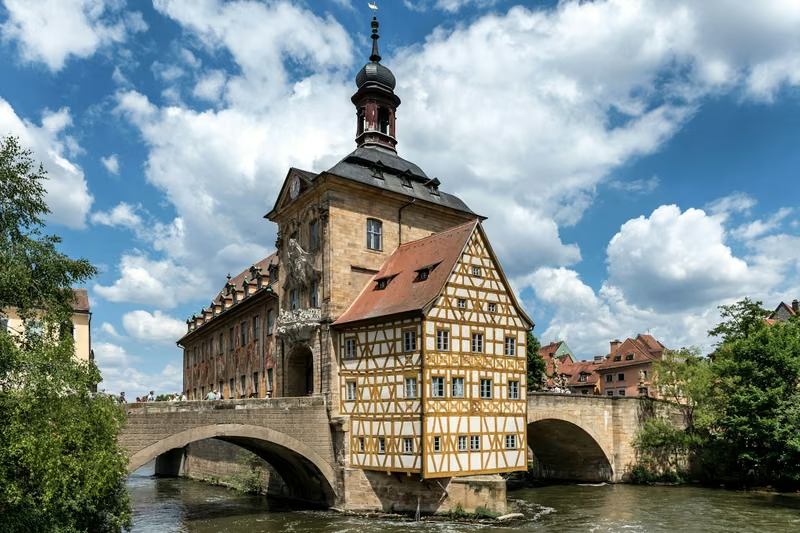
On the Main, Würzburg's Residenz is the standout sight. This vast baroque palace of the prince-bishops was designed largely by Balthasar Neumann, and its grand staircase is crowned by an enormous ceiling fresco by Giovanni Battista Tiepolo. Bamberg is another favourite, a hilly old town of churches and cobbled lanes, with its Old Town Hall built on an island in the river. Miltenberg and Wertheim are smaller but full of character.
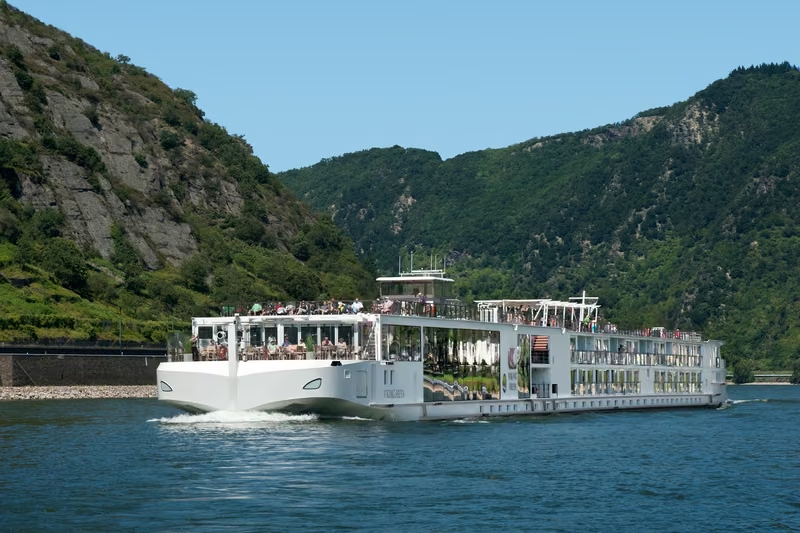
On the Moselle, the scenery is the star. The river curls back on itself again and again, and the vineyards climb almost vertically from the water. The Calmont, near Bremm, is often described as the steepest vineyard in Europe. Cochem's Reichsburg castle sits on a hill above the town like something from a fairy tale, and Bernkastel's market square is one of the prettiest in Germany.
The Main-Danube Canal has its own quieter appeal. Ships pass through a series of large locks, crossing the watershed between the rivers that flow north to the North Sea and those that flow east to the Black Sea. Most cruises use the canal to reach Nuremberg, where the old town, the castle and the Documentation Centre on the former rally grounds can all be visited.
Ports and places to know
Nuremberg, Germany
Ships moor on the Main-Danube Canal for Nuremberg, a once great imperial city with a hilltop castle and a rebuilt medieval old town. Its 20th-century history is told at the Documentation Centre and in Courtroom 600 at the Palace of Justice, where the Nuremberg trials were held.
Bamberg, Germany
Bamberg's old town, spread over seven hills, is a UNESCO World Heritage Site with a fine cathedral and an Old Town Hall perched on an island in the river. Try the local smoked beer, Rauchbier, in one of its traditional taverns.
Würzburg, Germany
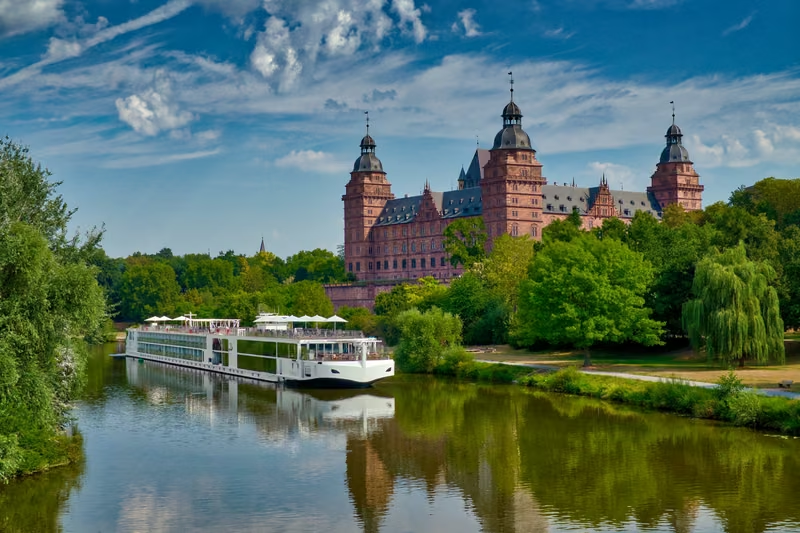
This Franconian wine city is dominated by the Residenz, a vast baroque palace listed by UNESCO, and the Marienberg Fortress above the river. The Old Main Bridge, lined with statues of saints, is a favourite spot for a glass of local wine.
Wertheim, Germany
Wertheim sits where the Tauber flows into the Main, below the ruins of a red sandstone castle. It is known for its glassmaking traditions and its pretty, timbered old town.
Miltenberg, Germany
Miltenberg is one of the best preserved small towns on the Main, with a long main street of half-timbered houses. Its Zum Riesen inn claims to be one of the oldest in Germany.
Trier, Germany
Founded by the Romans, Trier is often called Germany's oldest city, and its Roman monuments, including the Porta Nigra, are listed by UNESCO. Karl Marx was born here in 1818, and his family home is now a museum.
Bernkastel-Kues, Germany
This wine town has a market square of leaning half-timbered houses and the ruined Landshut castle on the hill above. The famous Doctor vineyard rises steeply behind the town.
Cochem, Germany
Cochem is one of the most photographed towns on the Moselle, with its Reichsburg castle on a hill above the river. The castle was rebuilt in Gothic style in the 19th century and can be visited.
Koblenz, Germany
Koblenz sits at the Deutsches Eck, the point where the Moselle meets the Rhine. A cable car crosses the Rhine to the Ehrenbreitstein Fortress, with fine views over both rivers.
Food and wine
The Moselle is one of Germany's most famous wine regions, and Riesling is king. The slate soils and steep south-facing slopes produce wines that are light, fragrant and often gently sweet, though dry styles are increasingly popular. Bernkastel's Doctor vineyard is among the most celebrated in Germany. Cochem is also known for its mustard, still ground in a traditional mill in the town.
Franconia has its own wine traditions, with dry Silvaner the signature grape, often bottled in the squat, round Bocksbeutel flask. The region is also beer country. Bamberg is famous for Rauchbier, a smoky beer made with malt dried over beechwood fires, and Nuremberg is known for its small grilled Rostbratwurst sausages and spiced Lebkuchen gingerbread, a speciality since the Middle Ages.
When to go
Cruises on the Main and Moselle run from around March to December. Spring and early summer are fresh and green, while summer brings warm weather and long evenings for enjoying the views of the vineyards from the deck. On the Moselle in particular, the scenery is at its best in late September and October, when the vines turn gold and the harvest is under way.
The wine festivals of late summer and autumn are a highlight in many Moselle villages. In winter, Nuremberg's Christkindlesmarkt is one of the most famous Christmas markets in Germany, and Main cruises in late November and December often call at Nuremberg, Bamberg and Würzburg for their markets. Water levels can occasionally affect sailings on these rivers, as on the Rhine.
The Main and Moselle river cruises we offer
These are the cruises currently on our site that sail this river. We are adding more cruise lines, and each will appear here under its own heading.
Viking River Cruises
About Viking| Cruise | Length | From pp |
|---|---|---|
| Grand European Tour | 15 days | £3,995 |
| Paris to the Swiss Alps | 12 days | £2,790 |
| Cities of Light | 12 days | £2,790 |
| European Sojourn | 23 days | £7,440 |
| Rhine & Main Explorer | 11 days | £2,495 |
| Castles, Vineyards & Villages | 8 days | £1,795 |
| Rhine, Main & Danube Odyssey | 18 days | £4,790 |
| Rhine & Moselle Discovery | 8 days | £2,395 |
| A Tale of Three Rivers | 8 days | £2,395 |
Lead-in fares per person, checked in October 2026.
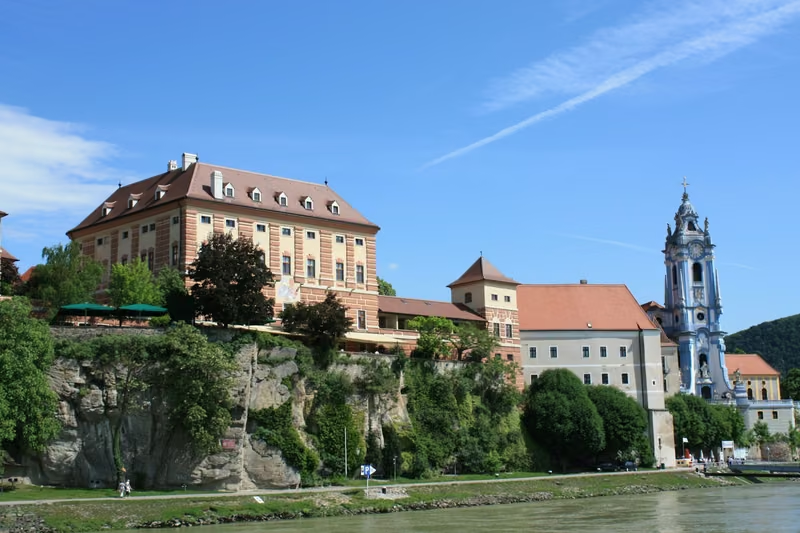
Grand European Tour
Fifteen days across the continent by water, from the bridges of Budapest to the canals of Amsterdam, linking the Danube, the Main and the Rhine.
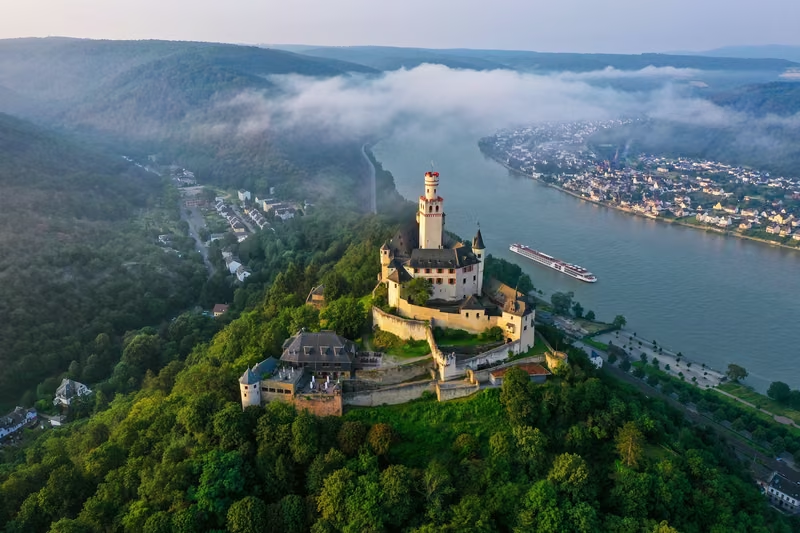
Paris to the Swiss Alps
Start with two days in Paris, cruise the Moselle and Rhine through vineyards and castle country, and finish beside the lake in Zürich.
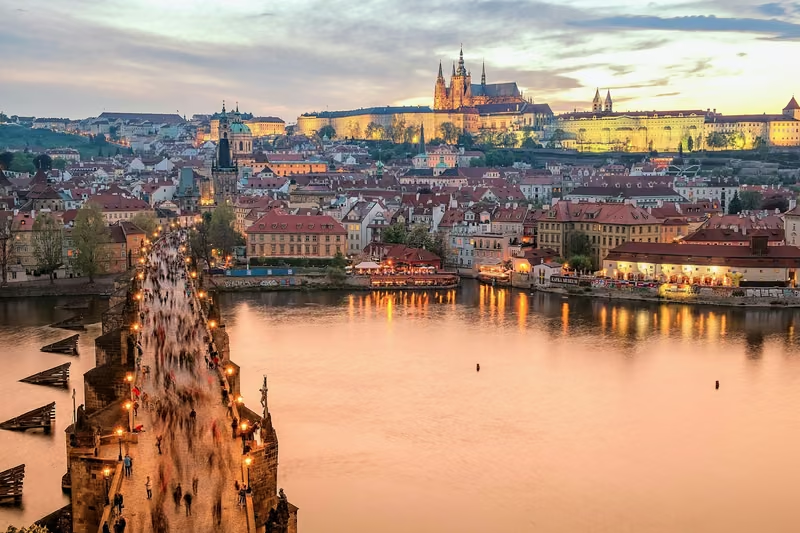
Cities of Light
Twelve days from Paris to Prague, following the Moselle, Rhine and Main through Roman Trier, wine country and the old towns of Franconia.
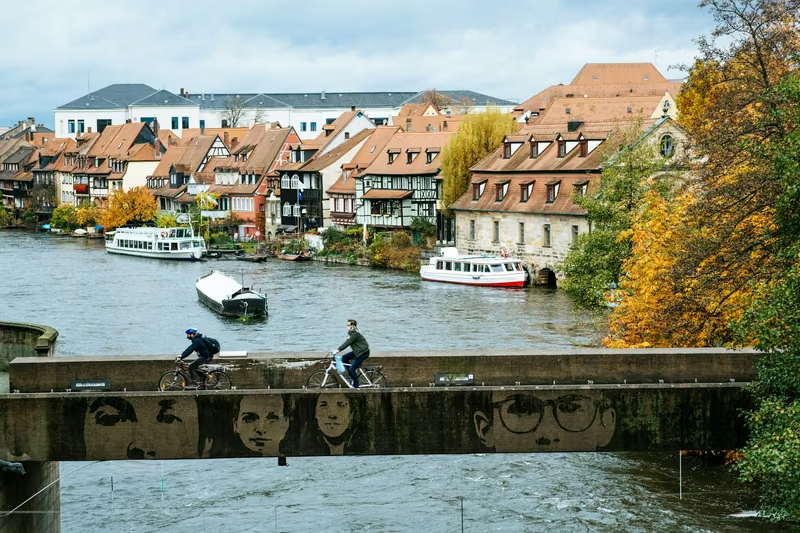
European Sojourn
Twenty-three days and three rivers, from the canals of Amsterdam to the boulevards of Bucharest, crossing eight countries without changing your style of travel.
Rhine & Main Explorer
Eleven days from Nuremberg to Basel, through the wine towns of Franconia and down the Rhine to Alsace and the Swiss border.
 New
Castles, Vineyards & Villages
Eight days from Bavaria to Amsterdam, along the vine-covered Main and through the castle country of the Middle Rhine.
The Main and Moselle river cruises: questions answered
The Main flows through Bavaria's Franconia region and is known for historic cities such as Würzburg, Bamberg and Nuremberg, with dry Silvaner wines and good beer. The Moselle flows from France through Luxembourg and Germany and is known for tight river loops, steep Riesling vineyards and wine towns like Bernkastel and Cochem. Both are quieter than the Rhine and often feature on combined itineraries.
It is a 171 km waterway between Bamberg on the Main and Kelheim on the Danube, completed in 1992. It climbs through 16 locks to a summit of 406 metres above sea level, crossing the European watershed. The canal links the Rhine and Danube systems, so cruises can sail across Europe between Amsterdam and Budapest.
A Moselle cruise is often eight days, typically combined with part of the Rhine. Cruises along the Main and the Rhine run from about eight to 11 days. The Main also forms part of longer journeys of two weeks or more between Amsterdam or Basel and Budapest, which sail the Main-Danube Canal on the way.
Late September and October are especially lovely, with the grape harvest under way and the vineyards changing colour. Spring is fresh and quiet, while summer brings the warmest weather and plenty of village wine festivals. In December, Christmas markets add festive sparkle to towns such as Trier and Bernkastel.
Trier is usually described as Germany's oldest city. It was founded by the Romans around 16 BC as Augusta Treverorum, and it became one of the most important cities in the western Roman Empire. Its Roman monuments, including the Porta Nigra, the amphitheatre and the imperial baths, are a UNESCO World Heritage Site, together with the cathedral and the Church of Our Lady.
Very much so. The Moselle is one of Germany's best known wine regions, famous for Riesling grown on steep slate slopes. Franconia, on the Main, is known for dry Silvaner, often bottled in the distinctive round Bocksbeutel. Most cruises along these rivers include time in wine towns, and many offer the chance to taste local wines.
There are many locks on the Main and the Main-Danube Canal, and several on the Moselle, and passing through them is part of the experience. Itineraries are planned around them, so they do not usually affect your time ashore. Many guests enjoy watching from the sun deck as the ship rises or falls in the lock chamber.