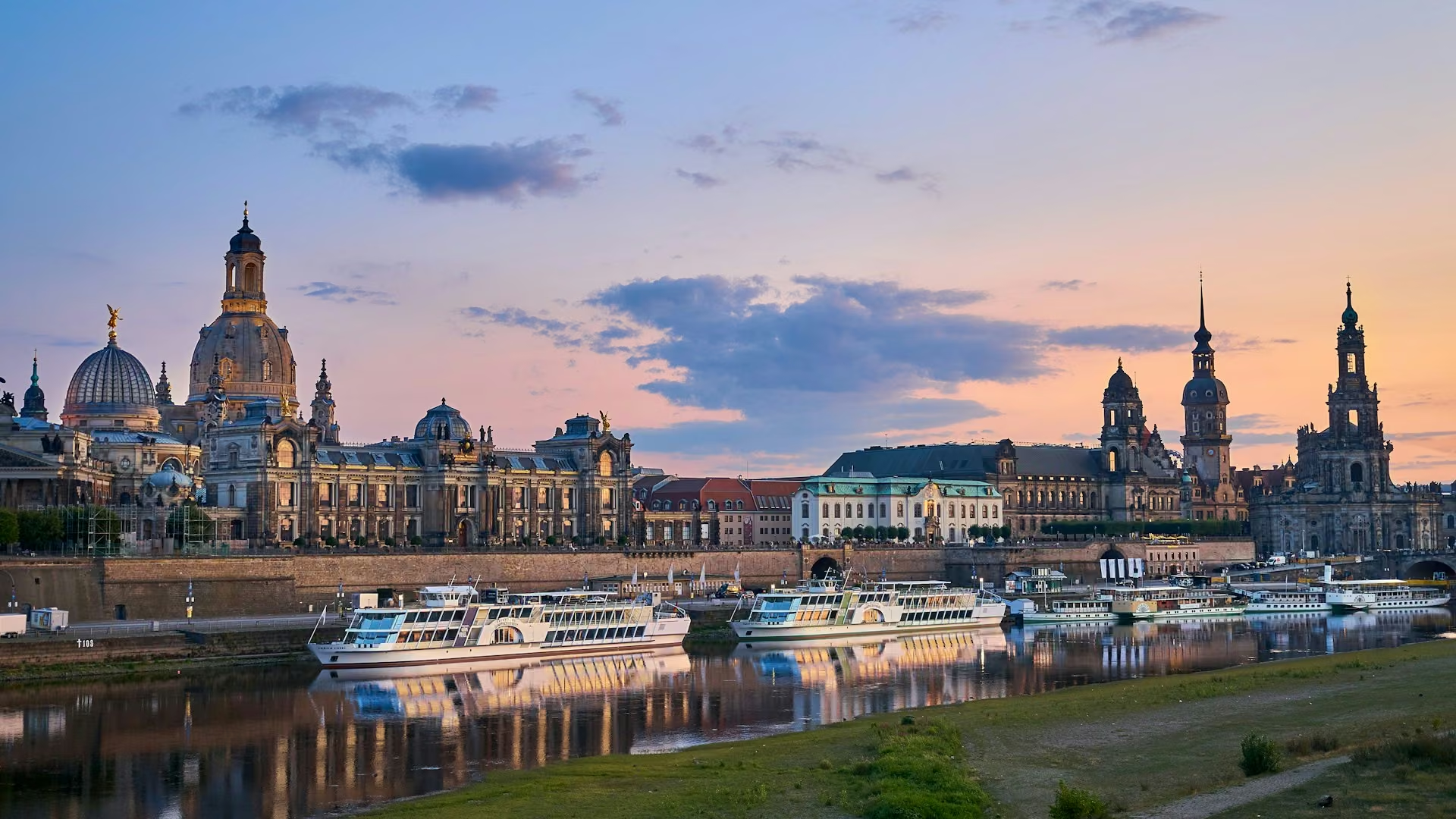
The Elbe is one of Europe's quieter cruising rivers, with fewer ships and a slower pace. It links two of the continent's most fascinating capitals, Berlin and Prague, and the towns in between are full of stories from the Reformation to the Cold War.
Cruising the Elbe
The Elbe rises in the Giant Mountains (Krkonoše) of the northern Czech Republic and flows about 1,094 km through Bohemia and eastern Germany to the North Sea at Cuxhaven, passing Dresden, Magdeburg and Hamburg on the way. River cruises usually sail the upper and middle Elbe, between the Berlin and Potsdam area and the Czech border, with Prague at one end of the journey. It is a river of gentle meadows, vineyards, sandstone cliffs and handsome old towns, many of them restored since German reunification in 1990.
Cruising the Elbe feels different from the busier Rhine and Danube. There are fewer ships, and stretches of the river are largely unspoilt, with floodplain meadows and riverside woods where you may spot herons and storks. The river is also shallow in places, so Elbe ships are specially designed to sit low in the water, and they are smaller than many other river cruise ships. Water levels can still vary, particularly in late summer, and cruise lines sometimes need to adjust itineraries.
The towns along the Elbe are rich in history. Wittenberg is where Martin Luther launched the Reformation in 1517, and Torgau is where American and Soviet troops met in April 1945. Meissen gave Europe its first true porcelain, and Dresden, rebuilt after the destruction of 1945, is once again one of the most beautiful baroque cities in Germany. Upstream, the river cuts through the sandstone towers of Saxon Switzerland before crossing into the Czech Republic, where the gorge continues past wooded cliffs and small riverside villages.
Most Elbe cruises last around ten days and are often combined with hotel stays in Berlin and Prague, giving you two great cities as well as the river. It is a good choice for travellers who have already cruised the Rhine or Danube and want something a little less well known, or for anyone interested in German history. Below you will find a short history, highlights, food and drink, timing and the ports most cruises visit, followed by the Elbe cruises we currently offer.
River facts
| Length | About 1,094 km |
|---|---|
| Source | The Giant Mountains (Krkonoše), northern Czech Republic |
| Flows into | The North Sea at Cuxhaven, Germany |
| Countries | The Czech Republic and Germany |
| Cruising season | April to October |
| Typical cruise | 8 to 11 days, often between Berlin and Prague |
A short history of the Elbe
In the early Middle Ages the Elbe marked the eastern edge of the Frankish world, and beyond it lay the lands of the Slavs. Over the following centuries German settlers moved east, and towns such as Magdeburg, Meissen and Dresden grew up along the river. Magdeburg's cathedral is the burial place of Otto the Great, the first Holy Roman Emperor, and Hamburg, near the mouth, became one of the leading cities of the Hanseatic League.
In 1517 Martin Luther, a monk and professor in Wittenberg, published his 95 Theses criticising the sale of indulgences, and the Protestant Reformation spread from here across Europe. Two centuries later, Saxony's ruler Augustus the Strong turned Dresden into a glittering baroque capital, filling it with palaces and treasures, and in 1710 he founded the Meissen porcelain manufactory, the first in Europe to make true hard-paste porcelain.
The 20th century left deep scars. Dresden was devastated by Allied bombing in February 1945, and on 25 April 1945 American and Soviet forces met on the Elbe at Torgau, a moment known as Elbe Day. For more than four decades, much of the river lay in communist East Germany or Czechoslovakia. Since 1990, towns and monuments have been carefully restored, most famously Dresden's Frauenkirche, rebuilt using many of its original stones and reconsecrated in 2005.
Highlights along the river
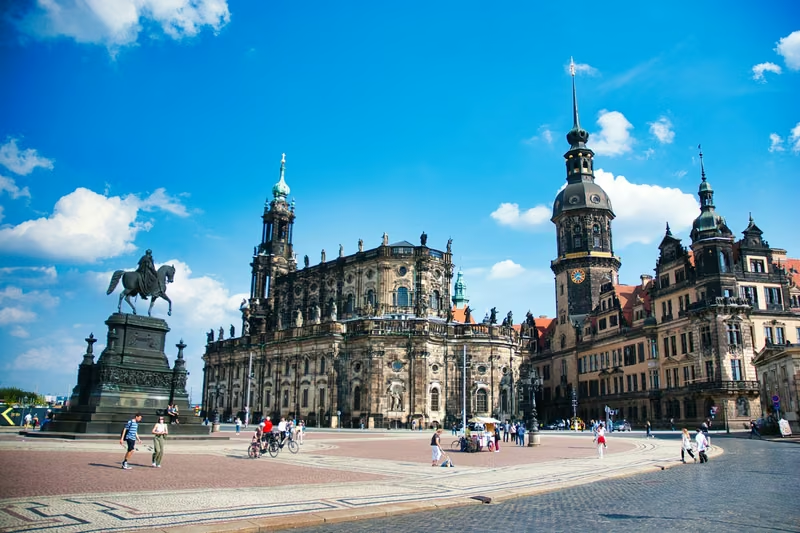
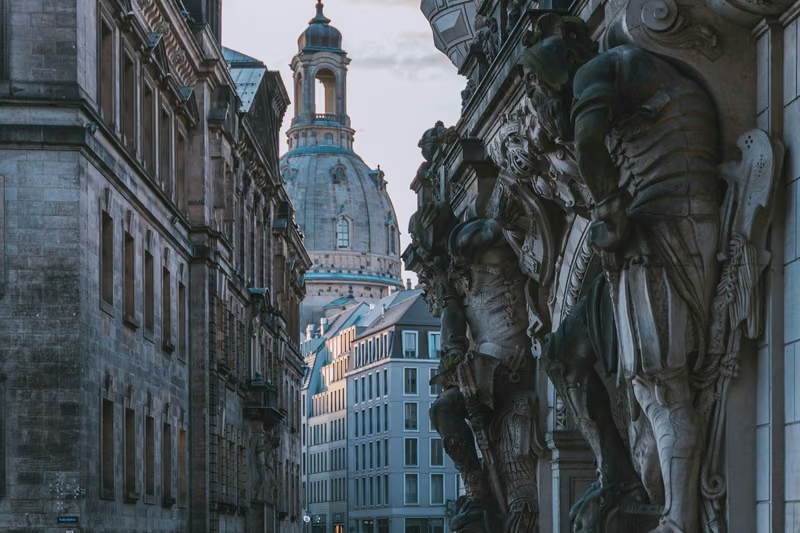
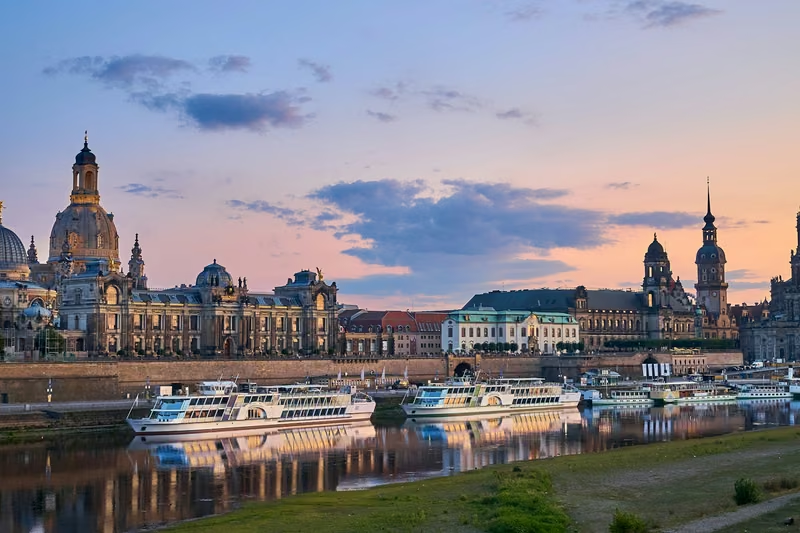
Dresden is the great city of the Elbe. Its skyline of domes and spires, rebuilt after 1945, is one of the most beautiful in Germany. The Zwinger palace, the Semper Opera House, the restored Frauenkirche and the treasures of the Green Vault are all within a short walk of each other. The Elbe valley at Dresden was once listed by UNESCO, but lost its status in 2009 after the building of a new road bridge.
Upstream from Dresden, the river enters Saxon Switzerland, a landscape of sandstone pillars, gorges and forests that is now a national park. The Bastei, a rocky ridge high above the river, is crossed by a stone bridge built in 1851 and gives stunning views over the Elbe. Across the border in the Czech Republic, the gorge continues through Bohemian Switzerland.
Further downstream, Meissen's hilltop castle and cathedral look down over the old town, and the porcelain manufactory still welcomes visitors. Wittenberg's Luther sites, including the Castle Church and Luther's house, are part of a UNESCO World Heritage Site. Potsdam, close to Berlin, has the palaces and gardens of Sanssouci, built for Frederick the Great, and Prague is one of the most beautiful cities in Europe.
Ports and places to know
Berlin and Potsdam, Germany
Many Elbe cruises begin or end with a stay in Berlin, from the Brandenburg Gate and the Reichstag to the remains of the Berlin Wall. Nearby Potsdam has the palaces and gardens of Sanssouci, built for Frederick the Great in the 18th century.
Wittenberg, Germany
Lutherstadt Wittenberg is where Martin Luther launched the Reformation in 1517. The Castle Church, the Luther House and the town church are part of a UNESCO World Heritage Site.
Torgau, Germany
Torgau is a handsome Renaissance town with the grand Hartenfels Castle above the river. It is famous as the place where American and Soviet troops met on 25 April 1945.
Meissen, Germany
Meissen is the home of Europe's first hard-paste porcelain, made here since 1710. The old town climbs up to the Albrechtsburg castle and Gothic cathedral on the hill above the Elbe.
Dresden, Germany
The Saxon capital is famous for its baroque architecture, from the Zwinger palace to the rebuilt Frauenkirche. It also has superb museums, including the Green Vault with its dazzling royal treasures.
Bad Schandau and Saxon Switzerland, Germany
Bad Schandau is a small spa town in the heart of Saxon Switzerland National Park. It is the base for visits to the Bastei, a dramatic sandstone ridge with views high above the river.
Děčín, Czech Republic
Děčín is the first sizeable Czech town upriver from the German border, set in a sandstone gorge below a large castle. It is often the point where cruises transfer by coach to Prague.
Prague, Czech Republic
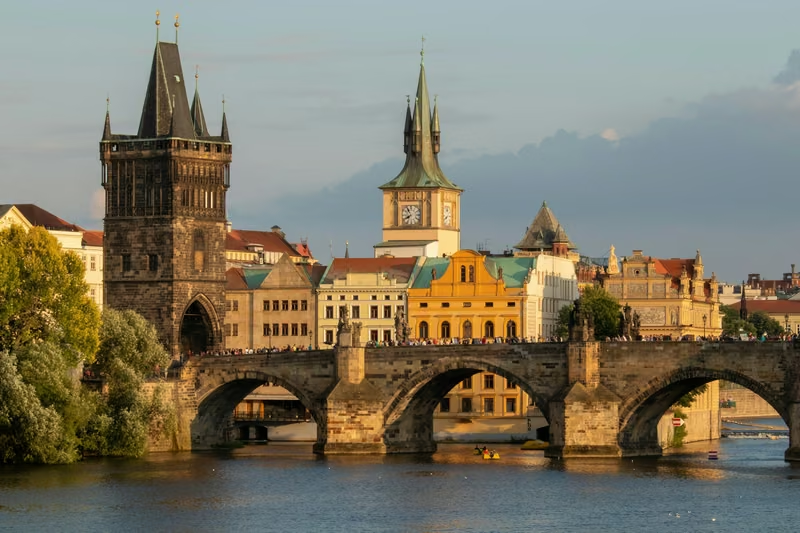
Prague stands on the Vltava, a tributary of the Elbe, and is usually reached by coach at the end or start of a cruise. Its historic centre, with Prague Castle, the Charles Bridge and the Old Town Square, is a UNESCO World Heritage Site.
Food and drink
Saxon cooking is hearty and comforting. Look out for Sauerbraten, a marinated pot roast, potato dumplings and red cabbage, as well as Dresden's famous Christstollen, the fruit loaf known in Britain simply as stollen. Eierschecke, a layered cake with custard and quark, is a Dresden speciality best enjoyed with an afternoon coffee.
Few people realise that the Elbe valley around Meissen and Dresden is a wine region. Saxony is one of the smallest and most northerly wine areas in Germany, producing crisp whites from grapes such as Riesling and Müller-Thurgau. In the Czech Republic, beer is king, and a Bohemian lager with roast pork, dumplings and sauerkraut is the classic meal. Svíčková, beef in a creamy vegetable sauce with cranberries, is a Czech favourite.
When to go
The Elbe cruising season usually runs from about April to October. Spring brings blossom and fresh green meadows along the river, and the weather is generally mild. Summer is warm, and the long days are perfect for exploring Dresden and the sandstone landscapes of Saxon Switzerland.
The Elbe is more prone to low water than many rivers, especially in late summer and early autumn after dry spells. Cruise lines plan for this with shallow-draught ships, but on occasion they may still need to change the itinerary or use coaches for part of the route. September and October bring autumn colour to the forests and vineyards, along with the wine harvest in Saxony.
The Elbe river cruises we offer
These are the cruises currently on our site that sail this river. We are adding more cruise lines, and each will appear here under its own heading.
Viking River Cruises
About Viking| Cruise | Length | From pp |
|---|---|---|
| Elegant Elbe | 10 days | £2,795 |
Lead-in fares per person, checked in October 2026.
The Elbe river cruises: questions answered
Prague stands on the Vltava, a tributary of the Elbe, and river cruise ships do not usually sail into the city. Most Elbe cruises end or begin near the Czech border, often at Děčín, with a coach transfer to Prague. Many itineraries include hotel nights in Prague, giving you time to explore the city properly.
Most Elbe cruises last around eight to 11 days, often including hotel stays in Berlin and Prague at either end. The river section usually runs between the Potsdam or Wittenberg area and the Czech border, with stops at towns such as Torgau, Meissen, Dresden and Bad Schandau along the way.
May, June and September are often the most pleasant months, with mild weather and fewer visitors. Summer is warm and good for exploring Saxon Switzerland. The Elbe is particularly sensitive to low water in late summer and early autumn, so it is worth understanding the cruise line's policy on itinerary changes before you book.
The Elbe is shallower than rivers such as the Rhine or Danube, so ships built for it are designed to sit low in the water, with a shallow draught. They also tend to be smaller and carry fewer guests. This can make life on board feel more relaxed and personal, and it helps the ships cope with the river's changing water levels.
If the water is too low for the ship to sail, cruise lines may change the order of ports, use coaches between some towns or move guests to a different ship. Low water on the Elbe is most likely in late summer and early autumn after dry weather. We always recommend good travel insurance, and we can explain each line's policy before you book.
Very much so. The Elbe passes Wittenberg, where the Reformation began in 1517, Torgau, where American and Soviet troops met in 1945, and Dresden, rebuilt after its wartime destruction. Berlin and Potsdam bring the story of Prussia and the Cold War, while Prague adds a thousand years of Bohemian history. Few European river cruises cover so much.
Saxon Switzerland is an area of dramatic sandstone pillars, cliffs and forests along the Elbe south-east of Dresden, protected as a national park. Its most famous viewpoint is the Bastei, a rocky ridge crossed by a 19th-century stone bridge, with wide views over the river. Despite the name, it is in Germany, and the landscape continues across the border into the Czech Republic.