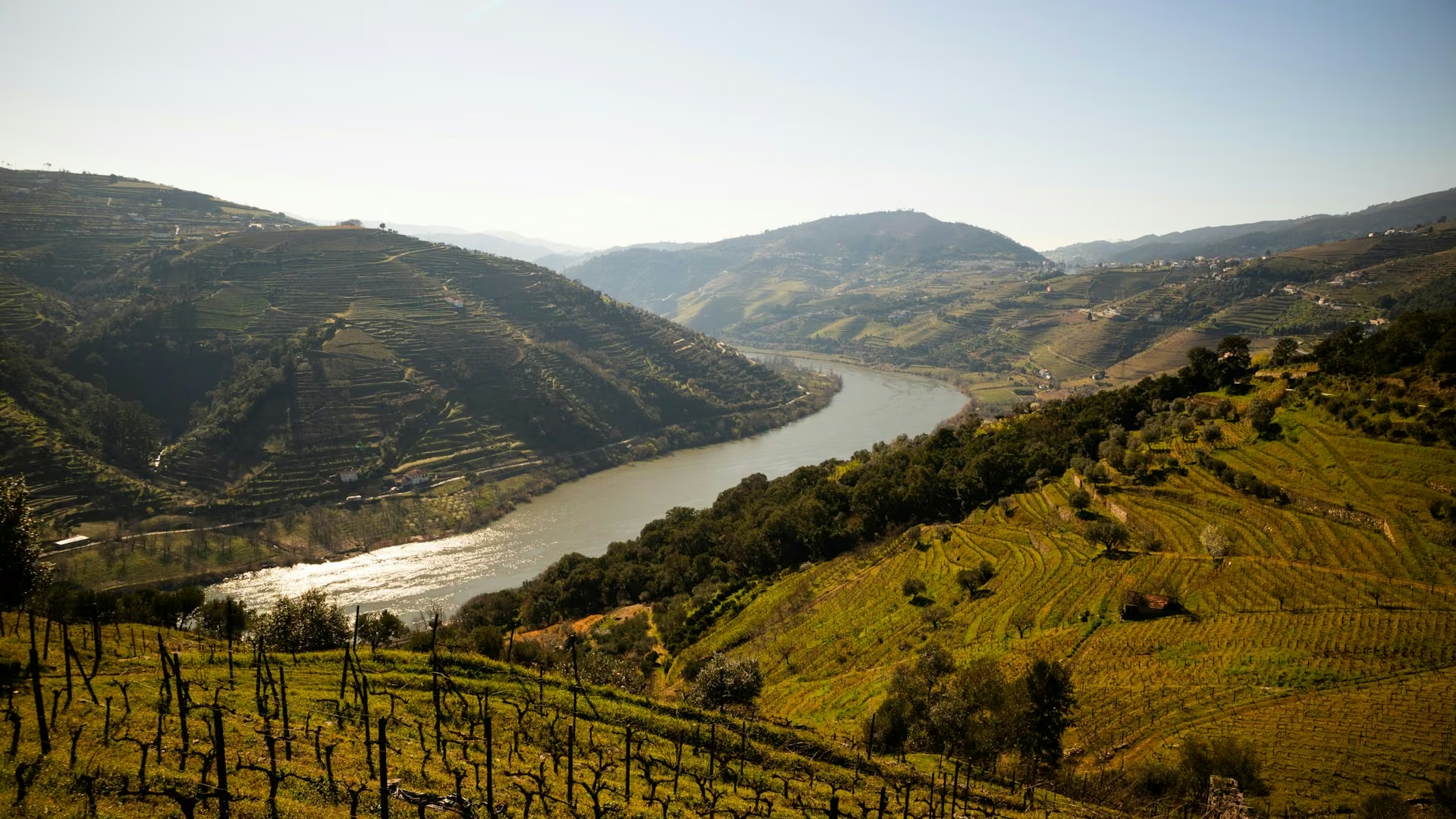
The Douro is unlike any other cruising river in Europe. Instead of cities and cathedrals, it offers a vast, sculpted landscape of vines, schist terraces and whitewashed wine estates, with Porto at one end and the Spanish border at the other.
Cruising the Douro
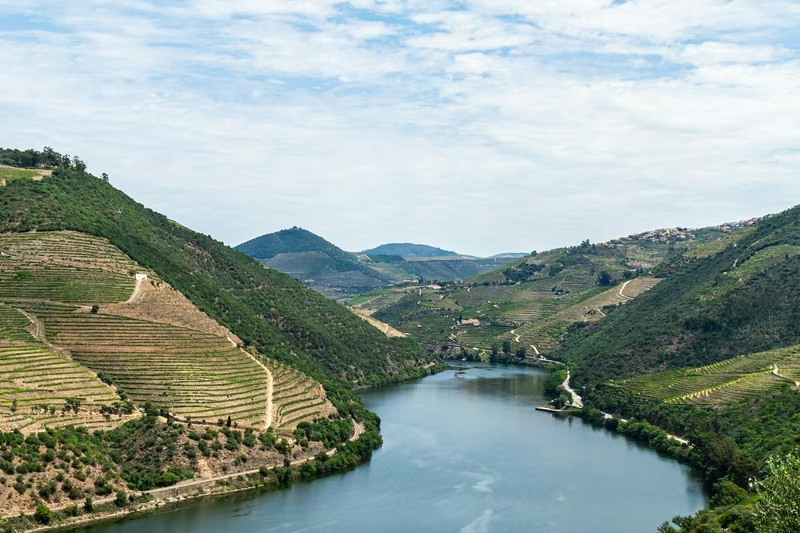
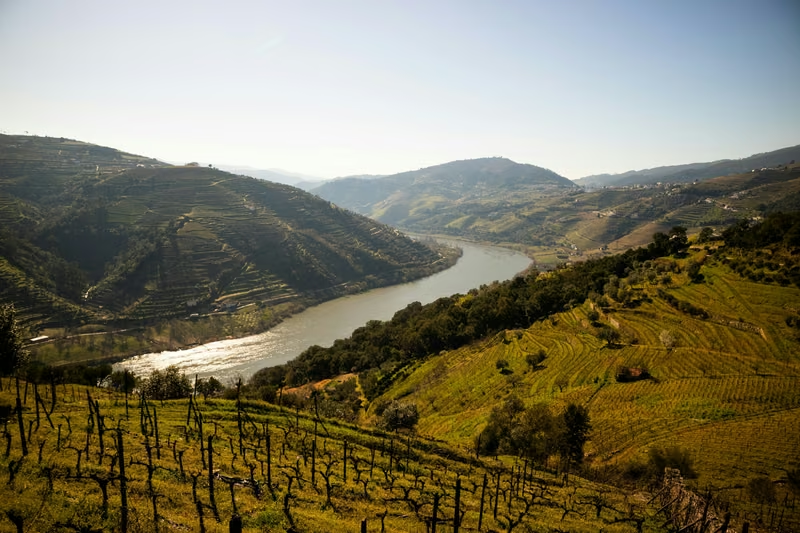
The Douro rises in the Picos de Urbión in Spain and flows about 897 km west to the Atlantic at Porto. For around 112 km it forms the border between Spain and Portugal, and in Spain it is known as the Duero. River cruises sail the Portuguese section from Porto up to Barca d'Alva, close to the Spanish frontier, through a landscape that grows wilder and more dramatic the further inland you go. Granite gives way to schist, the hills close in, and the vineyards climb almost from the water's edge.
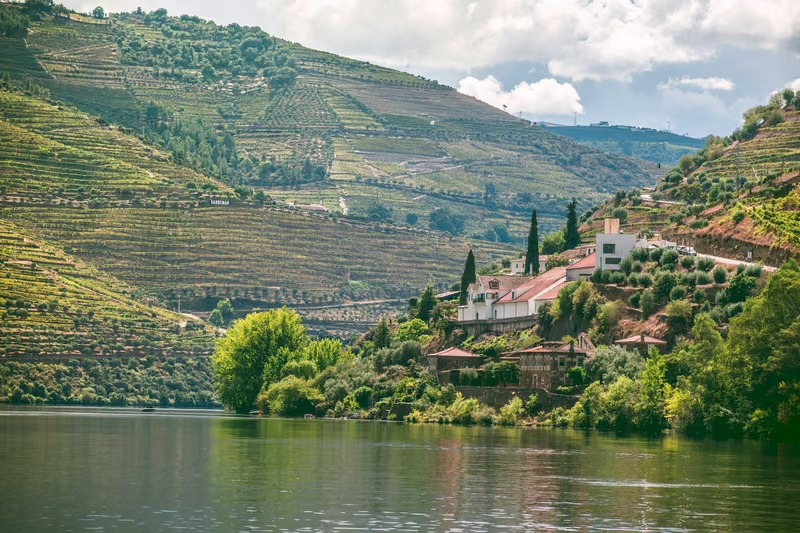
The upper valley is the heart of the port wine country. The Alto Douro was formally demarcated in 1756, making it one of the oldest regulated wine regions in the world, and it has been a UNESCO World Heritage Site since 2001. For centuries growers have cut terraces into the steep schist hillsides to plant vines, creating the stepped slopes that make the valley so striking. Quintas, the traditional wine estates, sit among the vines, many of them welcoming visitors for tastings.
The river was once wild and dangerous, full of rapids, and wine was carried down to Porto in flat-bottomed rabelo boats. Today a series of dams and five locks have tamed it, and the lock at Carrapatelo lifts ships about 35 metres, one of the highest in Europe. Passing through these locks is part of the fun of a Douro cruise. Because the locks limit the size of ships, Douro vessels tend to be smaller than those on other rivers, which gives a more intimate feel on board.
Most Douro cruises start and end in Porto, a lively city with a UNESCO-listed historic centre, and many include a day trip to Salamanca in Spain. Some itineraries add a few days in Lisbon before the cruise. The Douro suits travellers who love wine, food and scenery and prefer quiet villages to big cities. Below you will find a short history, highlights, food and wine, advice on timing and the ports most cruises visit, followed by the Douro cruises we currently offer.
River facts
| Length | About 897 km |
|---|---|
| Source | The Picos de Urbión, Soria province, Spain |
| Flows into | The Atlantic Ocean at Porto |
| Countries | Spain and Portugal (river cruises sail the Portuguese section) |
| Cruising season | March to November |
| Typical cruise | 8 to 10 days, usually from Porto |
A short history of the Douro
Vines have grown in the Douro valley since Roman times, but the story of port really begins in the 17th and 18th centuries. Wars with France pushed English merchants to look elsewhere for wine, and the Methuen Treaty of 1703 gave Portuguese wines favourable terms in England. British firms set up in Porto and in Vila Nova de Gaia across the river, and names such as Taylor's, Croft and Graham's are still on the lodges today. Adding brandy to the wine helped it survive the voyage, and fortified port was born.
In 1756 the Marquis of Pombal, the powerful chief minister of Portugal, created a company to regulate the port trade and marked out the boundaries of the wine region with granite posts. It was one of the first formally demarcated wine regions in the world. For two centuries the wine was carried downriver in rabelo boats, skilfully steered through the rapids, until railways, roads and finally dams made the river trade obsolete.
Porto itself has a long and proud history. Prince Henry the Navigator was born here in 1394, and the city helped launch Portugal's age of exploration. Legend has it that its people gave all their meat to the fleet that sailed for Ceuta in 1415, keeping only the tripe for themselves, which is why they are still nicknamed tripeiros, or tripe eaters. The dams built from the 1960s onwards made the river navigable all the way to the Spanish border.
Highlights along the river
The scenery is the true highlight of a Douro cruise. Above Régua the valley narrows and deepens, and the terraced vineyards rise steeply on both sides, dotted with white quintas and the odd chapel. The stretch around Pinhão is especially beautiful, and the town's railway station is decorated with blue and white azulejo tiles showing scenes of the wine harvest.
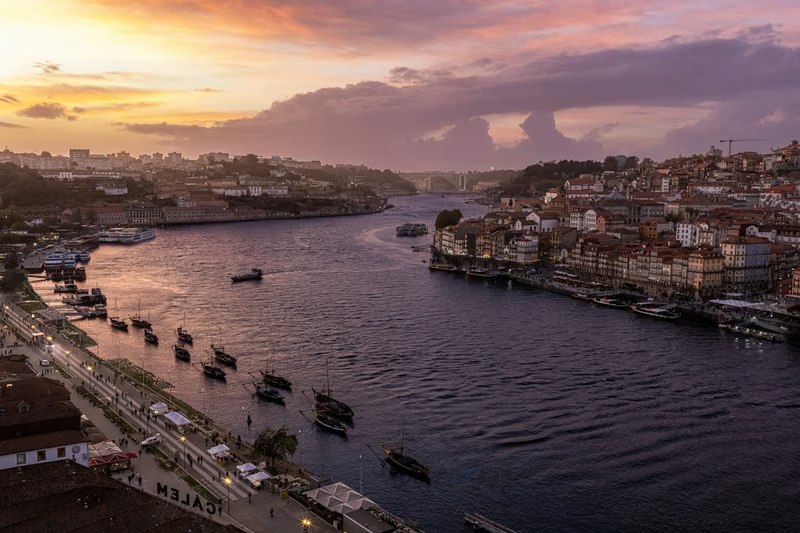
Porto deserves time at the start or end of your cruise. Its Ribeira district tumbles down to the river in a jumble of tiled houses, and the double-decker Dom Luís I bridge, designed by a partner of Gustave Eiffel, links the city with the port lodges of Vila Nova de Gaia. Further upriver, Mateus Palace near Vila Real is a baroque manor house famous as the image on the Mateus Rosé label, and Lamego's baroque sanctuary is reached by a long staircase of nearly 700 steps.
Near the Spanish border, the medieval hilltop village of Castelo Rodrigo looks out over the valley from its walls. Many cruises include a day trip from the river into Spain to visit Salamanca, a golden sandstone university city whose old centre is a UNESCO World Heritage Site. Its university, founded in 1218, is one of the oldest in Europe.
Ports and places to know
Porto, Portugal
Porto is the start and end point of most Douro cruises, a hilly, characterful city with a UNESCO-listed historic centre. Its port lodges, in Vila Nova de Gaia across the river, offer cellar tours and tastings.
Régua, Portugal
Peso da Régua is the main town of the lower Alto Douro and an important centre of the port trade. The Douro Museum tells the story of the river and its wine.
Vila Real and Mateus Palace, Portugal
Vila Real is a short drive from the river and close to Mateus Palace, an elegant baroque manor surrounded by formal gardens. The palace is famous as the image on the Mateus Rosé label.
Lamego, Portugal
Lamego is an attractive old town known for its baroque Sanctuary of Our Lady of Remedies. A long, decorated staircase of nearly 700 steps climbs up to the church.
Pinhão, Portugal
This small village sits in the heart of the port wine country, surrounded by some of the most famous quintas. Its railway station is decorated with azulejo tile panels showing scenes of the harvest.
Barca d'Alva and Castelo Rodrigo, Portugal
Barca d'Alva is the last Portuguese stop before the Spanish border. Nearby, the medieval walled village of Castelo Rodrigo stands on a hill with sweeping views over the valley.
Salamanca, Spain
Salamanca is usually visited on a day trip from the river, and its golden sandstone old town is a UNESCO World Heritage Site. Highlights include the university, the grand Plaza Mayor and the House of Shells.
Food and wine
Port comes in several styles. Ruby port is young, fruity and deep red, tawny is aged in wood and takes on nutty, caramel flavours, and white port is often served with tonic as an aperitif. Vintage port, made only in the best years, is the finest of all. The Douro also makes excellent dry red and white table wines, which have become increasingly well known in recent years, and the valley is known for its olive oil and almonds.
Portuguese food is generous and comforting. In Porto, try a francesinha, a hearty sandwich layered with meats and covered in melted cheese and a rich beer sauce, or tripas à moda do Porto, tripe with white beans. Bacalhau, salt cod, is the national dish and is said to have hundreds of recipes. Pastéis de nata, small custard tarts, are on sale everywhere, and are best enjoyed warm with a coffee.
When to go
The Douro cruising season runs from around March to November. Spring is lovely, with wild flowers on the hillsides, fresh green vines and comfortable temperatures. Summer in the upper valley is very hot, often well above 30°C and sometimes over 40°C, so midsummer cruises call for early starts and plenty of shade. Porto, cooled by the Atlantic, is milder.
September and early October are harvest time, when the quintas are busy picking and treading grapes, and the valley is at its most atmospheric. Late October and November bring autumn colour to the vineyards, which turn shades of red and gold. Spring and autumn are the most popular times to go, so it is wise to book early.
The Douro river cruises we offer
These are the cruises currently on our site that sail this river. We are adding more cruise lines, and each will appear here under its own heading.
Viking River Cruises
About Viking| Cruise | Length | From pp |
|---|---|---|
| Portugal's River of Gold | 10 days | £3,295 |
| Douro's Valleys & Vineyards | 8 days | £3,445 |
Lead-in fares per person, checked in October 2026.
Portugal's River of Gold
Ten days from Lisbon to Porto, with a round-trip Douro cruise through terraced port wine country and a day across the border in Salamanca.
Douro's Valleys & Vineyards
Eight days on Portugal's river of wine, from the riverside lodges of Porto to the Spanish border and the golden university city of Salamanca.
The Douro river cruises: questions answered
Most Douro cruises last around eight days and run as a round trip from Porto, sailing up to Barca d'Alva near the Spanish border and back. Some itineraries last ten days or more, adding a stay in Lisbon before the cruise. Because the river is relatively short, there is plenty of time to explore each place at an easy pace.
Douro cruises sail the Portuguese section of the river, but many include a day trip to Salamanca in Spain. It is usually a coach journey of a couple of hours from the river near the border, and the city's UNESCO-listed old town, university and Plaza Mayor make it well worth the trip.
Spring and autumn are the most comfortable seasons. April and May bring wild flowers and fresh green vines, while September and early October are harvest time, when the quintas are at their busiest. Summer can be extremely hot in the upper valley, often above 30°C and sometimes over 40°C, so midsummer cruises are best for those who enjoy the heat.
The Douro has five locks between Porto and the Spanish border, and the size of these locks limits the length of ships that can use them. As a result, Douro ships carry fewer passengers than those on rivers such as the Rhine or Danube. Many guests feel this gives a more intimate and relaxed atmosphere on board.
Almost certainly. Port is the reason the Douro is famous, and most cruises include visits to quintas and port lodges with tastings. You are likely to try several styles, from fruity ruby to nutty tawny. The Douro also makes excellent red and white table wines, and many quintas produce olive oil too.
The Douro can be more demanding than some rivers. Some quintas and villages involve steep paths, steps or uneven ground, and summer heat can make walking tiring. Ships often moor at small piers away from town centres, so many visits begin with a coach ride. Tell us about any mobility needs and we can advise on which itineraries suit you best.
The Alto Douro is the area of the upper Douro valley where port wine grapes are grown. It was formally demarcated in 1756, making it one of the first regulated wine regions in the world, and it was listed as a UNESCO World Heritage Site in 2001 for its terraced landscape, which has been shaped by wine growing over many centuries.