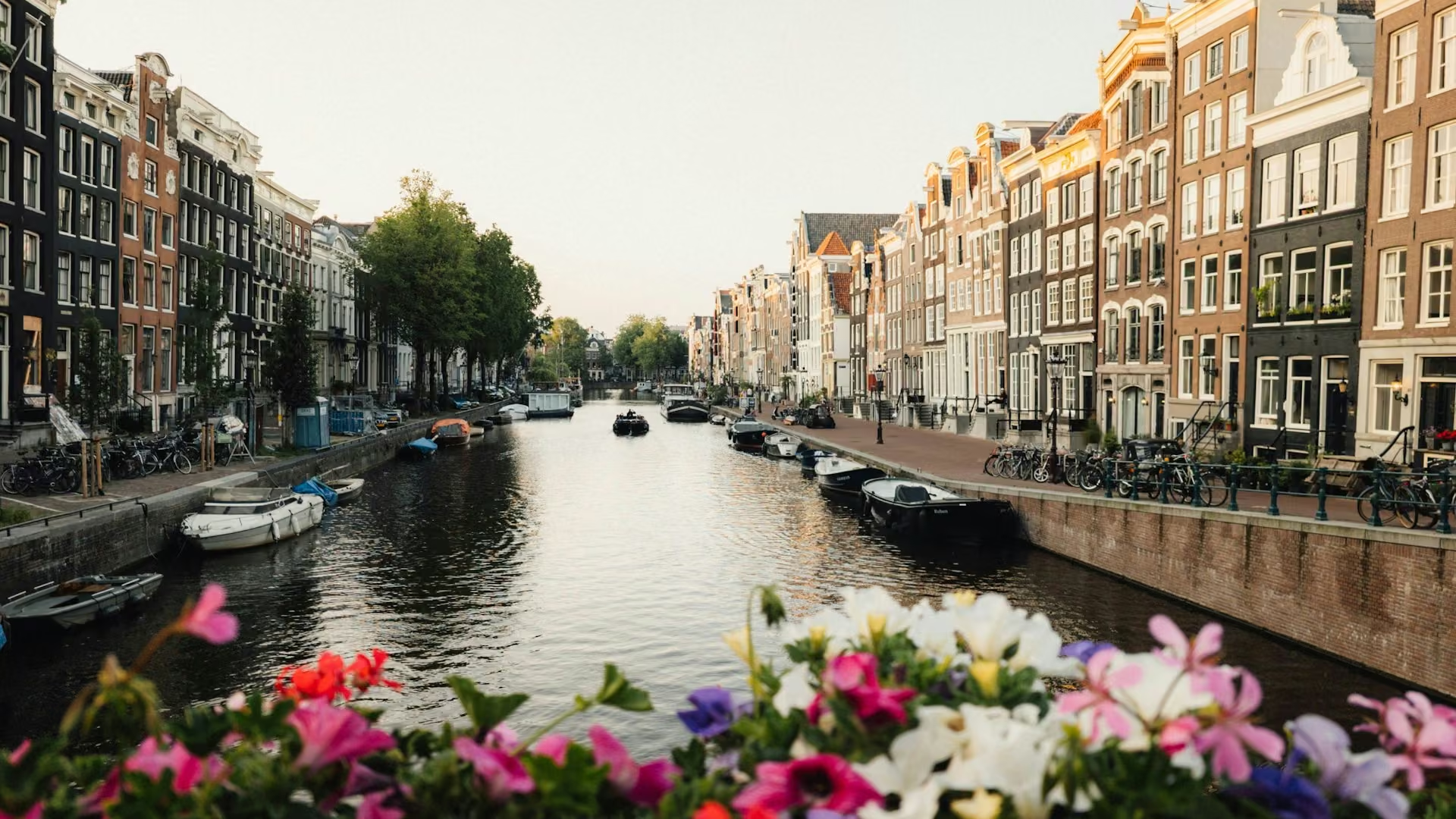
There is a short window each year when the Netherlands is at its most colourful, and this cruise is built around it. In ten days you see Keukenhof in flower, the windmills of Kinderdijk, the old trading towns of Zeeland and a full day in Antwerp, all without packing and unpacking.
The route
Amsterdam · Enkhuizen · Arnhem · Kinderdijk · Rotterdam · Antwerp · Middelburg · Veere · Zeeland · Amsterdam
About the Tulips & Windmills cruise
Tulips & Windmills starts and finishes in Amsterdam, with an overnight stay on board at the beginning so you can find your feet in the city. Highlights include the Dutch Masters at the Rijksmuseum, a canal trip past the gabled houses and, of course, a stroll among the tulips of Keukenhof, one of the largest flower gardens in the world. The Low Countries are at their best in spring, and the whole cruise is planned around that season.
From Amsterdam the ship crosses the IJsselmeer to Enkhuizen, a Zuiderzee port with a proud seafaring history and a harbour still full of traditional sailing boats. The crossing is a peaceful few hours, and a good chance to try the deck chairs on the sun deck. Arnhem follows, with its parks, museums and moving memories of Operation Market Garden in 1944. Then it is south to the windmills of Kinderdijk and the striking modern skyline of Rotterdam, before you cross into Belgium for Antwerp, a city of Renaissance splendour, chocolate and fruit beer.
The last part of the cruise explores Zeeland, the Dutch province that lives closest to the sea. Middelburg, a wealthy trading hub in the Golden Age, has some of the finest old buildings in the country, and nearby Veere is a little harbour town with a long maritime story. You then see the Delta Works, the great storm barriers built after the 1953 flood, before sailing back to Amsterdam for a final evening.
The fare includes return flights from London and selected regional airports, one included shore excursion in every port of call, all meals on board, beer, wine and soft drinks with lunch and dinner, free Wi-Fi, port taxes and onboard gratuities. Your ship is one of Viking's European Longships. Prices start from £2,595 per person. We checked this in October 2026, and the fare will vary with your departure date and stateroom.
For more on the river itself, see our Holland and Belgium river cruise guide.
Cruise highlights
Keukenhof in bloom
Wander one of the world's largest flower gardens while the tulips, daffodils and hyacinths are out in spring.
Dutch Masters in Amsterdam
The Rijksmuseum holds Rembrandt's The Night Watch and some of the finest Golden Age paintings anywhere.
Sailing the IJsselmeer
Cross one of Western Europe's largest lakes, once the open Zuiderzee, on the way to historic Enkhuizen.
Arnhem and Market Garden
Visit parks and museums or follow the story of the 1944 airborne battle for the Rhine bridge.
Kinderdijk and Rotterdam
The working windmills of a UNESCO site and, on the same day, the bold rebuilt city of cube houses.
Zeeland and the Delta Works
Golden Age Middelburg, harbourside Veere and the storm surge barrier that keeps the sea at bay.
Watch the Tulips & Windmills cruise
Video: Tulips & Windmills (Viking Cruises)
Day by day itinerary
Welcome to Amsterdam
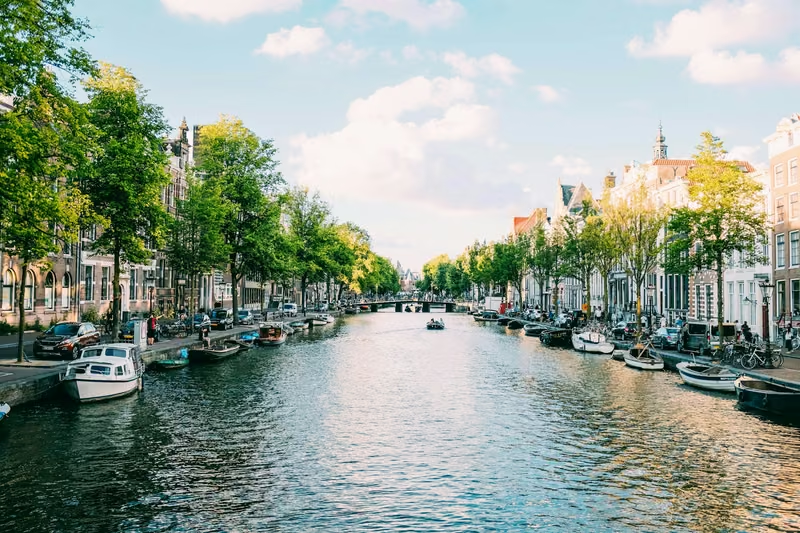
Your cruise begins in Amsterdam, where you board your Viking Longship and settle into your river-view stateroom. The city's 17th-century canal ring is now listed by UNESCO, and the best introduction is a trip along the water, gliding under humpbacked bridges past houseboats and tall merchants' houses. If you prefer, spend the time in one of the museums instead. The Rijksmuseum is home to Rembrandt's The Night Watch and works by Vermeer, and the Van Gogh Museum is a short walk away. In the evening, enjoy your first dinner on board with the city lit up around you.
Bitterballen and poffertjes
The ship stays overnight, so today is yours to enjoy Amsterdam at a gentler pace. Make time for the local snacks. Bitterballen are crunchy little balls of rich ragout, fried and served with mustard, ideally with a beer in a traditional brown café. Poffertjes are tiny, fluffy pancakes cooked in a special dimpled pan and finished with butter and icing sugar. In between, you could wander the Nine Streets, with their small independent shops, or call at the floating flower market on the Singel, where in spring the tulip bulbs are piled high.
Across the IJsselmeer
This morning you sail the IJsselmeer, an inland bay in the central Netherlands and one of the largest lakes in Western Europe. Until 1932 this was the Zuiderzee, an arm of the North Sea, before the Afsluitdijk dam closed it off. In the afternoon you reach Enkhuizen, once one of the six cities with a chamber of the Dutch East India Company. Walk past the Drommedaris, a round harbour tower first built in 1540 to guard the entrance to the old port, and the tall spire of the Zuiderkerk. The town is also home to the Zuiderzee Museum, which tells the story of the fishing communities around this old sea.
Arnhem's parks and its war story
Arnhem is a green city on the Lower Rhine, surrounded by woods and heathland, and there are plenty of parks and museums to choose from. For many British visitors, though, the name means one thing. In September 1944, during Operation Market Garden, British airborne troops landed nearby and fought for days to hold the bridge over the Rhine before being forced to withdraw. The bridge was later renamed after Lieutenant Colonel John Frost, who led the men defending it. You can tour the Market Garden sites and learn how the battle unfolded, a story many will know from the film A Bridge Too Far.
Windmills and modern Rotterdam
The morning brings you to Kinderdijk, where a long line of windmills stands guard over the polders. They were built in the 18th century to pump water off the low-lying land, and the site has been a UNESCO World Heritage Site since 1997. Several mills still work, and some are still homes. Later you arrive in Rotterdam, a city whose centre was flattened by bombing in May 1940. Rather than recreate what was lost, Rotterdam rebuilt with confidence, and its architecture is now one of the reasons to visit. Look out for Piet Blom's tilted cube houses, a symbol of the city's rebirth after the war.
Antwerp's Renaissance splendour
Today you cross into Belgium and Antwerp, a port city that was among the richest in Europe in the 16th century. You see that wealth in the guildhalls around the Grote Markt and in the Cathedral of Our Lady, whose great altarpieces were painted by Peter Paul Rubens, Antwerp's most famous resident. The Rubens House, where he lived and worked, is a short walk from the centre. Then it is time for the serious business of Belgian chocolate, followed by a glass of fruit beer. Kriek, made with sour cherries, is a good place to start if you have not tried one before.
Middelburg and Veere
Middelburg is the capital of Zeeland and was a prosperous trading hub in the Dutch Golden Age, home to one of the chambers of the Dutch East India Company. Its Gothic Town Hall, built between 1452 and 1520, was gutted by fire in the German bombardment of May 1940 and has since been carefully restored, along with much of the old centre. Nearby Veere is a small, very pretty harbour town with a rich maritime heritage, explored on a walking tour. For centuries it was the staple port for Scottish wool, and the Scottish Houses on the quay are a reminder of those close links.
The Delta Works
Zeeland means sea land, and few places show more clearly how the Dutch live with water. On the night of 31 January 1953, a storm surge broke through the dykes here and killed more than 1,800 people across the southwestern Netherlands. The response was the Delta Works, a series of dams and storm surge barriers built over the following decades. The most impressive is the Oosterschelde barrier, completed in 1986, with huge sliding gates that stay open to let the tides flow and close only when a storm threatens. You learn about flood management at the barrier and in its museum.
Back to Amsterdam
The ship returns to Amsterdam for your last full day. Use it to see the parts of the city you missed at the start. The gabled houses along the quieter canals, such as the Herengracht and the Keizersgracht, are lovely in the soft spring light, and many of the gables carry dates and carvings showing the trade of the merchants who built them. You might visit the Anne Frank House, if you have booked tickets well in advance, or just sit on a café terrace and watch the boats. In the evening, there is a final dinner on board with the friends you have made.
Journey home
After breakfast you say goodbye to the crew and your fellow guests. If you booked flights through Viking, a transfer takes you to the airport for your flight home to the UK. If you would like longer in the Low Countries, Viking offers extensions. When we checked, a stay in The Hague, home of the Dutch government and the Mauritshuis gallery with Vermeer's Girl with a Pearl Earring, was offered after this cruise, with Amsterdam and Bruges and Ghent available beforehand. We can confirm the current options and prices for your date.
Itineraries and shore excursions are set by Viking and can change, and may vary by departure.
The places you will visit
Tulips and the story of Keukenhof
Tulips are not native to the Netherlands. They came from the mountains of Central Asia by way of the Ottoman Empire, and reached Dutch gardens in the late 16th century. By the 1630s they had become a craze, and prices for rare bulbs rose to extraordinary levels before collapsing in 1637, an episode remembered as tulip mania. The Dutch kept growing them, though, and the sandy soil behind the dunes between Leiden and Haarlem proved ideal. Today that strip of land is known as the Bulb Region, and in spring the fields turn into stripes of colour.
Keukenhof sits in the middle of it, at Lisse. The name means kitchen garden, because in the 15th century this was the herb and vegetable garden for nearby Teylingen Castle, linked to Countess Jacoba of Bavaria. The flower park opened in 1950 as a showcase for growers, and it now covers 32 hectares. Around seven million bulbs are planted by hand each autumn, and the park opens for only about eight weeks, from mid-March to mid-May. Peak bloom usually falls around mid-April, but the weather has the final say.
Arnhem and Operation Market Garden
In September 1944, Field Marshal Montgomery launched Operation Market Garden, a bold plan to drop airborne troops behind German lines and seize a chain of bridges across the Dutch rivers, opening a route into Germany. American paratroopers took bridges around Eindhoven and Nijmegen, while the British 1st Airborne Division landed west of Arnhem with orders to capture the road bridge over the Rhine. Only a small force led by Lieutenant Colonel John Frost reached it, and they held the northern end for several days against heavy odds.
The relief force could not get through in time, and the surviving airborne troops were withdrawn across the river at night. Many did not come home, and the Arnhem Oosterbeek War Cemetery is a quiet and moving place to visit. The Airborne Museum in Oosterbeek, in the former Hartenstein Hotel that served as the British headquarters, tells the story in detail. The rebuilt bridge in Arnhem was renamed the John Frost Bridge in 1977, the same year the film A Bridge Too Far brought the battle to a wider audience.
Zeeland: Middelburg, Veere and the sea
Zeeland is a province of former islands and peninsulas at the mouths of the Scheldt and the Maas, and its history has always been tied to the sea. In the Golden Age, Middelburg was its great trading city and the seat of the Zeeland chamber of the Dutch East India Company. Its abbey, founded in the Middle Ages, still sits at the centre of town, and its Gothic Town Hall, the work of the Keldermans family of architects from Flanders, ranks among the finest civic buildings in the Low Countries.
Veere, a few miles away, grew rich on a special relationship with Scotland. For centuries it held the staple for Scottish wool, which meant Scottish merchants brought their trade here, and the Scottish Houses on the quay were part of that world. Today Veere's harbour looks out over the calm Veerse Meer, a lake created when a dam closed off the sea channel in 1961 as part of the Delta Works. That same programme of dams and barriers, whose centrepiece, the Oosterschelde barrier, was completed in 1986, is why Zeeland can sleep easily through winter storms.
What is included
Viking prices its river cruises to include most of what you need, so there are few extras to budget for once you are on board.
Return flights
Return flights from London and selected regional airports, with ground transfers included when you fly with Viking.
A shore excursion in every port
One included shore excursion in each port of call, usually a guided walking or coach tour, with optional extras to buy.
All meals on board
Breakfast, lunch and dinner every day you are on board, including al fresco dining on the Aquavit Terrace.
Drinks with lunch and dinner
Beer, wine and soft drinks served with lunch and dinner, plus specialty coffee, tea and bottled water at any hour.
Free Wi-Fi
Wi-Fi is included on board at no extra charge, though speeds can vary as the ship moves along the river.
Port taxes and fees
Port taxes and fees are built into the fare, so there are no extra charges waiting at the end.
Onboard gratuities
Gratuities for the crew on board are included in the fare.
Enrichment and performances
Talks on the history and culture of your route, plus local performers who bring the destinations to life on board.
Your stateroom, the ship and its facilities are covered on our Viking Longships page.
Fares
| Cruise | Duration | From, per person |
|---|---|---|
| Tulips & Windmills, Roundtrip Amsterdam | 10 days | £2,595 |
Lead-in fare per person, checked in October 2026. Viking's fares change with the date, direction of sailing and stateroom grade, so please email us for live prices and availability on the departure you have in mind.
Interested in the Tulips & Windmills? Email us your preferred month and we will send dates and prices.
Email an enquiry- This is a spring cruise. Departures are timed for tulip season, and Keukenhof is usually open from mid-March to mid-May, with peak bloom around mid-April.
- Starting and finishing in Amsterdam makes travel simple, with short flights from many UK airports and no one-way journeys to plan.
- The pace is relaxed and the towns are flat and compact, but expect cobbles and a fair amount of walking at Keukenhof.
- Spring weather in the Low Countries can be cool and breezy, so pack layers and a light waterproof.
- It suits garden lovers, first-time river cruisers and anyone with an interest in Second World War history or Dutch art.
Tulips & Windmills: your questions answered
The fare includes return flights from London and selected regional airports, one included shore excursion in every port of call, all onboard meals, beer, wine and soft drinks with lunch and dinner, 24-hour specialty coffee, tea and bottled water, free Wi-Fi, port taxes and fees, enrichment lectures and onboard gratuities. Ground transfers are included when you book flights through Viking.
The cruise runs in spring, when Keukenhof is open and the bulb fields are in flower, so your chances are very good. Exactly which flowers are at their best depends on the weather that year. Earlier departures tend to see more crocuses, daffodils and hyacinths, with tulips usually peaking around mid-April.
This cruise is sailed by one of Viking's European Longships, and the exact ship is confirmed at booking. Every Longship has river-view staterooms with the Viking Explorer bed, heated bathroom floors and Freyja toiletries, plus the Aquavit Terrace at the bow for eating outside when the weather is kind.
The Netherlands is flat and the towns on this route are compact, so most people manage comfortably. Keukenhof is large, though, and you can easily walk a few miles there if you want to see it all. Expect cobbled streets in the older towns. If you have any mobility concerns, let us know and we will check the details with Viking.
Return flights to Amsterdam are included from London and selected regional airports. Because the cruise is a round trip, you fly in and out of the same city. If you buy your flights through Viking, transfers between the airport and the ship are included. Ask us which regional airports are available on your departure date.
Yes. When we checked in October 2026, Viking offered pre-cruise stays in Amsterdam, either standard or premium, and a fully guided pre-cruise stay in Bruges and Ghent. After the cruise, a stay in The Hague was available. Options and prices change, so we will confirm what is available for your departure.
You spend two days in Amsterdam, then sail the IJsselmeer to Enkhuizen and continue to Arnhem, Kinderdijk and Rotterdam. The ship crosses into Belgium for Antwerp, then returns to the Netherlands for Middelburg, Veere and the Delta Works in Zeeland before a final day in Amsterdam. Spring departures also include time at Keukenhof Gardens.
You might also like
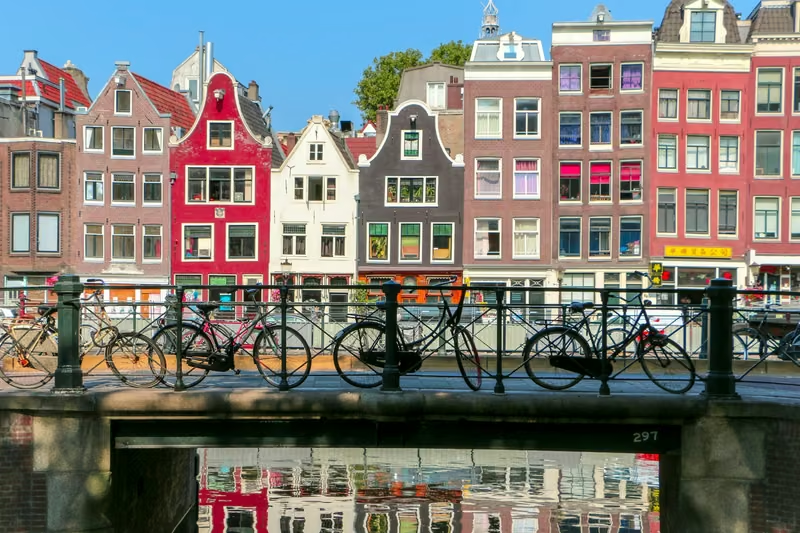
Holland & Belgium
Ten days on the canals and rivers of the Low Countries, from Amsterdam's gabled waterfronts to the chocolate shops and diamond streets of Antwerp.
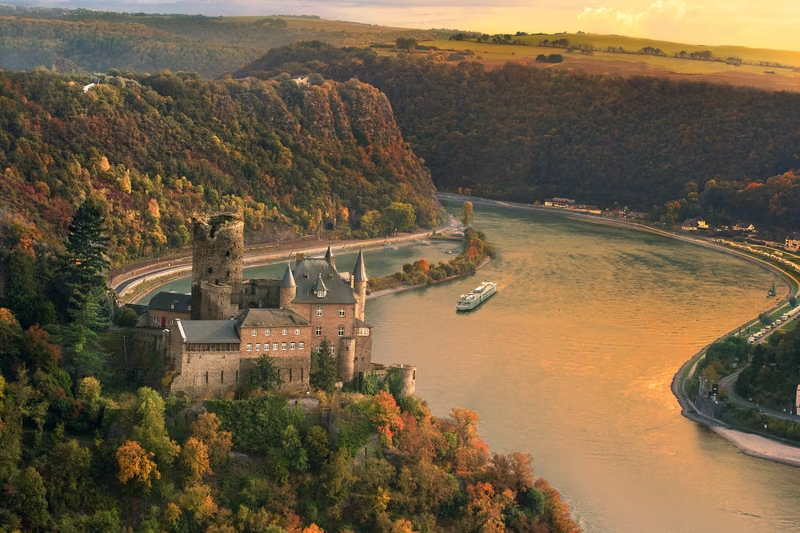
Rhine Getaway
Eight days down the Rhine from the Swiss border to the canals of Amsterdam, with Alsace, the castle country of the Middle Rhine and Cologne along the way.
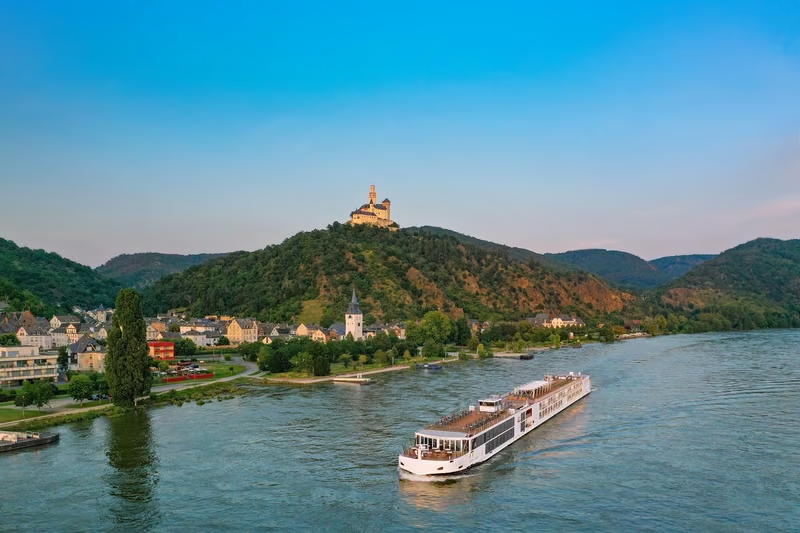 New
Castles, Vineyards & Villages
Eight days from Bavaria to Amsterdam, along the vine-covered Main and through the castle country of the Middle Rhine.