The Danube has carried traders, armies and emperors for two thousand years, and it is still one of the easiest and most rewarding ways to see central and eastern Europe. You unpack once, and Vienna, Bratislava and Budapest come to you.
Cruising the Danube
Rising in Germany's Black Forest and running roughly 2,850 km to the Black Sea, the Danube flows through or along the borders of ten countries, more than any other river in the world. It passes four national capitals, Vienna, Bratislava, Budapest and Belgrade, which gives a Danube cruise a variety that is hard to match. In a single week you can go from Bavarian baroque to Habsburg grandeur and on to the café terraces of Budapest, with the scenery changing every day between vineyards, wooded hills and wide, slow plains.
Most cruises concentrate on the upper and middle river, between Passau or Regensburg in Bavaria and Budapest. This stretch includes the Wachau Valley, Melk Abbey, Vienna and the Danube Bend, and an eight-day voyage covers it comfortably. Longer itineraries carry on south and east beyond Budapest into Croatia, Serbia, Bulgaria and Romania, passing through the Iron Gates gorge where the river squeezes between the Carpathian and Balkan mountains. The grandest journeys link the Danube with the Main and the Rhine by way of the Main-Danube Canal, so you can sail all the way between Budapest and Amsterdam.
River cruising suits the Danube particularly well. Towns grew up on its banks because the river was the main road, so ships tend to moor within walking distance of the old centre. Days usually follow a gentle rhythm, with a guided walk or visit in the morning, free time after lunch, and sailing in the late afternoon or overnight. Some of the finest scenery, especially through the Wachau, is best enjoyed from the sun deck with a glass of local wine. Ships often stay into the evening in Vienna and Budapest, which leaves time for a concert or a stroll along the floodlit riverbanks.
The Danube makes an excellent first river cruise. Distances between ports are short, the cities are well known and most sightseeing is on foot over fairly level ground, although some old towns have cobbles and the odd steep lane. It also rewards repeat visitors, who often come back for the quieter lower Danube or for the Christmas markets in late autumn. Below you will find a short history of the river, the highlights worth knowing about, food and wine, advice on when to go and the ports most cruises call at, followed by the Danube cruises we currently offer.
River facts
| Length | About 2,850 km |
|---|---|
| Source | The Black Forest, Germany, where the Breg and Brigach meet at Donaueschingen |
| Flows into | The Black Sea, through the Danube Delta in Romania and Ukraine |
| Countries | Germany, Austria, Slovakia, Hungary, Croatia, Serbia, Romania, Bulgaria, Moldova and Ukraine |
| Cruising season | Late March to December, including Christmas market cruises |
| Typical cruise | 8 to 15 days, with some longer voyages of up to 23 days |
A short history of the Danube
The Romans used the Danube as the northern frontier of their empire, and a chain of forts along its banks grew into towns such as Regensburg, Vienna and Budapest. Regensburg began life as the legionary fortress of Castra Regina, and the ruins of Aquincum, a provincial capital, can still be seen on the edge of modern Budapest. In the Middle Ages the river carried salt, wine and timber, and crusaders followed it east. On his way home from the Third Crusade, Richard the Lionheart was held captive at Dürnstein in the Wachau, a story the town still loves to tell.
For centuries the middle Danube was the frontier between the Habsburgs and the Ottoman Empire. The Ottomans won a crushing victory at Mohács in 1526 and twice laid siege to Vienna, in 1529 and 1683. The failure of the second siege opened the way for Habsburg expansion down the river, and much of the baroque architecture you see today, from Melk Abbey to the palaces of Vienna, dates from the confident decades that followed. Bratislava, then known as Pressburg, was the coronation city of the kings of Hungary from 1563 to 1830.
The twentieth century was harder on the river's people. After the Second World War the Iron Curtain cut the Danube in two, and travel downstream of Vienna was difficult until 1989. Since then the lower river has opened up to visitors, and the completion of the Main-Danube Canal in 1992 created a continuous waterway between the North Sea and the Black Sea, which is what makes today's long cross-Europe voyages possible.
Highlights along the river
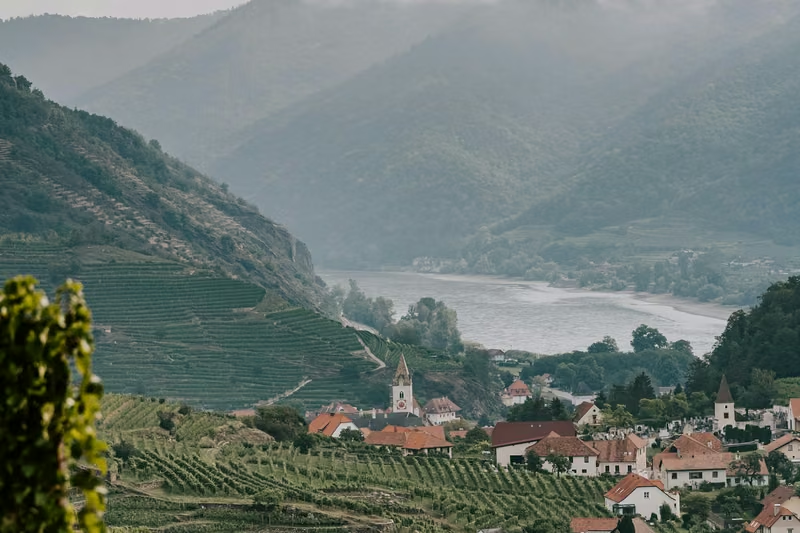
For many people the Wachau Valley, between Melk and Krems in Austria, is the loveliest part of the river. It is a short, gentle stretch of terraced vineyards, apricot orchards, castle ruins and small wine villages, and it has been a UNESCO World Heritage Site since 2000. Melk Abbey, a huge baroque Benedictine monastery rebuilt in the early 18th century, stands guard at its western end, and its library and gilded church are well worth the climb.
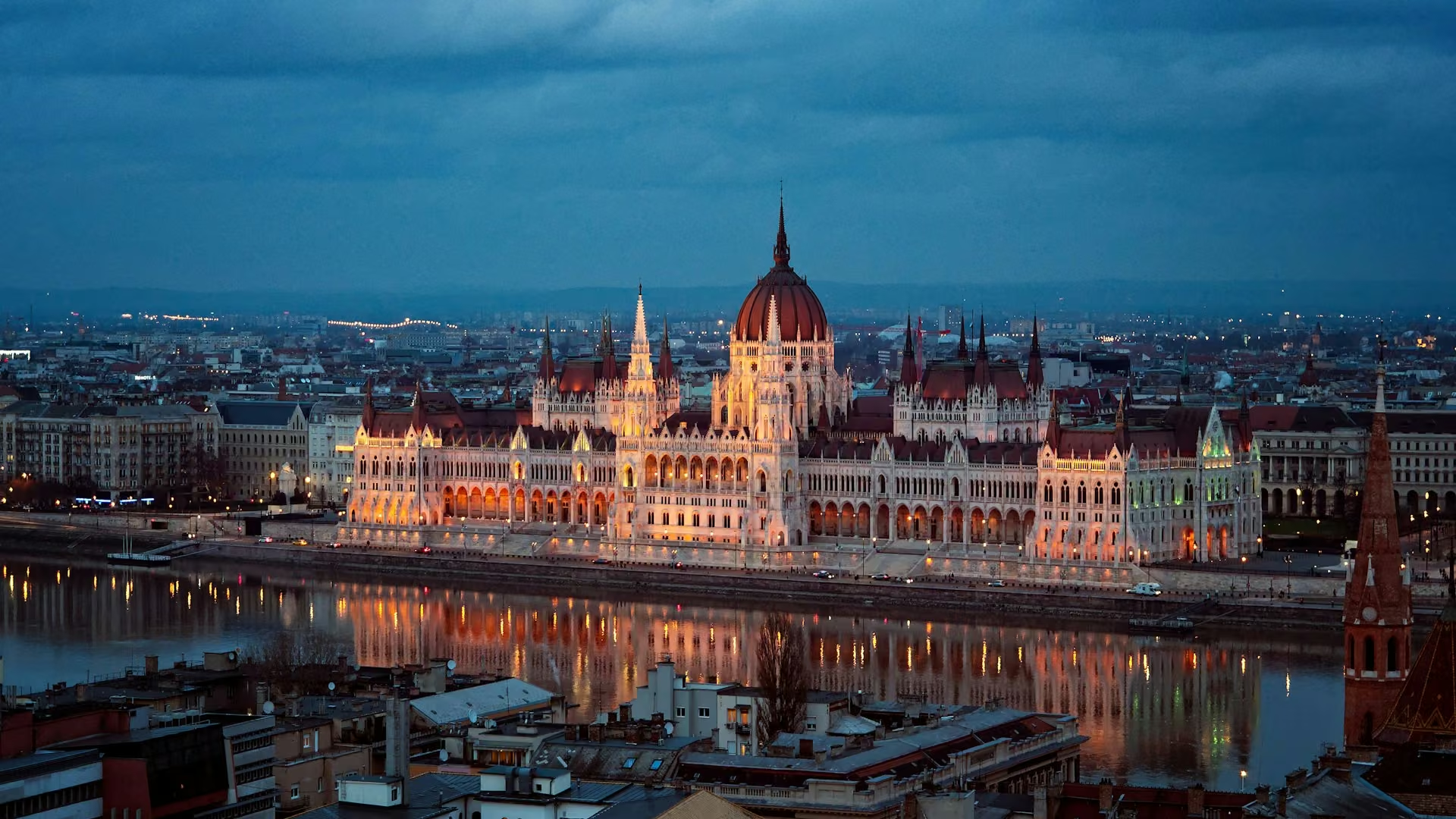
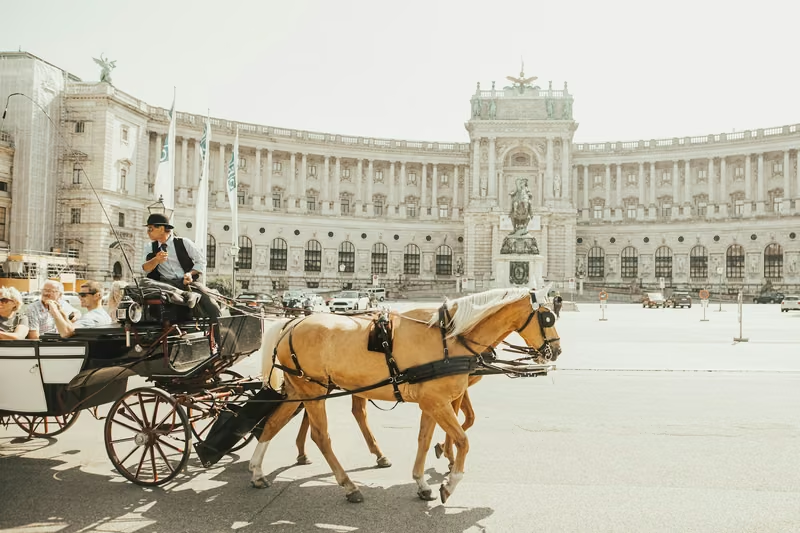
Vienna and Budapest are the great city stops. Vienna is the city of the Habsburgs and of Mozart, Haydn, Beethoven and Strauss, with the Hofburg, Schönbrunn Palace and St Stephen's Cathedral to explore. Budapest is really two cities, hilly Buda with its castle district and flat Pest with its grand Parliament building, which were formally united in 1873. Sailing into Budapest after dark, with the Parliament, the Chain Bridge and the castle all lit up, is one of the finest arrivals in river cruising.
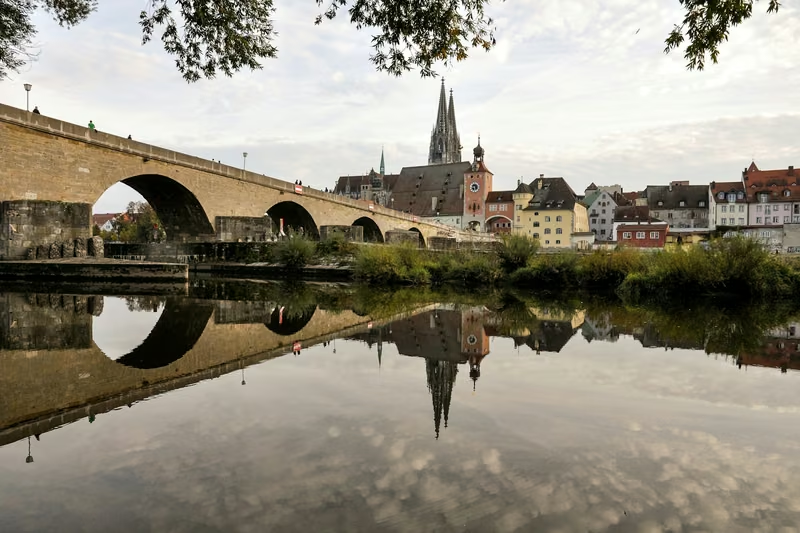
Further downstream, the Iron Gates gorge on the border between Serbia and Romania is the river's wildest stretch, with cliffs rising steeply on both sides and the giant carved face of the Dacian king Decebalus looking out from the Romanian bank. Smaller towns add plenty of character too, from Passau, where three rivers meet, to Regensburg with its medieval stone bridge, and Bratislava's compact old town below the castle.
Ports and places to know
Budapest, Hungary
Hungary's capital straddles the river, with Buda's castle district and Fisherman's Bastion on the hills and Pest's Parliament, cafés and thermal baths on the flat side. The banks of the Danube here are a UNESCO World Heritage Site, and many ships moor within sight of the Chain Bridge.
Vienna, Austria
The former Habsburg capital is a city of palaces, museums and music, from the Hofburg and Schönbrunn to the State Opera. Ships usually moor a short ride from the centre, and many cruises allow an evening for a concert of Mozart and Strauss.
Bratislava, Slovakia
Slovakia's capital has a small, walkable old town of pastel palaces and narrow lanes below its square castle. St Martin's Cathedral saw the coronation of Hungarian kings and queens for nearly three centuries, including Maria Theresa in 1741.
Melk and the Wachau Valley, Austria
Melk's golden baroque abbey sits high above the river at the western end of the Wachau. Cruises usually visit the abbey and then sail through the vineyards towards Dürnstein and Krems, one of the prettiest stretches of river in Europe.
Passau, Germany
Known as the City of Three Rivers, Passau stands where the Inn and the Ilz join the Danube, right on the Austrian border. Its baroque St Stephen's Cathedral houses one of the largest church organs in the world.
Regensburg, Germany
One of Germany's best preserved medieval cities, Regensburg has Roman foundations, a 12th-century stone bridge and an old town listed by UNESCO. Its narrow lanes and tall merchant towers are a delight to explore on foot.
Belgrade, Serbia
Serbia's capital stands where the Sava meets the Danube, overlooked by the Kalemegdan Fortress and its park. It is a lively, unpolished city with good food, busy cafés and the vast Church of St Sava.
Vidin, Bulgaria
This quiet Bulgarian river town is home to Baba Vida, one of the best preserved medieval fortresses in the country. It also makes a good base for visiting the striking red rock formations around Belogradchik.
Food and wine
Food along the Danube changes with every border. Bavaria brings sausages, pretzels and beer, and Regensburg has one of Germany's oldest sausage kitchens right beside the stone bridge. In Austria the coffee house is an institution, and an afternoon spent over Sachertorte or apple strudel in a Viennese café is time well spent. Wiener schnitzel, properly made with veal, is the classic main course.
Hungary is the land of paprika, which turns up in goulash, fisherman's soup and chicken paprikash, and Budapest's Great Market Hall is the place to see it piled high in every shade of red. The wines are better than many visitors expect. The Wachau produces superb Grüner Veltliner and Riesling, while Hungary is known for sweet Tokaji and for the reds of Eger and Villány.
Further east, Serbian grilled meats, Bulgarian yoghurt and Romanian sarmale (cabbage leaves stuffed with minced meat and rice) take over, and a glass of plum brandy is offered as a welcome almost everywhere. It is worth trying the local speciality wherever you are, whether that is a slice of strudel in Vienna or a bowl of fish soup in Hungary.
When to go
The Danube cruising season runs from around late March to December. Spring brings blossom to the Wachau and comfortable temperatures for walking, while summer is warm and lively, with long evenings on deck. July and August can be hot in Vienna and Budapest, and in very dry summers low water can occasionally affect sailing on some stretches. Spring can bring the opposite problem, with high water after snowmelt or heavy rain.
Autumn is a lovely time to go, with the grape harvest under way in the Wachau and the woods turning gold. From late November the Christmas market cruises begin, calling at towns such as Passau, Vienna, Bratislava and Budapest, with mulled wine, gingerbread and carols in the squares. These sailings are popular and the best dates go early, so it pays to plan ahead.
The Danube river cruises we offer
These are the cruises currently on our site that sail this river. We are adding more cruise lines, and each will appear here under its own heading.
Viking River Cruises
About Viking| Cruise | Length | From pp |
|---|---|---|
| Grand European Tour | 15 days | £3,995 |
| Romantic Danube | 8 days | £1,795 |
| Danube Waltz | 8 days | £1,795 |
| Passage to Eastern Europe | 11 days | £3,295 |
| Capitals of Eastern Europe | 17 days | £4,795 |
| European Sojourn | 23 days | £7,440 |
| Rhine, Main & Danube Odyssey | 18 days | £4,790 |
Lead-in fares per person, checked in October 2026.
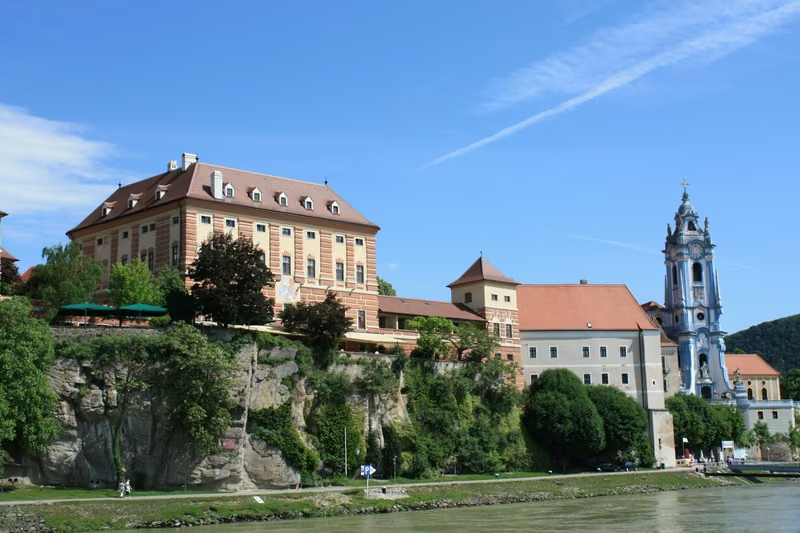
Grand European Tour
Fifteen days across the continent by water, from the bridges of Budapest to the canals of Amsterdam, linking the Danube, the Main and the Rhine.
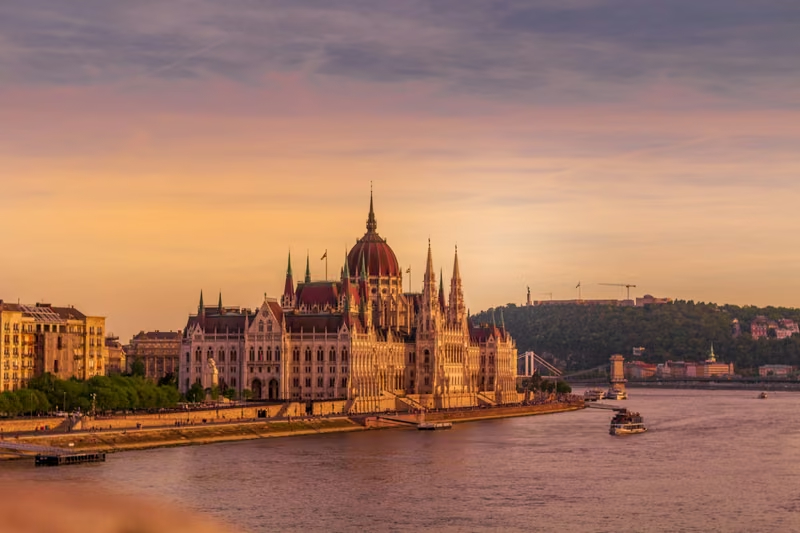
Romantic Danube
Eight days on the Danube from Budapest to medieval Regensburg, with two full days in Vienna and a slow sail through the vineyards of the Wachau.
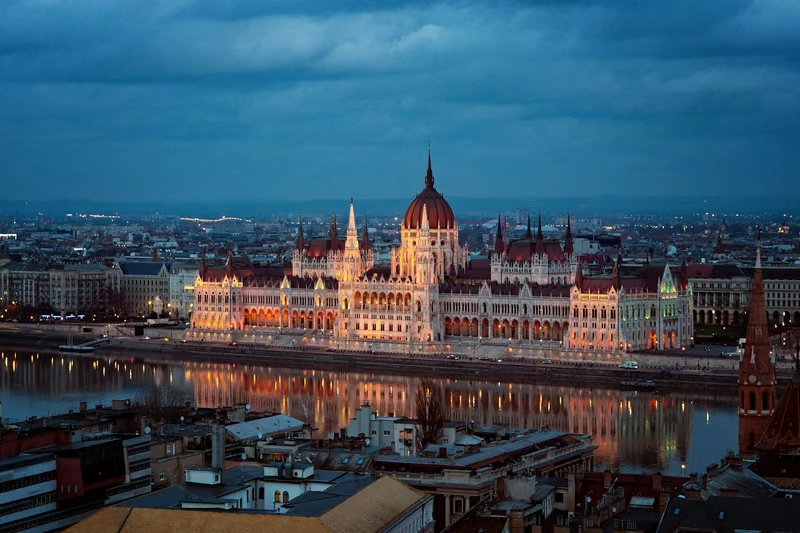
Danube Waltz
A week on the Danube from Budapest to Passau, taking in four countries, two capitals that rarely get the attention they deserve and the vineyards of the Wachau.
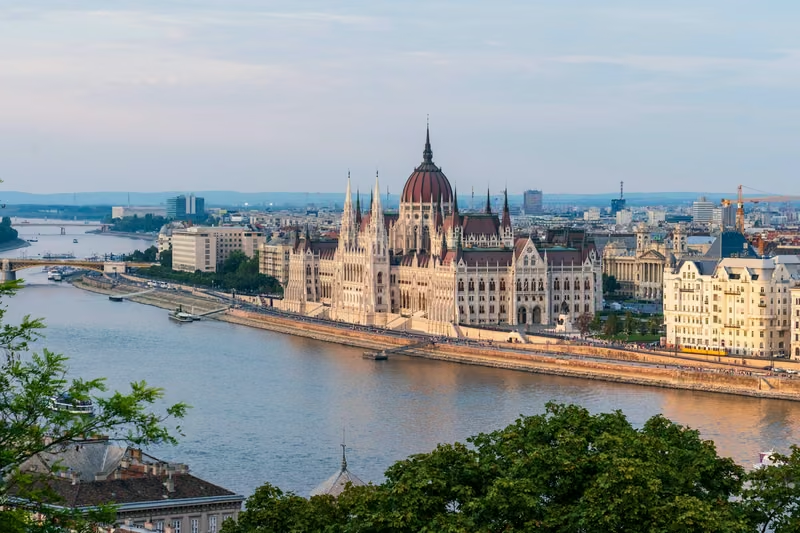
Passage to Eastern Europe
Eleven days on the lower Danube, from Bucharest to Budapest, through the gorges of the Iron Gate and across five countries, several of which most river cruisers never reach.
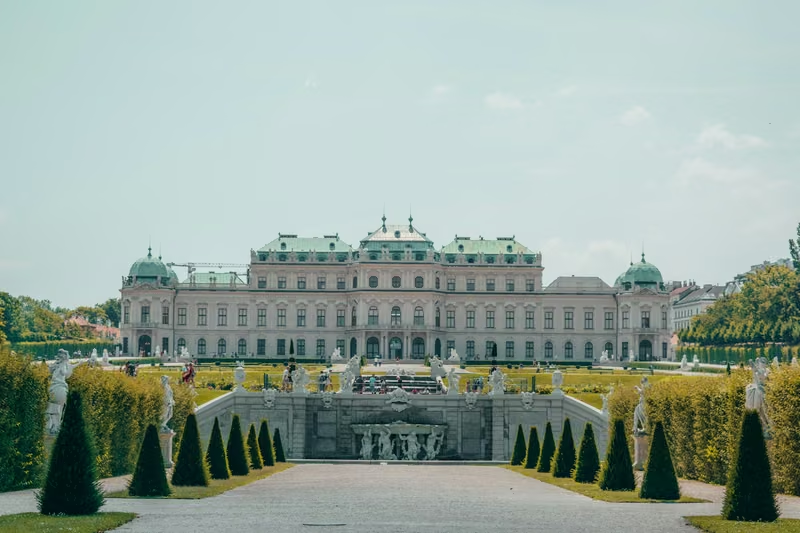
Capitals of Eastern Europe
Seventeen days down the Danube from Vienna to Bucharest, with five capital cities, the Iron Gate gorges and a final run towards the Black Sea.
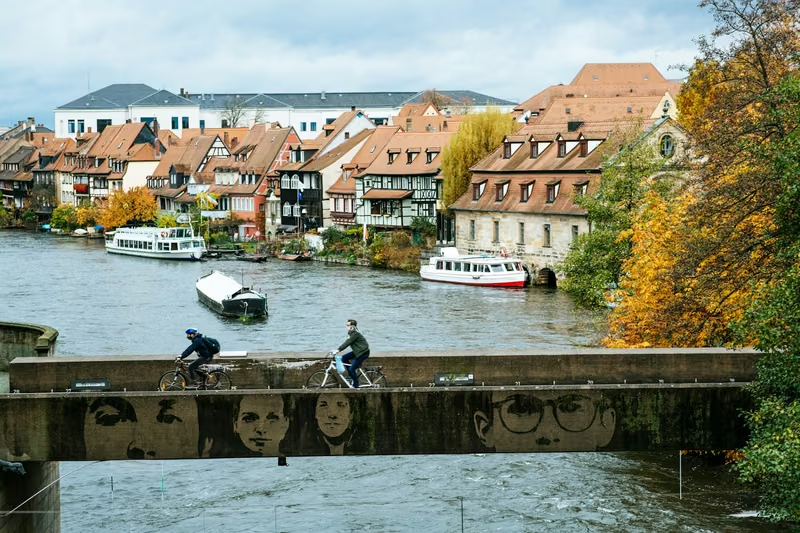
European Sojourn
Twenty-three days and three rivers, from the canals of Amsterdam to the boulevards of Bucharest, crossing eight countries without changing your style of travel.
The Danube river cruises: questions answered
The most popular Danube cruises last eight days and cover the stretch between Passau or Regensburg and Budapest, taking in Vienna, the Wachau and Bratislava. Cruises of 10 to 17 days continue beyond Budapest to the Iron Gates and the lower Danube in Serbia, Bulgaria and Romania. If you have more time, longer voyages link the Danube with the Main and the Rhine and run all the way to Amsterdam.
Most people would choose the Wachau Valley in Austria, a short stretch of vineyards, apricot orchards and castle ruins between Melk and Krems that is listed by UNESCO. The Danube Bend north of Budapest is also very pretty. For drama, the Iron Gates gorge on the Serbian and Romanian border is hard to beat, with sheer cliffs on both sides of the river.
May, June, September and early October are often the most comfortable months, with mild weather for walking and fewer crowds than high summer. Summer gives long evenings and the warmest weather, though Vienna and Budapest can be hot. Late November and December are for the Christmas markets, which are well worth seeing if you do not mind cold days and early dusk.
Yes, it is one of the best. The upper Danube has short distances between ports, famous cities and ships that usually moor close to the old towns. Most sightseeing is done on foot at an easy pace, although cobbles and a few hills are part of the experience. Speak to us if you have mobility concerns, as some ports are easier than others.
Water levels on the Danube can occasionally rise after heavy rain or snowmelt, or drop in a long dry summer. When that happens, cruise lines may change the order of ports, swap ships or use coaches for part of the route. Changes are usually made at short notice, so good travel insurance and a flexible attitude both help. We can explain the policy of each cruise line before you book.
Germany, Austria, Slovakia and Croatia all use the euro, and Bulgaria adopted it in 2026. Hungary uses the forint, Serbia the dinar and Romania the leu, although cards are widely accepted in shops and cafés in the main cities. A small amount of local cash is handy for markets, toilets and tips in smaller towns.
Yes. The Main-Danube Canal, completed in 1992, connects the Danube with the Main and the Rhine, so longer itineraries can sail between Budapest and Amsterdam, crossing Germany through Franconia and the Rhine Gorge. Some cruises go even further, from the Black Sea region to the North Sea. These journeys typically take two to three weeks.