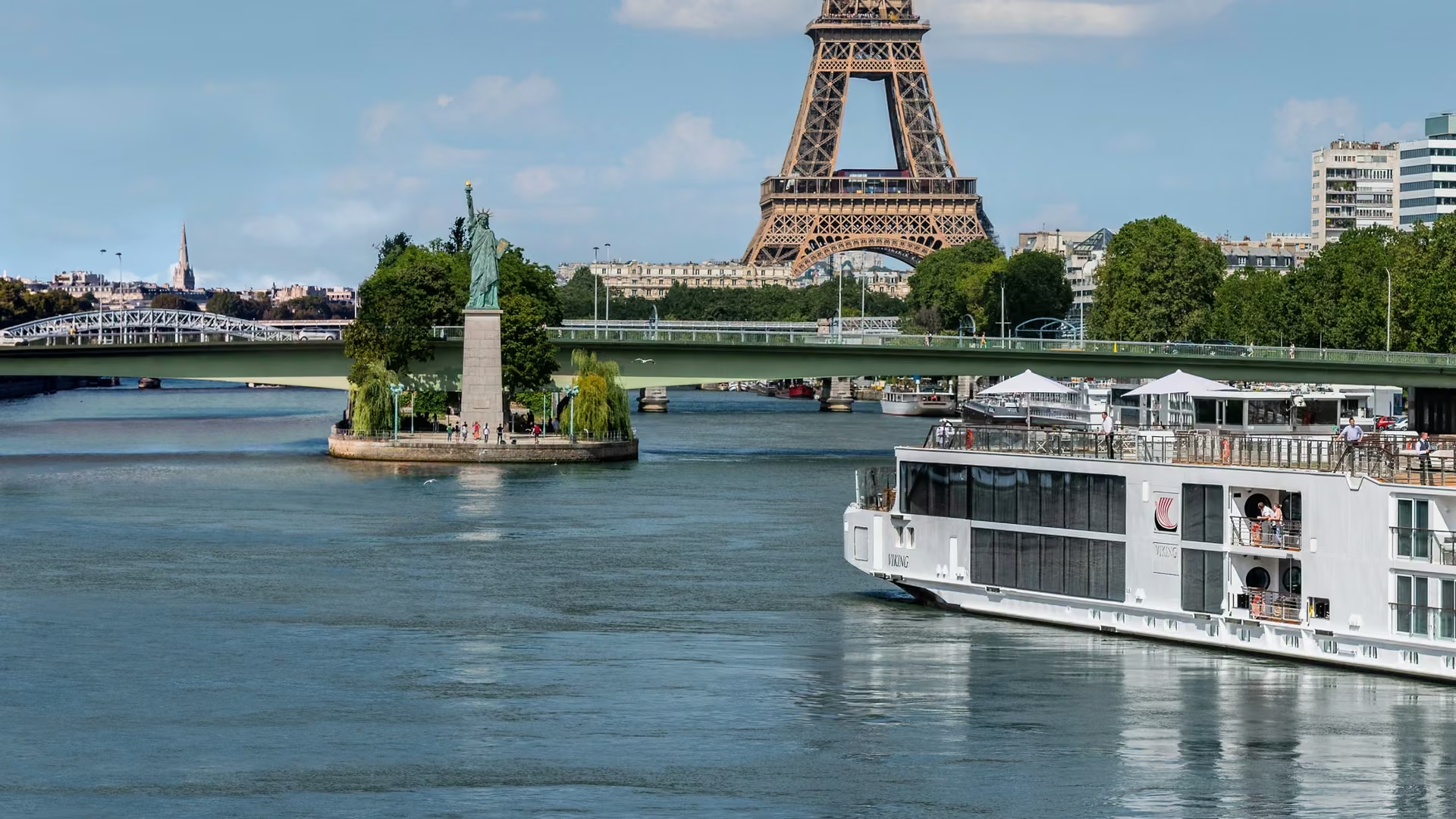
The Seine is the river of Paris, the Impressionists and the Normandy landings. A cruise along it is short in distance but rich in stories, with good food and cider waiting at almost every stop.
Cruising the Seine
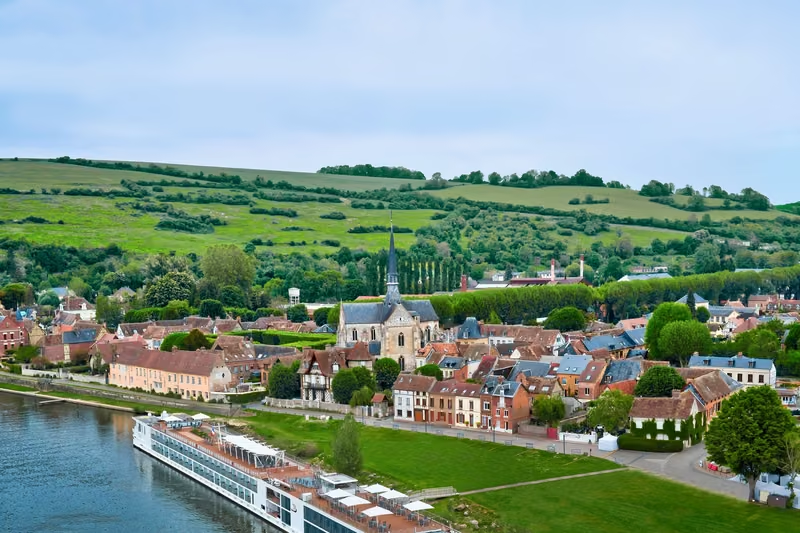
The Seine rises on the Langres plateau north-west of Dijon and flows about 777 km across northern France to the English Channel, reaching the sea between Le Havre and Honfleur. Unlike most cruising rivers it stays within one country, which gives a Seine cruise a very French character from start to finish. Most itineraries begin and end in Paris and sail the lower river through Normandy, a gentle landscape of meadows, apple orchards, white chalk cliffs and half-timbered villages, with the river looping lazily between them.
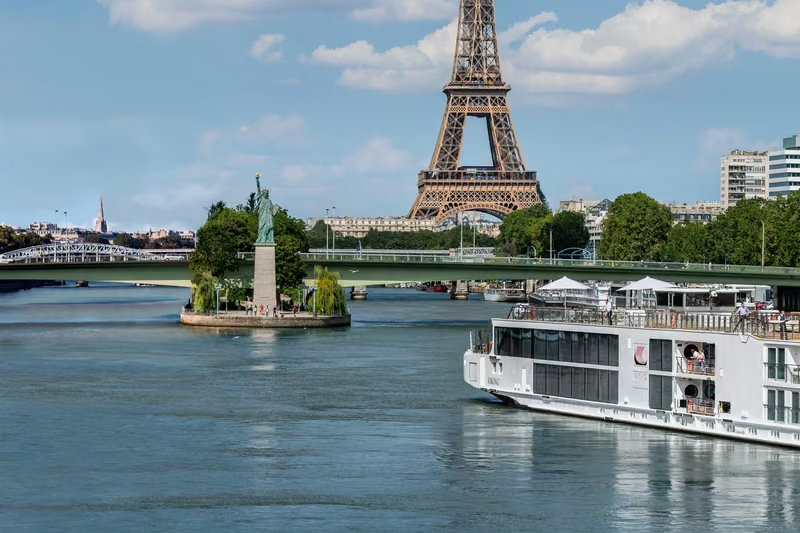
Paris itself is a big part of the appeal. Ships moor in or near the city, and many cruises spend a night or two there before or after sailing, so you can see the Louvre, the Eiffel Tower and the Latin Quarter without having to change hotels. The banks of the Seine in Paris are a UNESCO World Heritage Site, and an evening sail past the illuminated bridges and monuments is a lovely way to see the city at its best.
Downstream, the Seine becomes the river of Impressionism. Claude Monet lived and painted at Giverny, near Vernon, for more than forty years, and his house and garden are among the most visited sights in France. Rouen, the capital of Normandy, has the cathedral Monet painted again and again, and the square where Joan of Arc was burned at the stake. Closer to the coast, Honfleur's old harbour drew painters long before the Impressionists made it famous, and it is still one of the most charming little ports in France.
For many British travellers, the D-Day beaches are the emotional heart of a Seine cruise. Several itineraries include a full day on the Normandy coast, visiting the landing beaches and the cemeteries of 1944. With its short sailing distances and plenty of time in port, the Seine suits travellers who like a relaxed pace. Below you will find a short history, the highlights, food and drink, advice on timing and the ports most cruises visit, followed by the Seine cruises we currently offer.
River facts
| Length | About 777 km |
|---|---|
| Source | Source-Seine, on the Langres plateau north-west of Dijon, Burgundy |
| Flows into | The English Channel, between Le Havre and Honfleur |
| Countries | France |
| Cruising season | March to December |
| Typical cruise | 8 to 12 days, usually starting or ending in Paris |
A short history of the Seine
Paris began on an island in the Seine, the Île de la Cité, where a Celtic tribe called the Parisii lived before the Romans arrived. The river was the city's lifeline, and the ship on the Paris coat of arms still honours the boatmen who carried its trade. In the 9th century Norse raiders sailed up the Seine and besieged Paris more than once. In 911 the French king granted land around Rouen to their leader, Rollo, and that settlement became the Duchy of Normandy.
Rollo's descendant William the Conqueror invaded England in 1066, and for the next century and a half Normandy and England were closely bound together. Richard the Lionheart built Château Gaillard above Les Andelys in the 1190s to guard the Seine against the French king, but it fell in 1204. During the Hundred Years' War, Rouen was in English hands, and it was there in 1431 that Joan of Arc was tried and burned at the stake.
The 19th century brought the railway from Paris to the coast, and with it painters looking for fresh light and open skies. Monet, Pissarro, Sisley and others painted the river, its bridges and its towns. Less than a century later, on 6 June 1944, Allied forces landed on the Normandy beaches, beginning the liberation of France. The landing beaches, museums and cemeteries remain places of pilgrimage for visitors from Britain, the United States, Canada and beyond.
Highlights along the river
Monet's house and garden at Giverny is a must for anyone who loves art or gardens. The painter moved here in 1883 and stayed until his death in 1926, creating the flower garden and the water garden, with its Japanese bridge and water lilies, that he painted for the rest of his life. The gardens are at their best from spring to early autumn.
Rouen is the great city of the lower Seine. Its Gothic cathedral has the tallest spire in France, and its old centre is full of half-timbered houses, along with the Gros-Horloge, a grand ornamental clock set in an arch over one of the main streets. The modern church of Saint Joan of Arc stands in the Old Market Square, close to the spot where she died.
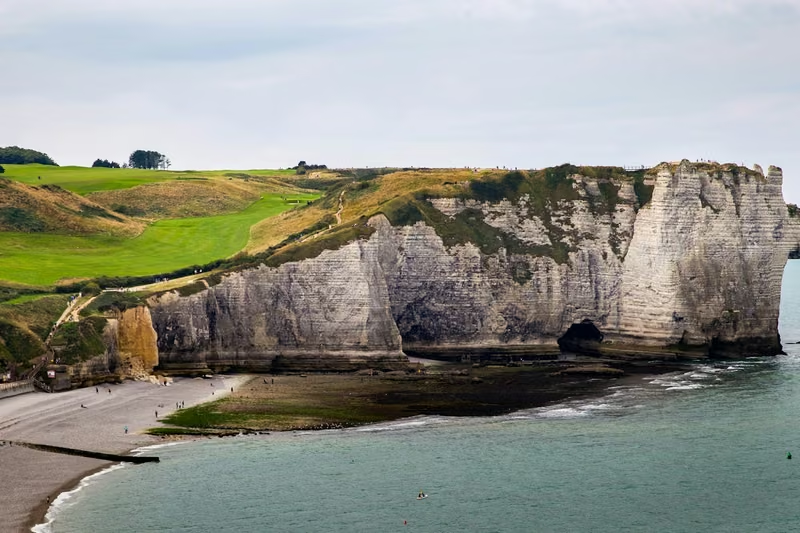
On the coast, Honfleur's old harbour, lined with tall slate-fronted houses, is one of the prettiest in France, and the town has a wooden church built by its shipwrights. A visit to the D-Day beaches is a moving experience, from Omaha Beach and Pointe du Hoc to the American Cemetery at Colleville-sur-Mer. The cliffs at Étretat, made famous by Monet, are another popular sight on this stretch of coast.
Ports and places to know
Paris, France
Most Seine cruises begin and end in Paris, often with a night or two moored in or near the city. It is a city for walking, from Notre-Dame and the Latin Quarter to the Louvre, Montmartre and the Eiffel Tower.
Vernon and Giverny, France
Vernon is a pleasant riverside town with an old mill perched on the remains of a medieval bridge. It is the closest stop for Giverny, where Monet's house and gardens lie just a few kilometres away.
La Roche-Guyon, France
This village sits below a castle built into the chalk cliffs, with a ruined medieval keep on the hill above. Its château has a long history and fine views over a loop in the Seine.
Les Andelys, France
Les Andelys lies below the white cliffs and the ruins of Château Gaillard, Richard the Lionheart's great castle of the 1190s. The climb to the castle gives a superb view along the Seine.
Rouen, France
The capital of Normandy has a magnificent Gothic cathedral, streets of half-timbered houses and the square where Joan of Arc died in 1431. It is a city that rewards time on foot.
Caudebec-en-Caux, France
This small town on the lower Seine is a good base for the ruined abbey of Jumièges and the working abbey of Saint-Wandrille. It is also a stop for trips to the Normandy coast.
Honfleur, France
Honfleur's old harbour, with its tall narrow houses and bobbing boats, has charmed painters for well over a century. Eugène Boudin, one of Monet's early mentors, was born here.
Normandy beaches, France
The D-Day landing beaches are usually visited on a full-day trip from the river. Omaha Beach, Pointe du Hoc and the American Cemetery at Colleville-sur-Mer are among the most moving places in France.
Food and drink
Normandy is dairy country, and its food is rich with butter and cream. The region gives its name to some of France's best known cheeses, including Camembert, Livarot, Pont-l'Évêque and the heart-shaped Neufchâtel. The coast brings oysters, mussels, scallops and the little grey shrimps of Honfleur, while inland you will find duck from Rouen and lamb raised on the salt meadows near Mont-Saint-Michel.
Normandy is too far north for many vineyards, so the apple takes the place of the grape. Cider, the sweeter pommeau and the apple brandy Calvados are produced across the region, and a small glass of Calvados between courses is known as the trou normand. Paris adds its own pleasures, from a buttery croissant at a café counter to a long lunch in a classic bistro.
When to go
The Seine cruising season runs from around March to December. Spring is lovely in Normandy, with apple blossom in the orchards and Giverny's gardens coming into flower. Summer is warm and pleasant, rarely too hot, and the long days are ideal for time on the coast. Normandy's weather is changeable all year, so a light waterproof is always worth packing.
Early June brings the annual D-Day commemorations, which add meaning to a visit but also bring large crowds to the beaches. September and October are quieter, with the apple harvest and cider making in full swing. In December, Paris is decorated for Christmas, and cruises around this time combine festive markets with the city's lights.
The Seine river cruises we offer
These are the cruises currently on our site that sail this river. We are adding more cruise lines, and each will appear here under its own heading.
Viking River Cruises
About Viking| Cruise | Length | From pp |
|---|---|---|
| Paris & the Heart of Normandy | 8 days | £2,295 |
| London, Paris & D-Day | 12 days | £3,595 |
| France's Finest | 15 days | £4,690 |
Lead-in fares per person, checked in October 2026.
Paris & the Heart of Normandy
Eight days on the Seine, starting and finishing in Paris, with Monet's garden, medieval Rouen and the Normandy beaches along the way.
London, Paris & D-Day
Twelve days of remembrance, from the wartime bunkers of London and the codebreakers of Bletchley Park to the Seine, Rouen and the beaches of Normandy.
France's Finest
Fifteen days, two rivers and the best of France, from Paris and the Normandy beaches to the vineyards of the Rhône and the Roman towns of Provence.
The Seine river cruises: questions answered
Most Seine cruises last around eight days, sailing from Paris down to Normandy and back. Some longer itineraries of 12 days or more add time in London or Paris, or continue south to Burgundy and Provence on the Saône and Rhône. Because the Seine is relatively short, cruises spend more time in port than on many other rivers.
Many Seine cruises include a day on the Normandy coast, visiting the landing beaches of June 1944. Typical visits include Omaha Beach, Pointe du Hoc and the American Cemetery at Colleville-sur-Mer, although the exact programme varies by cruise line. If the D-Day beaches are important to you, tell us and we will check which cruises include them.
Yes, Giverny is close to the Seine at Vernon, and many Seine cruises include or offer a visit. Monet lived here from 1883 until 1926, and his house and gardens are open to visitors from spring to autumn. The water lily pond is at its best in summer, while spring brings tulips and wisteria.
Late spring and early summer are lovely, with apple blossom and Monet's gardens in full flower. September and October bring the apple harvest and quieter towns. Summer is warm without being too hot. Early June is busy around the D-Day anniversary, and December cruises are a good way to see Paris dressed for Christmas.
That depends on the itinerary. Many Seine cruises moor in or near Paris at the start and end of the voyage, giving you a day or two to explore. Some cruise lines include hotel stays before or after. Ask us about adding extra nights if you want more time for museums, shopping or a day trip to Versailles.
The Seine is generally gentle, but some sights involve walking on cobbles or climbing hills, such as the path to Château Gaillard. Visits to Giverny and the D-Day beaches involve a coach ride and some walking. Most ports have options for different abilities. Let us know about any mobility needs and we can help find the right cruise.
Normandy is known for butter, cream and cheese, including Camembert, Livarot and Pont-l'Évêque. It is also apple country, producing cider, pommeau and the apple brandy Calvados. Seafood from the coast, such as oysters, mussels and scallops, is excellent, and Rouen has its own famous duck dish.